
Legal Question: Ever Heard of a Camera? Why Do We Use Courtroom Sketch Artists?
This week’s question is from Alex via the form. Alex asks:
I just watched Evil Genius on Netflix and was struck by the interview with the courtroom artist. He described his shifting interpretation of the defendant as the trial progressed, and it made me wonder: what is the role of a sketch artist in a courtroom? If they're present to visually document the trial, why not a camera? Surely photo or video would be a more objective recording of proceedings?
Also, on the theme of documentation - what does the stenographer produce on that little baby keyboard?! Hope you're well - thanks for brightening up some dreary English Sundays!
Great question, Alex! I hope you’re doing well, too. I hope your English Sundays are less dreary these summer days.
It’s been awhile since I have watched Evil Genius, but I flipped on the last episode to hear the part you referenced. The courtroom sketch artist described his interpretation of the defendant to the documentarian, saying:
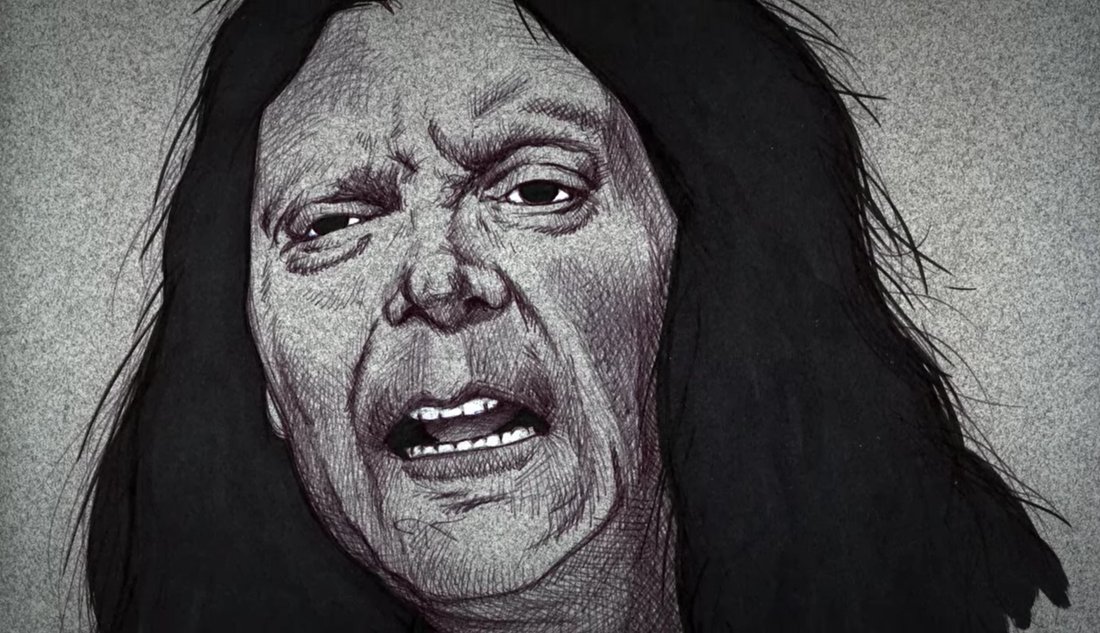
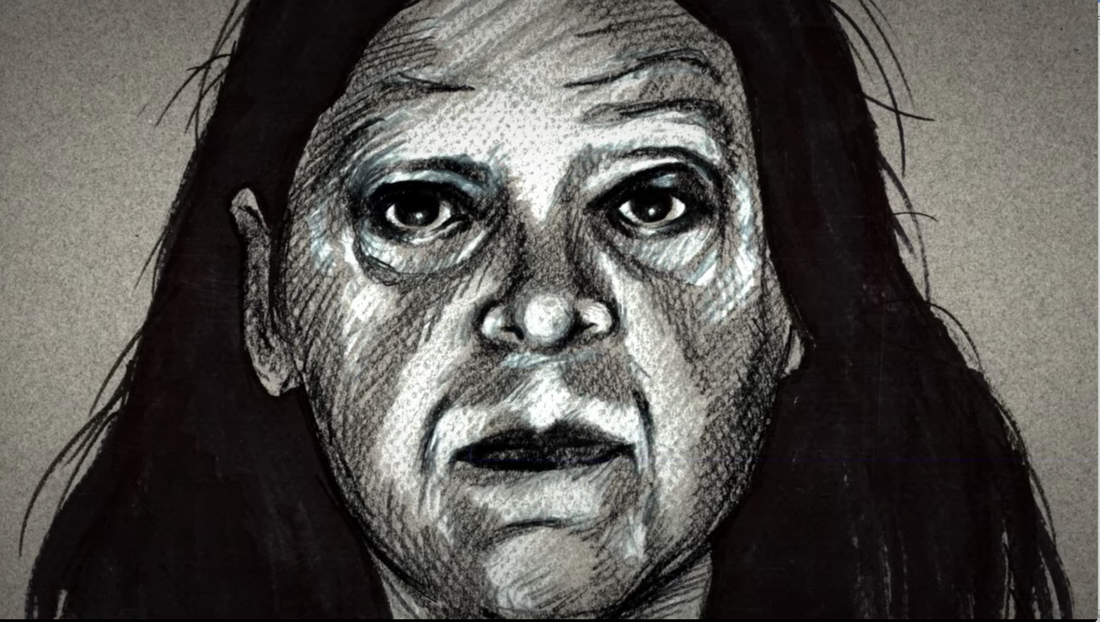
“Early in the case, I wanted to bring out the – for lack of a better word - the animal. I wanted to bring out the villain in my illustrations – dark tones, dark eyes, wild hair. After I see her mingling with you and some of the other people and being this charming character, I found myself today starting to soften the likeness that I’m illustrating of her.”
Here are two pictures, one of the artist’s “villain” rendering earlier in the trial:
And one after he “softened” her likeness:
A HISTORY OF ALLOWING CAMERAS IN THE COURTROOM
The 1935 trial of Richard “Bruno” Hauptmann for the Lindburgh kidnapping drew tons of media scrutiny. Cameramen were climbing on the lawyers’ tables and blinding jury members and witnesses with their flashbulbs. In response to the chaos, the American Bar Association adopted a rule that banned cameras from courtrooms just two years later.
Federal Rule of Criminal Procedure adopted in 1946 later mandated that: “The court must not permit the taking of photographs in the courtroom during judicial proceedings or the broadcasting of judicial proceedings from the courtroom.” Then in 1972, the national policy-making body for the federal courts known as the Judicial Conference of the United States, adopted a prohibition against “broadcasting, televising, recording, or taking photographs in the courtroom and areas immediately adjacent thereto.”
In the 1960s, the state of Texas ignored the ABA’s rules and allowed cameras in the courtroom, but that was only for state-level proceedings. That didn’t go so well, and the Supreme Court actually overturned a Texas criminal conviction based on excessive media coverage of the trial in the decision Estes v. Texas, 381 U.S. 532 (1965).
In 1981, the unanimous Supreme Court decision, Chandler v. Florida, 449 U.S. 560, didn’t go so far as to mandate cameras in the court room, but paved the way for state courts to allow cameras during proceedings.
As of 2006, all 50 states allow for some type of camera in the court. There have been some changes made regarding civil cases in federal courts, as well as naturalization and other ceremonial events. But to this day, photographs and video cameras are prohibited in federal criminal trials in federal district courts.
The crime at issue in Evil Genius is bank robbery, which falls under federal criminal jurisdiction. This is why they needed a courtroom sketch artist to document the proceedings.
WHY DO WE NEED SKETCH ARTISTS?
When cameras are banned from court, the public and the media rely on courtroom sketch artists to capture a visual representation of what happened. There is no prohibition on sketch artists in the courtroom. Some may be treated as members of the press and required to sit in a specific area of the courtroom. Others may be treated like regular spectators.
While every artist’s process varies, many make rough sketches at the time of the court proceeding and make notes of details. Then they later finalize the sketches before selling them either to newspapers or TV stations.
You are right, Alex – a camera would be a more objective documentation of the proceeding. The pros and cons of cameras in the courtroom have been debated for decades. While some argue that it offers greater access to justice and accessibility, others say it can be a distraction and result in an unfair trial for the defendants.
Different constitutional factors are at play – while the First Amendment guarantees a free press, it doesn’t guarantee that press can send cameras anywhere. Justice Earl Warren reasoned in the Estes case that, as long as the press could send in reporters to write down what was happening, their First Amendment rights were not infringed upon.
Similarly, the constitutional due process rights of the accused should be protected. The court in the Chandler case held that a state allowing cameras in the court room does not necessarily infringe on a defendant’s constitutional rights so long as the allowance does not infringe on “fundamental guarantees” under the constitution. For instance, a state would have to hear arguments from a defendant on why cameras may bias the jury or deprive him of some other right.
You make a good point that a camera is objective. The Evil Genius sketch artist admitted that he let his emotions color his interpretation of the defendant. At the same time, doesn’t that somewhat represent how she looked? If, at first, she was rougher and more aggressive, but over time became more likable, then he captured what she “really” looked like, maybe even better than a camera. But either way, cameras weren’t allowed since it was federal district court, so his interpretation is all we have.
WHAT DOES THE STENOGRAPHER PRODUCE ON THAT BABY KEYBOARD?
Exact transcripts of a trial. How do they do it? No clue. I have been recorded by a stenographer in open court (who repeatedly asked me to slow down). I also just watched five videos on YouTube. I am still struggling to explain just how they do it. I know they use their baby keyboards to record everything that is said, word-for-word, and do it at 200+ words per minute, which is incredible.
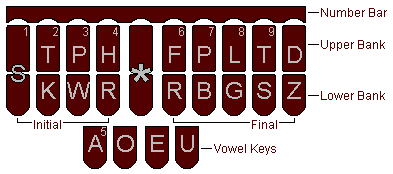
They do it using a special keyboard that is laid out as such:
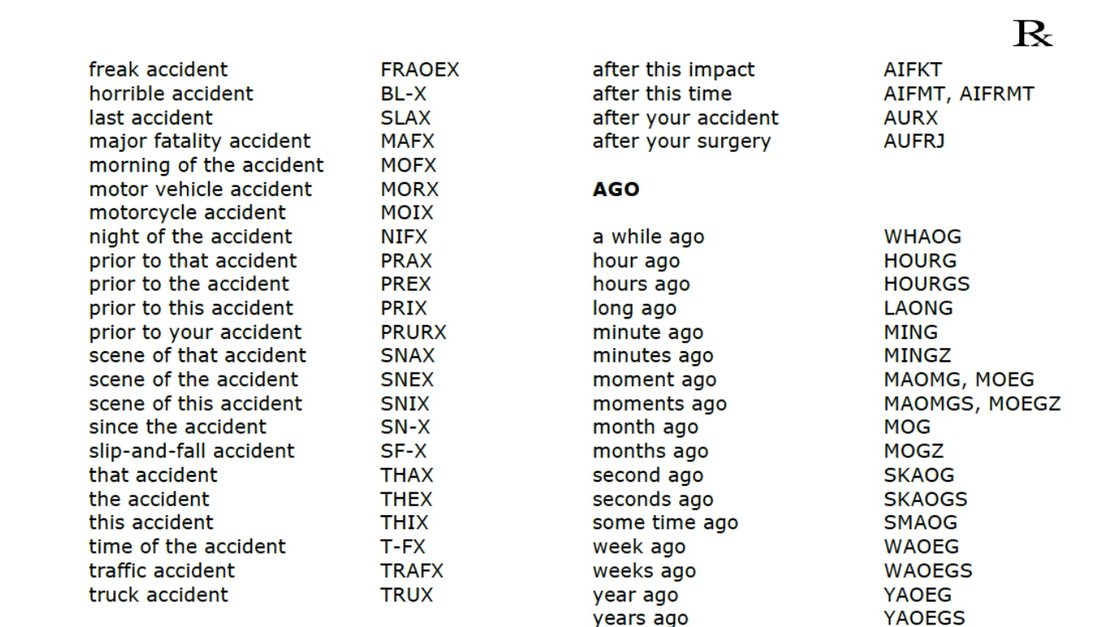
They can also add in custom dictionaries – almost like iPhone keyboard shortcuts – where a quick letter combo brings up an often-used phrase in court so they can easily keep up with the proceedings.
Here are some examples:
Using their fancy little keyboards and a connected laptop, court reporters produce a clear transcript of proceedings, delineating between speakers and obtaining clarification when needed. They are more accurate than voice-to-text software and provide human cognition that computers just can’t compete with.
They do an incredible service along with sketch artists. Without them, we wouldn’t have records of important proceedings like the ones on display here at the Library of Congress.
I hope that answers your question, Alex!
Got a question? Submit it here. They can be legal what-if questions, questions on current events, or questions about the legality of actions in TV shows or movies you’ve seen. I never ever want to answer your personal legal questions, so don't send those. Love you, but I don’t do that.
***
This piece first appeared in Sunday Morning Hot Tea. Subscribe so you don’t miss another piece.