


Legal Question: Do Cops Need a Warrant to Search Your Hotel Room?
This question comes from Austin, who asks:
Can cops just bust into your hotel room without a warrant? We’re watching “Law and Order: SVU,” and the cops had the hotel manager open up someone’s hotel room without the hotel guest’s permission. Can they do that?
Great question, Austin!
CAN BENSON AND STABLER BUST UP IN YOUR ROOM AT THE LA QUINTA?
No, but there are exceptions. Searches of someone’s “residence,” including a temporary residence like a hotel room, are governed by our constitutional right against unlawful search and seizure. That right is found in the Fourth Amendment to the Constitution, which reads:
The right of the people to be secure in their persons and houses against unreasonable searches and seizures, and no Warrants shall issue, but upon probable cause, particularly describing the place to be searched, and the persons or things to be seized.
Constitutional rights are not absolute. The Supreme Court is empowered with judicial review, meaning it decides whether laws are in line with the Constitution. Whether a search is reasonable or valid under the Fourth Amendment has been refined through case law and statutes throughout the years.
The Court has recognized a few exceptions to the right against unlawful searches. If one of those exceptions is present, the ragtag crew from NYPD’s 16th Precinct would be able to crack that hotel door and dig around in your stuff.
WHAT ARE THE EXCEPTIONS?
If the person being searched gives their permission (called “consenting” to the search), then the police don’t need a warrant. If they don’t have consent and they don’t have a warrant, then authorities need an exception in order to try and perform a lawful search.
The exception used fairly often is known as “exigent circumstances.” Exigent means “pressing or demanding,” so exigent circumstances are situations where there is an immediate need for the authorities to enter without waiting for a warrant. These include a “grave threat” to the safety of the investigating police, members of the public, or their property. It could also be to stop a suspect from escaping. It could also be when there is a belief that evidence will be lost or destroyed by not entering. I’m
The police can’t just be walking by when this happens. They have to have “probable cause” or the reasonable belief that crime has taken place or is currently taking place before they can act.
LoûIf there are no exigent circumstances, no consent, and no warrant to search, there are other ways for police to search. If you leave something illegal out in the open and the cops just happen to see it, then that is not usually considered an unlawful search. This is called the “plain view doctrine.” There's no need to search when anyone walking by could see the contraband. Similarly, if the police are lawfully arresting someone, they are able to search while making that arrest. This is called a “search incident to a lawful arrest.”
WHAT IF THE MANAGER LETS THEM IN?
If the cops aren’t kicking down your hotel door, they may be sweet talking the manager to let them in. Unless they have a warrant or one of the exceptions above exist, the manager can’t let them in your room. Your room is your domain for as long as you've checked in, followed hotel rules, and paid for your reservation.
WHAT IF I CHECK OUT?
Once you check out, your rights stop. Anything you left behind in the now-vacant room could be searched by the police.
Also, if you are forcibly removed from the hotel for violating hotel rules, or if you leave on your own accord before you check out (called “abandonment”), you no longer have claim to the room you were staying in. After that, the hotel management could let authorities in and whatever they find may be used against you.
WHAT IF THEY BUST IN ANYWAY?
Kicking in a door without a warrant and without a valid Fourth Amendment exception would not be a great idea. If that happens, the evidence found could be suppressed by the court or your defense attorney could ask that the entire case against you be dismissed. The police would also open themselves up to civil liability, and you could sue the government. Lawsuits like these are brought under 42 USC §1983, a federal statute which allows individuals to sue the government for violations of their civil rights.
In the episode, there was some mention of “exigent circumstances.” If such circumstances existed - a person was in danger or evidence was in danger of being destroyed - then the cops could come in and search. If the search was challenged later, they could try to argue that their warrantless search was necessary later in court. If no exigent circumstances or other exceptions existed, then the evidence would probably be suppressed, bhuhyy G on or kept out of the proceedings.
In any case, the dedicated detectives who investigate these vicious felonies are members of an elite squad known as the Stay-the-Hell-Out-of-My-Hotel-Unless-You-Have-A-Warrant Unit.
I hope that answers your question, Austin. Thanks for sending!
Got a question? Submit it here. They can be legal what-if questions, questions on current events, or questions about the legality of actions in TV shows or movies you’ve seen. I never ever want to answer your personal legal questions, so don't send those. Love you, but I don’t do that.
***
This piece first appeared in Sunday Morning Hot Tea. Subscribe so you don’t miss another piece.

Legal Question: Michael Scott's Diary Drama
This question comes from my dear friend, Todd, who will also co-officiate our wedding soon! Todd asks:
“Watching The Office where Michael’s journal is submitted in Jan’s wrongful termination deposition. He literally says he does not want it submitted. That should be the end of it, right?”
Thanks for the question, Todd! This is an excellent episode. I laugh every time at, “Tan almost everywhere. Jan almost everywhere.” It is also an excellent episode for Michael’s development as a character and standing up for himself.
When answering these questions, I like to establish where the players are and what rules apply. The Office is set in Scranton, Pennsylvania. Jan is suing Dunder Mifflin for employment discrimination and asking for $4 million. Dunder Mifflin is publicly traded and headquartered in New York. Most publicly traded companies are incorporated in Delaware, even if they are headquartered somewhere else. By this point in the series, Jan is living with Michael in Scranton, making her a Pennsylvania resident.
When a resident of one state sues the resident of another state and the amount at issue is over $75,000, this is called “diversity of jurisdiction” and the proper place to file a lawsuit is in federal court. Plus, employment discrimination suits often end up in federal court because they involve federal employment laws.
For this we’ll assume the federal rules apply. One of the federal rules regarding discovery states that “Parties may obtain discovery regarding any non-privileged matter that is relevant to any party's claim or defense.”
Although Jan stole the diary, it would be non-privileged and relevant to her claims as it proves the timeline of her relationship with Michael. Despite its shady origin, the court would likely allow its admission.
In the show, once the diary is introduced during the deposition, the attorneys then copy the whole thing and distribute its entirety to both sides. This is because of something called the doctrine of completeness (Rule 106 in the Federal Rules of Evidence). It allows an adverse party (Dunder Mifflin) to require that “any other part” of a writing be revealed after part of the writing is introduced. In this case, since Jan introduced the diary entry about Jamaica, Dunder Mifflin’s attorney had every right to ask for the rest of the diary to be made available as well.
To answer the question, the stolen nature of the diary does not have any bearing on its admissibility. On a gut level, that may not seem right. There is a doctrine known as the “exclusionary rule” that applies in criminal cases, which prevents the government from using most evidence gathered in violation of the United States Constitution. However, Jan’s employment lawsuit against Dunder Mifflin is a civil case - not criminal, therefore the exclusionary rule does not apply.
If Michael felt wronged by Jan stealing his diary, which she admits to doing, he could press charges against her for criminal theft or file a civil lawsuit against her. However, she asks him to “call it even” by pointing out that he emailed a topless photo to everyone in the company. Michael agrees. Still, if he wanted to call the law offices of James P. Albini and see if he’ll take the case, Michael has that option.
I hope that answers your question, Todd. Thanks for sending!
Got a question? Submit it here. They can be legal what-if questions, questions on current events, or questions about the legality of actions in TV shows or movies you’ve seen. I never ever want to answer your personal legal questions, so don't send those. Love you, but I don’t do that.
***
This piece first appeared in Sunday Morning Hot Tea. Subscribe so you don’t miss another piece.

Legal Question: Can you transfer venue so hard that you leave the state?
This week’s question comes from Christie via our upcoming minisode on the Murdaugh Murders (Part 2). Christie asked:
Can you ask for a transfer of venue out of state?
In an upcoming Sinisterhood minisode on the Murdaugh Murders update - part 2, Christie asked whether Alex Murdaugh could ask for a change of venue outside the state if the jury pool of South Carolina was so tainted by their personal connections to the case and all the media coverage.
At the time I said, "I don't think so," but then I started second-guessing myself. I love when I am not sure about something because it means I get to wrap my brain around another state's laws and refresh my memory on old concepts, deeply buried in the recesses of my skull. This was a great question, so I decided to dig into it here.
BACKGROUND
Some backstory - Alex Murdaugh is the once-prominent South Carolina lawyer who, it turns out, has been scamming his clients, stealing funds, and trying to commit insurance fraud by hiring someone murder him on the side of the road.
That is only about 1/10th of the story. His wife and son were murdered under suspicious circumstances. The family has also been tied to the murder of a young man in the community named Stephen Smith. Alex’s murdered son, Paul, also recklessly drove a boat and killed a young woman named Mallory Beach . The list of controversies associated with the family is endless. We covered his story in several parts, located here, here, here, and in an update here. The second part of the update is coming soon.
Alex is currently in jail for financial crimes and is facing millions of dollars in lawsuits for the damage he's done. His attorney has made reference to a tainted jury pool with regards to the civil suits. Since so many families and the community at large has been negatively impacted by all of his actions, the question has become - could he really get a fair trial in South Carolina or has the jury pool been tainted?
WHAT IS VENUE?
Venue is a place where a lawsuit is filed. In the earlier days of the legal system, lawsuits for things like theft, injury, or wrongful death (called “torts”) could be “brought wherever the wrongdoer [could] be found and legally served with process.” Eventually, to keep things more organized, states passed laws mandating where lawsuits could be filed and heard by a judge.
WHERE DO YOU SUE SOMEBODY?
South Carolina Code section 15-7-30 mandates that a lawsuit like the ones Alex is facing, “must be brought and tried in the county” (1) where the defendant (Alex) resides at the time of the lawsuit, OR (2) where the most substantial part of the bad act occurred.
SO CAN YOU CHANGE YOUR VENUE?
You can ask for a new venue, just not outside the state. I'll address South Carolina law in this answer, but note that laws vary across states and with the federal lawsuits as well.
South Carolina Code Annotated § 22-3-920 provides that either party in a civil case (the person suing or being sued) or the prosecutor or the accused in a criminal case, may apply for a change of venue. So it never hurts to ask.
The person requesting the change of venue has to give the judge a sworn statement explaining why he does not believe he can receive a fair trial in the current venue. The sworn statement has to include details and facts supporting the person's belief. The code states that if the sworn statement “sets forth grounds for a belief that the party cannot obtain a fair trial” then the judge must grant the change of venue. You can only move once, though. In that scenario, the case would be moved to another county to proceed with trial there.
You can't move the case out of the state because other states don't have jurisdiction over controversies or crimes that happened in South Carolina. In some civil cases, if each party is from a different state and other factors apply, the plaintiff could possibly sue in federal court. We don't have the time or space to get into that here. It takes up a whole semester in first year Civil Procedure in law school and doesn't apply here anyway.
But if the shit goes down in South Carolina, the trial will, too.
WHY WOULD YOU WANT TO MOVE?
Because the generosity of juries vary, sometimes a person filing a lawsuit may try to file in a place that is more friendly to someone who has suffered in the same way they have. Let’s look at a hypothetical. Say there’s a guy name Bob, and he works for the railroad company. If Bob was in a railroad accident, it would serve him well to file his lawsuit in a county where juries have proven to be generous to railroad accident victims in the past and who may be willing to punish railroad companies who injure people.
When you file in a place friendly to you, that is sometimes referred to as “forum shopping.” Ironically, the county where Alex Murdaugh practiced - Hampton, South Carolina - was a famously plaintiff-friendly county. Called a “judicial hellhole” by the defense-friendly American Tort Reform Foundation, Hampton was known for its liberal and generous jury verdicts, especially against railroad companies.
Due to South Carolina’s previously lax venue laws, Bob may have been injured by the railroad in a county across the state far away from Hampton, but if the tracks passed through Hampton, his attorneys could file his lawsuit in the judicial hellhole, hoping for a juicy, high-dollar verdict. This exact scenario is how the Murdaugh family accumulated its wealth over the decades. (Except for Alex - he was stealing.)
** Side Note: Tort reform is a controversial topic. Especially after the McDonald’s coffee verdict, there was a push by insurance companies and large businesses to reduce the amount of damages injured people could recover when they were injured. The narrative that “lawsuits are out of control” was pushed in the media, despite the fact that the Wall Street Journal reported “Americans… are filing far fewer lawsuits. Fewer than two in 1,000 people [0.002] – the alleged victims of inattentive motorists, medical malpractice, faulty products and other civil wrongs – filed tort lawsuits in 2015 ….” For a super interesting documentary on tort reform, check out the documentary Hot Coffee. **
WILL ALEX GET TO MOVE ANY OF THE MANY LAWSUITS FILED AGAINST HIM?
His lawyers can certainly try. Alex’s attorneys filed a motion against opposing counsel, Eric Bland, accusing Bland of tainting the jury pool with his media appearances. This argument is pretty cute considering Alex’s own attorneys have been giving interviews freely, and saying some pretty ridiculous stuff on camera. Plus, the media coverage has been national and international, so there is no way they can find a venue where someone hasn’t heard of the case. The motion is pending.
So if they can’t leave the state, how will he get a fair trial? The jury selection process will likely be extensive to ensure that only unbiased jurors are seated on the jury. If they bring in one or two hundred people to interview, surely they can find twelve who haven’t watched any documentaries or listened to any podcasts on the case.
In short, nope. He can’t move out of state. This goes for the criminal charges as well.
Thanks for the question, Christie! And thanks to y’all for sticking with me on this long trek through the fascinating world of South Carolina civil procedure.
Got a question? Submit it here. They can be legal what-if questions, questions on current events, or questions about the legality of actions in TV shows or movies you’ve seen. I never ever want to answer your personal legal questions, so don't send those. Love you, but I don’t do that.
***
This piece first appeared in Sunday Morning Hot Tea. Subscribe so you don’t miss another piece.

Legal Question: If your DNA is the same, can you get framed?
This question comes from Jamie via the form. Jamie asks:
Say we lived in one of the many fictional universes where doppelgängers exist. If my doppelgänger commits a crime, could I be charged for it?
Thanks for the question, Jamie! We covered doppelgängers in our February 2021 minisode on Patreon. As we discuss, the word doppelgängers originated in a 1796 novel written in Germany. The mischievous double in that book convinced the novel's protagonist to fake his own death. The doppelgänger in your question sounds like an even more nefarious form of this ancient concept.
COULD YOU BE CHARGED FOR YOUR DOPPELGÄNGER'S CRIME?
To answer your question - yes. If a doppelgänger is a legitimate double of you and not just a look-alike, you could be charged. Would the charges stick? That's a different question. But you can get charged for something you never did. Sadly, that happens all the time.
But back to the question at hand - your arrest would likely be based on some form of physical evidence. That evidence could include fingerprints, DNA, or facial recognition. If you were truly doppelgängers -meaning you were 100% the same as one another - all three of those things would match. If the arrest was based on any or all those things, they'd probably haul you in.
Like we discussed on the minisode, scientists studying facial measurements have found that anthropometric measurements - the distance between certain points on a face - are just as accurate as fingerprints and DNA. So if your doppelgänger is truly out there doing crimes, you could go down for it.
BUT WOULD THE CHARGES STICK?
Maybe not. Something similar happened in Germany back in 2009. Following a jewelry heist, sweat from a glove left behind was tested for DNA. It matched two men - a pair of identical twins. Both twins were arrested, but before the trial, they were let go with the court stating: "From the evidence we have, we can deduce that at least one of the brothers took part in the crime, but it has not been possible to determine which one."
This only worked for the twins because the evidence was DNA. If it had been fingerprints, the grift would be over as identical twins do not have identical fingerprints.
In order to be convicted of a crime, the state has to prove beyond a reasonable doubt that the crime was committed by the person who has been arrested. Since whatever evidence they would have against you would also match your doppelgänger 100%, you could argue that the court was incapable of proving your guilt. How could they determine it was you and not your doppelgänger? You would probably do well to try and prove your alibi to try and save yourself.
Benefit of a doppelgänger: get out of jail free card.
Drawback of a doppelgänger: just about everything else. (Have you seen Multiplicity?)
Thanks for the question, Jamie!
Got a question? Submit it here. They can be legal what-if questions, questions on current events, or questions about the legality of actions in TV shows or movies you’ve seen. I never ever want to answer your personal legal questions, so don't send those. Love you, but I don’t do that.
***
This piece first appeared in Sunday Morning Hot Tea. Subscribe so you don’t miss another piece.

Legal Question: If there’s something strange and you get arrested, who ya gonna call? YOUR LAWYER
This week’s question was sparked by watching the new movie Ghostbusters: Afterlife. No spoilers, but in the movie, a character is arrested and demands to make their one phone call. As I was thoroughly enjoying that movie (seriously - go see it! I laughed. I cried. I cried talking about it later. I loved it!), I wondered to myself:
Do you have a constitutionally protected right to a phone call after you have been arrested?
It’s one of our most propagated tropes in movies and TV shows: perps are always yelling, “I want my phone call!” But do they get one?
The answer is, as always, it depends. In this case, it depends on what jurisdiction you’ve been arrested in. In the new Ghostbusters flick, they’re in Oklahoma. This differs from Texas and varies widely across other states.
NO CONSTITUTIONAL RIGHT TO A PHONE CALL?
A couple of constitutional rights are implicated when considering whether an arrestee is entitled to a phone call. You have the right to due process under the Fifth Amendment and the right to counsel under the Sixth. However, the interpretation of those rights is not well-settled.
There’s a case out of the Fifth Circuit regarding two guys arrested at the onset of Hurricane Katrina in New Orleans. They were booked into jail, and because the phone lines were overwhelmed in anticipation of the hurricane, the men were not able to make phone calls. They argued, among other things, that the sheriff should have made their confiscated cell phones available to them since the phone lines were down.
The Fifth Circuit disagreed, saying, “There is no particularized, clearly established law which would have instructed [the Sheriff] that, under the Sixth Amendment, he had to allow pre-trial detainees to use their cell phones when land lines were disrupted.” Waganfeald v. Gusman, 674 F.3d 475, 485 (5th Cir. 2012).
Yikes.
The men were then left in the jail as it filled with water once the levees broke. The food became spoiled, and the toilets overflowed. They were later transferred to Angola aka "The Alcatraz of the South" all because they had allegedly been drunk in the French Quarter (who hasn’t!?) They had been arrested for public intoxication after one fell off a curb (again, WHO HASN’T?!). He said it was due to a bad knee (hard relate), and the other defendant said he was just trying to help his friend stand back up (true bro move right there).
A likely story, sure, but in any case, they shouldn't have ended up in a maximum security prison farm and likely wouldn’t have if they had just been able to call someone to bail them out.
STATE STATUTES
In the absence of a constitutional right, each state is able to pass its own laws that determine access to a phone call within a certain amount of time following arrest. In July 2021, the Chicago Appleseed Center for Fair Courts released a 50-state analysis on the various post-arrest phone call rights across the country. The analysis “found that about 46% of states provide ‘moderate protections’ for their residents, 22% of states have ‘no clear protections,’ and only 32% — 16 states — provide ‘strong protections’ for people’s right to communicate.”
Illinois just passed the SAFE-T Act which updates the criminal code to require at least THREE phone calls “upon being taken into police custody, but no later than one-hour after arrival at the first place of custody and before any questioning by law enforcement occurs.”
This is particularly important in Illinois as a rash of arrests and detentions at a shadowy “black site” in Chicago’s Homan Square saw arrestees facing secret arrests, beatings that resulted in head wounds, and multi-hour to multi-day detentions without counsel, including of arrestees as young as 15 years old.
SO DO I GET MY PHONE CALL?
Depends on where you are. In Texas, you don't.

pretends to be shocked in Texas
In one case from 2011, the U.S. District Court for the Northern District of Texas found that a defendant did not have “a protected liberty in placing a phone call upon booking as there is no state statute affording this right to pre-trial detainees in the state of Texas.” Basically, no law on the books = you're out of luck.
Chicago Appleseed reported that two bills (SB 303 and HB 2580) had been proposed in the Texas legislature that would allow arrestees to make a local phone call but...
Are you ready for this??
Neither bill passed. Because of course they didn’t.
I can't even pretend to be shocked about this.
As for Oklahoma, our Ghostbusters character would have a little more protection than Texas. The ACLU advises that arrestees in Oklahoma are entitled to a phone call. The case law backing that up states that a defendant gets "a reasonable time to send for counsel." So our character was well within their rights to demand a phone call.
[I am intentionally not gendering the character because I do not want to spoil the movie. It is so good. Go see it before someone spoils it for you!]
SO WHAT DO I DO IF I GET ARRESTED?!
You can check your state's laws using this informative table from Chicago Appleseed. I personally think everyone arrested should be entitled to a phone call, no matter what state they're arrested in. We should all be afforded a meaningful opportunity to converse with counsel, and at the very least let our family or friends know we have been taken in so we don’t end up beaten in a secret interrogation site or shipped all over a state during a deadly hurricane and subjected to inhumane conditions all because we tripped and fell in the French Quarter.
If your state's law on the subject sucks or is just plain missing, let your state representative or senator know you'd like to see that change.
Just remember, if you do get arrested and you do get your phone call, the privacy of that call depends on who is on the receiving end. If you call your lawyer, the cops can't eavesdrop and can't record you. But if you call a family member or a Ghostbuster, they can (and likely WILL) listen and use what you say against you. Keep that in mind when you’re deciding who ya gonna call.
Thanks to Ghostbusters: Afterlife for sparking this question and for existing!
Got a question? Submit it here. They can be legal what-if questions, questions on current events, or questions about the legality of actions in TV shows or movies you’ve seen. I never ever want to answer your personal legal questions, so don't send those. Love you, but I don’t do that.
***
This piece first appeared in Sunday Morning Hot Tea. Subscribe so you don’t miss another piece.
Legal Question: What is in Those Drawers?
This week’s question is from Julia via the form. I am answering it because it made me laugh. I hope it is based on a real experience.
Julia asks:
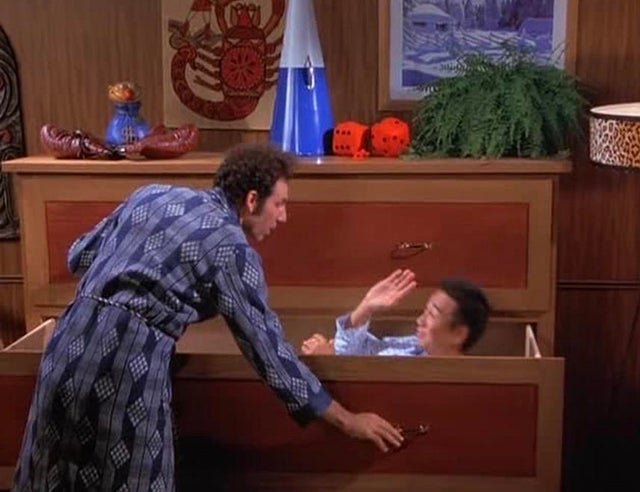
Hypothetically, if you attended a Stars or Mavs game and at the end of the night stowed away in one of the large empty drawers in the merch shop (which do appear big enough for a small adult human) what could/would you be charged with? What if the tickets were a gift or work perk that you didn't purchase yourself?
Thanks for asking, Julia!
I have never noticed this myself when visiting the American Airlines Center, but I’m definitely going to check it out the next time I’m there. Whether the drawers are human-size or not, stowing away inside one after hours would be a crime.
You could be charged with misdemeanor criminal trespass. The law is found in Texas Penal Code §30.05. That law states that it is a crime if you “enter or remain” on the property of another person including “a building” without the effective consent of the person – which includes when you receive notice to depart but fail to do so.
I don’t have a Mavs or Stars ticket handy, but I do have an old ticket from seeing Billie Eilish at the American Airlines Center where those teams play. On the back of the ticket, it reads in part:
This ticket is a revocable license and may be taken up and admission refused upon refunding the purchase price.
This is the same for any concert or sporting event. When you buy your ticket, you have purchased a limited revocable license. That means the owner of the property is allowing you to be on a specific portion of their property for a specific reason and for a limited period of time. At the end of the game or show, they herd everybody out into the streets. If you refuse to be herded and instead stow away in a large, empty drawer in the merch shop, that pretty much fits the bill of refusing to leave, making it textbook criminal trespass.
Criminal trespass is a Class B misdemeanor, unless you were carrying a weapon, in which case it’s enhanced to a Class A. Since there are metal detectors at the entry, I can’t imagine you’d be packing heat in your drawer heist. For a Class B misdemeanor, penalties include a fine of no more than $2,000 and/or up to 180 days in a county jail.
Even though you could be charged, would you be charged? That’s a different question. If you didn’t wreck anything while you were in there, you’d probably get a slap on the wrist and maybe go viral if you filmed it. Plus, the owners of the AAC may ask for your help on beefing up security since they would likely wonder how you managed to climb into a drawer and shut yourself in without anyone noticing.
That being said, I wouldn’t recommend it. Drawers are tricky and can sometimes get stuck.
As for whether the ticket was a gift or work perk that you didn’t buy yourself, it doesn’t matter for the purposes of your question. You, as holder of the ticket, were subject to that same limited revocable license. Once the time of the event ends, you’re still required to leave.
There is a whole emerging area of sports law exploring the question of whether a sports ticket is property you’re entitled to resell or whether it is a mere license to attend, meaning the grantor (sports team) can restrict your ability to resell it. People have written extensively on the subject and argued for an expansion of the rights of ticket holders.
[[ Tangentially related, do y’all remember when Creed got sued by concert attendees because their 2003 show in Chicago sucked so bad? It was a Creed concert – what did they expect? ]]
Anyway, since tickets are revocable licenses, courts tend to favor the idea that the grantor of the license (AAC, the Mavs, the concert promoters, etc.) can impose resale restrictions and revoke the license at any time or for any reason. Since your sneaky acts would occur after the license ended, you’d be trespassing whether you bought the ticket yourself or not.
Hope that answers the question! Thanks for asking!
Got a question? Submit it here. They can be legal what-if questions, questions on current events, or questions about the legality of actions in TV shows or movies you’ve seen. I never ever want to answer your personal legal questions, so don't send those. Love you, but I don’t do that.
***
This piece first appeared in Sunday Morning Hot Tea. Subscribe so you don’t miss another piece.

Legal Question: Repossessing the Roses
This week’s question is from Kelly via the form. Kelly asks:
In the 2nd episode of the Girardis, you discuss how items up to a certain value do/don’t get repossessed. This made me think of Schitt’s Creek. The Roses (mostly Moira) were still in possession of many designer clothes and jewelry that I would imagine would be within the price range of being repossessed. Would they realistically have been able to keep those items?
Great question, Kelly!
We recently covered the legal battle being waged by victims of tragedy against the formerly prominent trial lawyer Tom Girardi and his law firm, Girardi Keese. He stands accused of misappropriating millions of dollars in client and lender assets to support his Real Housewife of Beverly Hills, Erika Jayne’s, extravagant lifestyle. You can get the full scoop in the two parts from Sinisterhood here in Part One and Part Two.
On to the Roses…
I love this question because I love any excuse to re-watch Schitt’s Creek. A couple of important things to set up first.
WHERE IS SCHITT’S CREEK?
Tom Girardi and Girardi Keese are both going through bankruptcy proceedings under United States law. What he can/cannot keep is determined by the Bankruptcy Code and state law. Girardi is in California, so the list of items he gets to keep is determined under California law. Some examples of items he could possibly keep (depending on some factors that are outside the scope of this newsletter but which are discussed in the second episode) include:
A home worth $175,000,
A car worth $3,325,
Jewelry and art worth $8,725, and
Retirement accounts worth $1.3 million.
The Rose family lives in Canada. Yes, Schitt’s Creek is in Canada. Though there was some hemming and hawing at first, Dan Levy eventually confirmed it to BuzzFeed News. Additionally, the “people from the government” who ring the Roses’ doorbell in the pilot episode are wearing blue jackets with “REVENUE AGENCY” printed on the back. The tax-collecting authority in Canada is called the Revenue Agency.
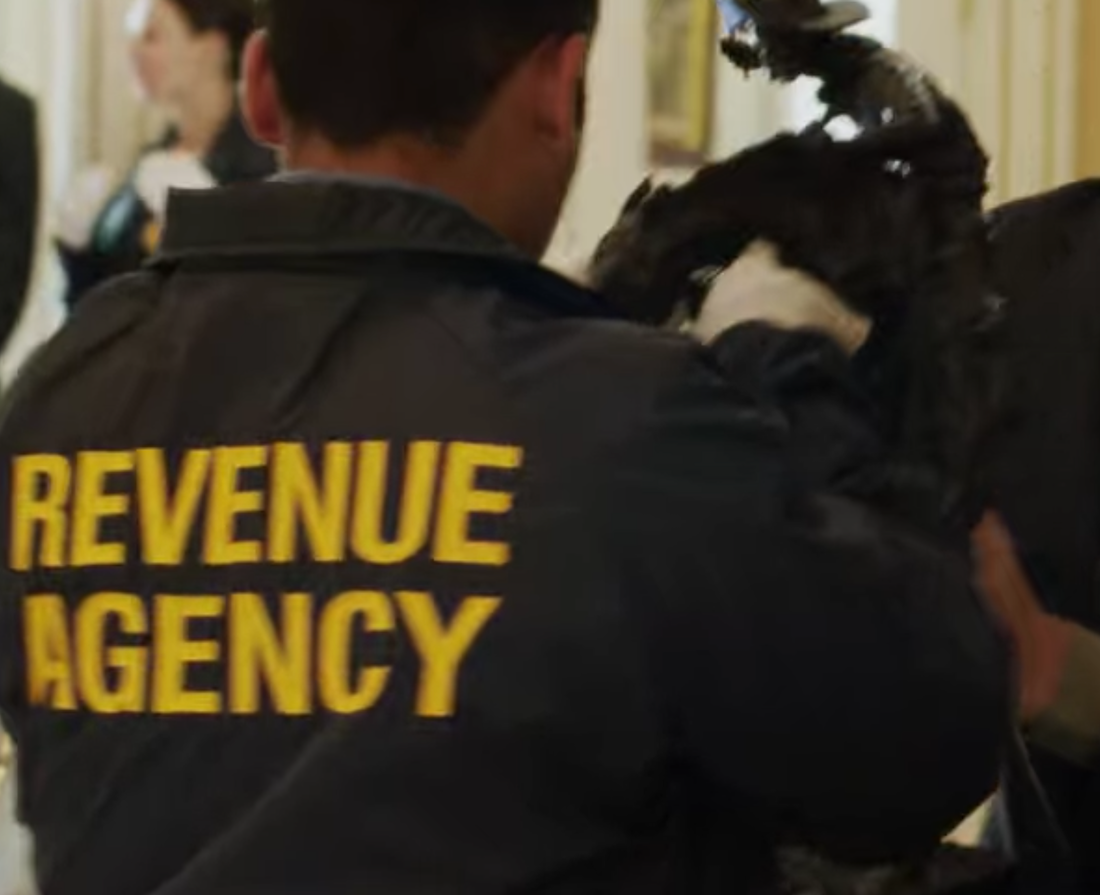
I’m still trying to wrap my mind around what kind of a sick person wants to get paid to destroy another person’s life. DESTROY ANOTHER PERSONS’ LIFE!
In the United States, the tax agency is called the Internal Revenue Service, and their jackets are printed with “IRS Revenue Officer” or “IRS-CID Police.” CID is the Criminal Investigation Division. Using the clue of the jackets and Dan Levy’s proclamation, we’ll look at this question under Canadian law.
WHAT HAPPENED TO THE ROSES?
In the first five minutes of the pilot episode, Johnny Rose calls a person named Eli a “son of a bitch.” Turns out Eli was the family’s business manager who was like “family” and was in charge of the Roses’ finances. The Revenue Agency officer then tells Johnny, “Eli really did a number, Johnny. He took everything,” and explains that Eli has run off to the Cayman Islands.
The phrase “He took everything” indicates to me that their business manager stole the majority of their assets. The Netflix episode description also states that “their business manager loots their family fortune,” which indicates to me that Eli both took the cash and left a big ol’ tax bill, especially since Johnny also says, “He was our business manager. He was supposed to pay taxes.”
The Revenue Agency officer then tells the Roses that there was a “very small amount set aside” for the family and also “one asset the government has allowed [the Roses] to retain” – the town of Schitt’s Creek.
Since Eli took “everything” – presumably their cash – then whatever physical property the Roses had left would be what the Canadian government would go after to satisfy the debt of unpaid taxes. Let’s discuss how that works.
WHAT HAPPENS WHEN YOU STIFF THE CANADIAN GOVERNMENT?According to the Canadian Revenue Agency (CRA), “Any amount you owe is payable in full immediately when you're assessed.” If the Roses failed to pay the CRA in a timely fashion, they were charged “compound daily interest at the prescribed rate on any amount owing.” Whatever amount the Roses owed was also subject to a daily interest rate, so their tax bill ballooned up even higher.
Since the Roses did not pay the outstanding debt to the CRA or contact the CRA to discuss payment plans, the CRA was entitled to take legal action to collect the unpaid amount. That legal action could have been garnishment, which means the CRA would go into bank accounts and seize the funds. Since Eli apparently took all of the Roses’ money and fled the country, that would not likely be successful.
Since the garnishment wouldn’t work so well, the CRA could put a lien on the Roses’ home or other large assets. That means, if the Roses tried to sell the property, the tax debt would get paid first.
What happened in the pilot episode was even more severe than just a lien. It is called a seizure of assets. First, the CRA would have gone to court and gotten a written command or formal order in favor of the Crown (the Canadian government) that allowed the CRA to seize and sell the Roses assets and property. Under Canadian law, the CRA can do this without notifying the Roses. If you think about it, it makes sense. You know you’re supposed to pay your taxes. Although they relied on their “business manager,” the liability still falls on the Roses as the taxpayers.
On the CRA website the agency states that it will seize property like: “your car, boat, artwork, cottage, rental property, or personal residence.”
Lock up your cottages, y’all. The CRA ain’t messing around.
After the CRA seized the Roses’ assets, it would sell them off to pay both the tax debt owed and all of the costs associated with selling the assets. If the sale proceeds didn’t satisfy the whole tax debt, then the Roses would still be liable to pay the remaining amount. Tax debts are not dischargeable in bankruptcy, either.
The Canadian Broadcasting Company recently reported that asset freezes and seizures were on the rise, with the CRA using provisions of the Criminal Code to enforce tax debts. Since tax evasion is technically a crime, then money retained and not used to pay taxes are fruits of that crime.
So, to the question…
Would the Roses realistically have been able to keep those items?
During the pandemonium of the asset seizure, Johnny shouts at Moira, “We’ve got 15 minutes to collect our personals.” Of the assets being seized in the house, it appeared to be large piece of furniture, statues, and large pieces of jewelry and expensive designer bags, not personal items like clothes or shoes.
When the family arrives in the town, they have luggage, duffle bags, some cardboard boxes, and cases containing Moira’s extensive wig collection.
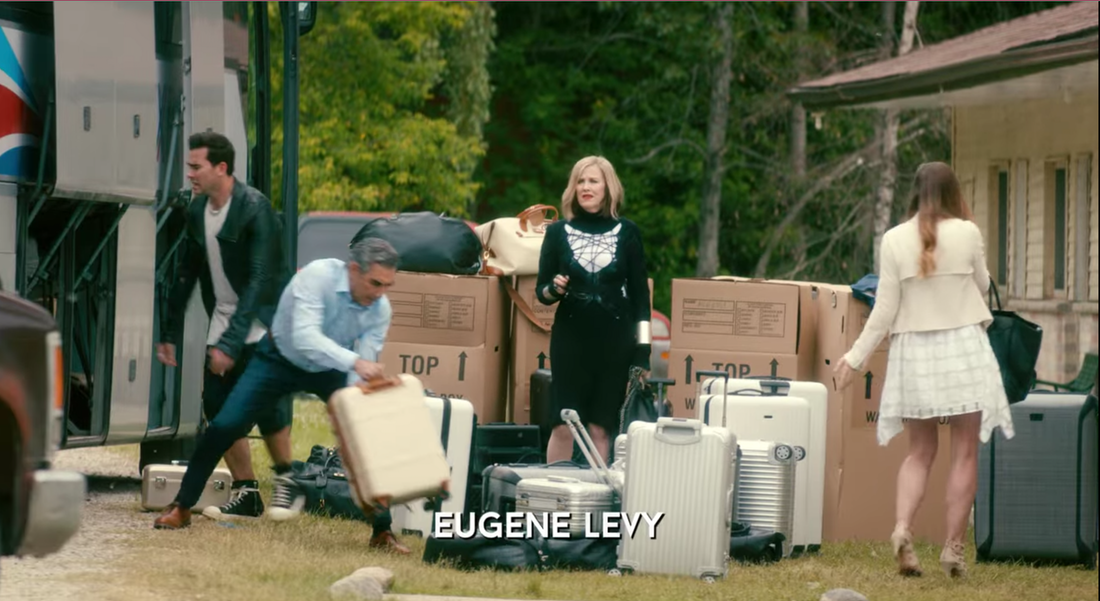
75% of the suitcases are filled with wigs.
The CRA agents came to seize assets of value that could be sold to satisfy the Roses’ tax debt. Their enormous house and various other properties would probably make the largest dent, then the larger, more valuable personal property pieces would be the next most valuable.
Though they wear some incredible designer clothes, taxing authorities don’t generally seize clothing. In the United States, the IRS will also allow individual taxpayers to keep “tools necessary for the trade, business or profession of the taxpayer,” which could arguably include their phones and laptops.

The looks of an icon
As for Moira’s jewelry, it’s not as recognizable as her designer clothes. For instance, the iconic panther brooch was created by the production designer, Debra Hansen. It later sold at a charity auction for $3,200, but that’s likely because it was a part of the show and not because of its inherent value.

Rawr! Look at that sweet brooch.
Many of the other pieces were either from the costume designer’s own collection or were costume jewelry, though there were some finer pieces layered in as well, according to this interview with Debra Hanson.

SO many layers of necklace
If Moira somehow successfully hid those assets and the tax debt got paid off with everything else the CRA took, she would be able to keep those items. Also, she’s Moira fricken Rose. She can do whatever she wants. PROOF: Check out this iconic collection of legendary Moira moments.
I hope that answers your question, Kelly!
Got a question? Submit it here. They can be legal what-if questions, questions on current events, or questions about the legality of actions in TV shows or movies you’ve seen. I never ever want to answer your personal legal questions, so don't send those. Love you, but I don’t do that.
***
This piece first appeared in Sunday Morning Hot Tea. Subscribe so you don’t miss another piece.

Legal Question: Ever Heard of a Camera? Why Do We Use Courtroom Sketch Artists?
This week’s question is from Alex via the form. Alex asks:
I just watched Evil Genius on Netflix and was struck by the interview with the courtroom artist. He described his shifting interpretation of the defendant as the trial progressed, and it made me wonder: what is the role of a sketch artist in a courtroom? If they're present to visually document the trial, why not a camera? Surely photo or video would be a more objective recording of proceedings?
Also, on the theme of documentation - what does the stenographer produce on that little baby keyboard?! Hope you're well - thanks for brightening up some dreary English Sundays!
Great question, Alex! I hope you’re doing well, too. I hope your English Sundays are less dreary these summer days.
It’s been awhile since I have watched Evil Genius, but I flipped on the last episode to hear the part you referenced. The courtroom sketch artist described his interpretation of the defendant to the documentarian, saying:
“Early in the case, I wanted to bring out the – for lack of a better word - the animal. I wanted to bring out the villain in my illustrations – dark tones, dark eyes, wild hair. After I see her mingling with you and some of the other people and being this charming character, I found myself today starting to soften the likeness that I’m illustrating of her.”
Here are two pictures, one of the artist’s “villain” rendering earlier in the trial:

And one after he “softened” her likeness:

A HISTORY OF ALLOWING CAMERAS IN THE COURTROOM
The 1935 trial of Richard “Bruno” Hauptmann for the Lindburgh kidnapping drew tons of media scrutiny. Cameramen were climbing on the lawyers’ tables and blinding jury members and witnesses with their flashbulbs. In response to the chaos, the American Bar Association adopted a rule that banned cameras from courtrooms just two years later.
Federal Rule of Criminal Procedure adopted in 1946 later mandated that: “The court must not permit the taking of photographs in the courtroom during judicial proceedings or the broadcasting of judicial proceedings from the courtroom.” Then in 1972, the national policy-making body for the federal courts known as the Judicial Conference of the United States, adopted a prohibition against “broadcasting, televising, recording, or taking photographs in the courtroom and areas immediately adjacent thereto.”
In the 1960s, the state of Texas ignored the ABA’s rules and allowed cameras in the courtroom, but that was only for state-level proceedings. That didn’t go so well, and the Supreme Court actually overturned a Texas criminal conviction based on excessive media coverage of the trial in the decision Estes v. Texas, 381 U.S. 532 (1965).
In 1981, the unanimous Supreme Court decision, Chandler v. Florida, 449 U.S. 560, didn’t go so far as to mandate cameras in the court room, but paved the way for state courts to allow cameras during proceedings.
As of 2006, all 50 states allow for some type of camera in the court. There have been some changes made regarding civil cases in federal courts, as well as naturalization and other ceremonial events. But to this day, photographs and video cameras are prohibited in federal criminal trials in federal district courts.
The crime at issue in Evil Genius is bank robbery, which falls under federal criminal jurisdiction. This is why they needed a courtroom sketch artist to document the proceedings.
WHY DO WE NEED SKETCH ARTISTS?
When cameras are banned from court, the public and the media rely on courtroom sketch artists to capture a visual representation of what happened. There is no prohibition on sketch artists in the courtroom. Some may be treated as members of the press and required to sit in a specific area of the courtroom. Others may be treated like regular spectators.
While every artist’s process varies, many make rough sketches at the time of the court proceeding and make notes of details. Then they later finalize the sketches before selling them either to newspapers or TV stations.
You are right, Alex – a camera would be a more objective documentation of the proceeding. The pros and cons of cameras in the courtroom have been debated for decades. While some argue that it offers greater access to justice and accessibility, others say it can be a distraction and result in an unfair trial for the defendants.
Different constitutional factors are at play – while the First Amendment guarantees a free press, it doesn’t guarantee that press can send cameras anywhere. Justice Earl Warren reasoned in the Estes case that, as long as the press could send in reporters to write down what was happening, their First Amendment rights were not infringed upon.
Similarly, the constitutional due process rights of the accused should be protected. The court in the Chandler case held that a state allowing cameras in the court room does not necessarily infringe on a defendant’s constitutional rights so long as the allowance does not infringe on “fundamental guarantees” under the constitution. For instance, a state would have to hear arguments from a defendant on why cameras may bias the jury or deprive him of some other right.
You make a good point that a camera is objective. The Evil Genius sketch artist admitted that he let his emotions color his interpretation of the defendant. At the same time, doesn’t that somewhat represent how she looked? If, at first, she was rougher and more aggressive, but over time became more likable, then he captured what she “really” looked like, maybe even better than a camera. But either way, cameras weren’t allowed since it was federal district court, so his interpretation is all we have.
WHAT DOES THE STENOGRAPHER PRODUCE ON THAT BABY KEYBOARD?
Exact transcripts of a trial. How do they do it? No clue. I have been recorded by a stenographer in open court (who repeatedly asked me to slow down). I also just watched five videos on YouTube. I am still struggling to explain just how they do it. I know they use their baby keyboards to record everything that is said, word-for-word, and do it at 200+ words per minute, which is incredible.
They do it using a special keyboard that is laid out as such:

They can also add in custom dictionaries – almost like iPhone keyboard shortcuts – where a quick letter combo brings up an often-used phrase in court so they can easily keep up with the proceedings.
Here are some examples:
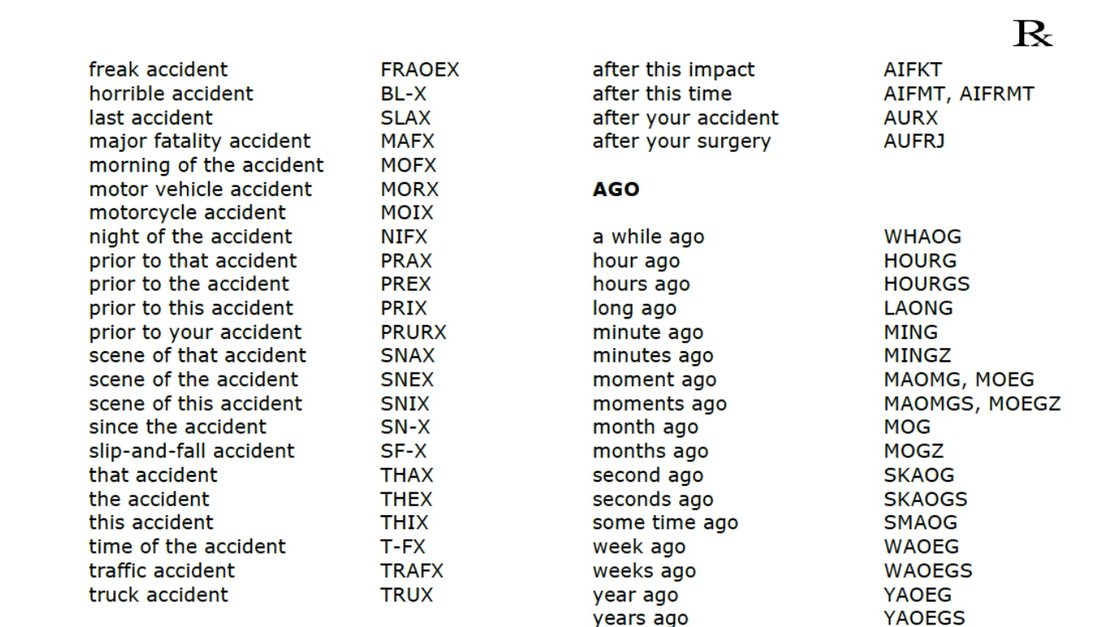
Using their fancy little keyboards and a connected laptop, court reporters produce a clear transcript of proceedings, delineating between speakers and obtaining clarification when needed. They are more accurate than voice-to-text software and provide human cognition that computers just can’t compete with.
They do an incredible service along with sketch artists. Without them, we wouldn’t have records of important proceedings like the ones on display here at the Library of Congress.
I hope that answers your question, Alex!
Got a question? Submit it here. They can be legal what-if questions, questions on current events, or questions about the legality of actions in TV shows or movies you’ve seen. I never ever want to answer your personal legal questions, so don't send those. Love you, but I don’t do that.
***
This piece first appeared in Sunday Morning Hot Tea. Subscribe so you don’t miss another piece.

Legal Question: Tow Up
This week’s question is from Austin who asked me in-person. Austin asked:
How is towing not a violation of the Fourth Amendment?
Great question, Austin! I am going to quote from some SCOTUS decisions in this answer, but I’m not going to give you footnotes or citations because it’s Sunday morning and it’s early. Just know if you see quotation marks, it’s from the Court.
The Fourth Amendment (probably my favorite Amendment to discuss) protects the right of the people to be secure in their persons, houses, papers, and effects, against unreasonable searches and seizures.
See how it doesn’t say we are secure from ALL searches, just “unreasonable” searches. Generally, searches without a warrant are automatically unreasonable unless they fall into one of a few exceptions.
The exception that applies to towing is called the “community caretaking” exception. All these exceptions have been created by the Supreme Court, as it interprets the Fourth Amendment and applies it to specific cases. The community caretaking exception was developed in a 1976 Supreme Court decision called South Dakota v. Opperman.
In that case, the Court explained that police can impound cars to protect “public safety” or “community caretaking functions.” Those functions include towing “disabled or damaged vehicles” and “automobiles which violate parking ordinances, and which thereby jeopardize both the public safety and the efficient movement of vehicular traffic.” The Court called that right of the police to tow cars for public safety “beyond challenge,” so it’s a pretty solid reason why someone’s car can get towed.
The only time that “community caretaking” exception could be violating the Fourth Amendment is if that supposed caretaking was simply a pretext, or an excuse, for police to search a car on suspicion of criminal activity. When deciding that, courts have to analyze whether towing for purposes of “community caretaking” was reasonable, based on the facts and circumstances encountered by the officer at the time of the tow.
Some reasons why police may tow a vehicle is to protect it – for instance, if it is likely to be vandalized or stolen. If that is the police’s reason for towing the car, the court would look at the facts and circumstances: are cars frequently stolen in that area? Is there something damaged on the car, like a door lock or window, that would make it susceptible to being broken into?
Once they have towed the car, cops can perform an “inventory search” of the vehicle. The Court has held that an inventory search can’t be “a ruse for a general rummaging in order to discover incriminating evidence.” Giving cops free rein to dig through a car could lend itself to that “general rummaging.” To prevent that, the Court demands that there be a “single familiar standard” in place to guide the police and keep them to the task at hand – inventorying the items in a car that has been towed to protect the police and the car owner.
In order not to violate the Fourth Amendment, the police standard must “sufficiently limit discretion of law enforcement officers to prevent inventory searches from becoming evidentiary searches.” This means the policies and procedures need to be clear and strict to keep the police on-task when inventorying items.
To that end, the policies and procedures should have three purposes, according to the Court. These are “(1) protecting the property of the vehicle’s owner, (2) protecting the police against claims or disputes over lost or stolen property, and (3) protecting the police from danger.” The danger could be explosives or other harmful items inside a car.
The standards are important in the Court’s opinion because they help guide police “who have only limited time and expertise to reflect on and balance the social and individual interests involved in the specific circumstances they confront.” This means the procedures provide a quick and easy-to-follow guidance when police have to jump in and inventory items in a car.
If police find illegal stuff when conducting the inventory, those items can be admissible as evidence agains the driver whose car was towed. Sometimes, police wrongfully pull over a car or wrongfully tow the car. That’s when a car owner can challenge whatever police found when unconstitutionally searching their car.
There are tons of scholarly articles written on and a long list of cases discussing these concepts. But you didn’t ask for all that, you asked how towing isn’t a violation. Here’s the TL;DR version —
Towing doesn’t violate the Fourth Amendment if the towing was for public safety. Just because police tow your car does not give them free rein over the contents. But they can inventory the items, and if they see something in plain view, that can be used as evidence against you. They can’t “generally rummage” through your stuff and they have to follow a policy meant to protect your stuff, protect the police from claims of stolen items, and protect the police from danger.
Thanks for asking, Austin!
Got a question? Submit it here. They can be legal what-if questions, questions on current events, or questions about the legality of actions in TV shows or movies you’ve seen. I never ever want to answer your personal legal questions, so don't send those. Love you, but I don’t do that.
***
This piece first appeared in Sunday Morning Hot Tea. Subscribe so you don’t miss another piece.
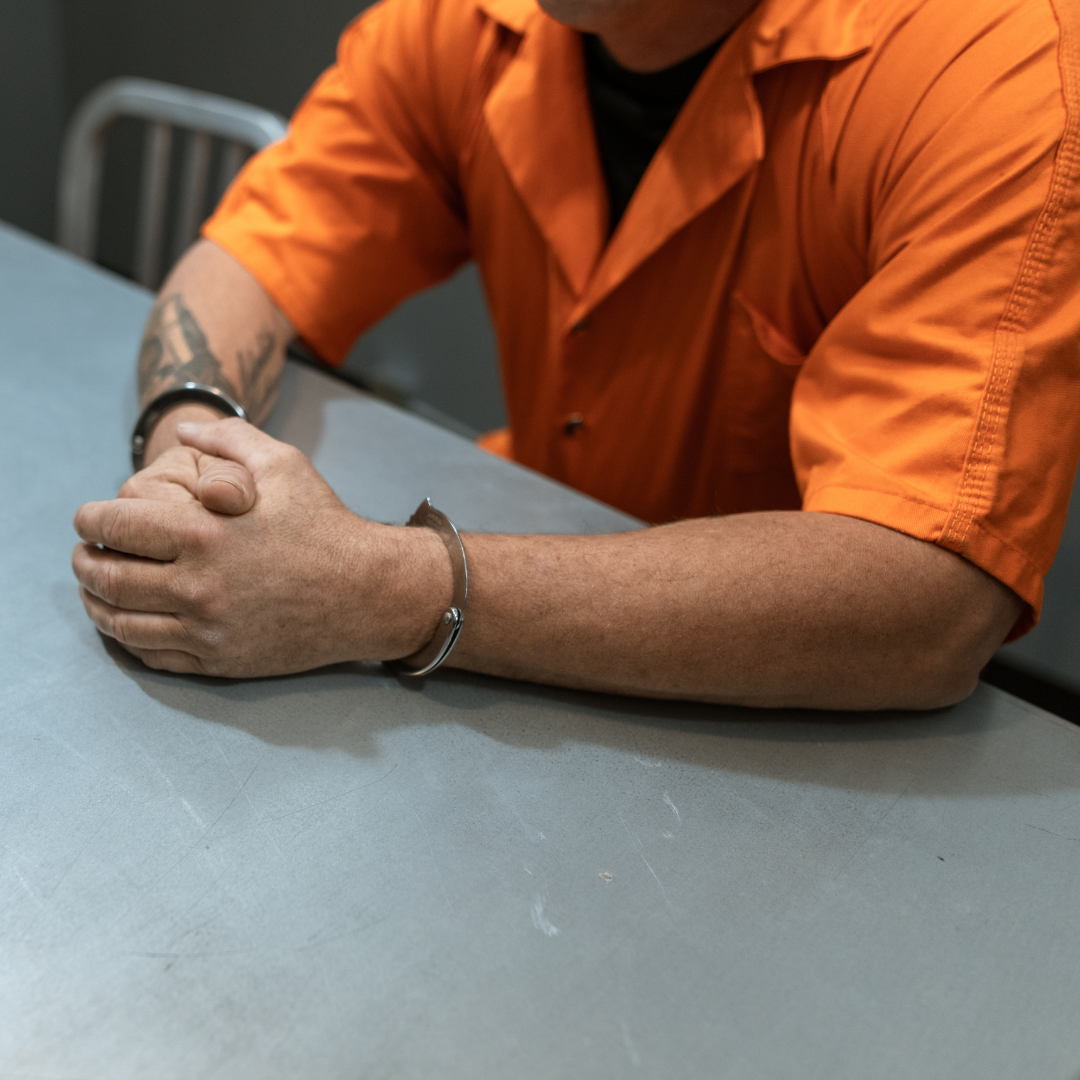
Legal Question: Bail After Pleading Guilty and Witness Protection
This week’s question is from Holly R. via the form. Holly asks:
In the mind-boggling stupid but oh so fun “Good Girls,” criminal husband Dean is arrested by “the Feds” for money laundering and counterfeiting. While in jail, he pleads a guilty (or at least the agent tells his actually guilty wife he does). In a later episode, there is talk of bailing him out. 1) What happens after you plead guilty to federal charges? 2) When can you actually be freed on bail? 3) Do you actually get a salary when entered into Witness Protection?
Great questions, Holly! I will be upfront with you and say I have never watched “Good Girls” though looks pretty cute and has an all-star cast. Please note, this contains some spoilerish things for “Good Girls” so if you haven’t finished the most recent season, beware. Let me take your questions in turn:
1) What happens after you plead guilty to federal charges?
Most of the time, you are remanded to custody - locked up - but not always.
Pleading guilty means there will be no trial to determine guilt or innocence. Since Dean is copping to the guilt, he would no longer be able to rely on the constitutional presumption of innocence. That constitutional right is why people who have only been accused of a crime but not yet convicted are eligible to be released on bail. That right has limits, of course. For instance a “public safety exception” exists in most states. This means that, based on the underlying crime, pre-trial bail can be denied if the crime is a capital crime, violent felony, or sexual assault, depending on jurisdiction.
2) When can you actually be freed on bail?
Because Dean wouldn’t need a trial, he would not be eligible for pre-trial bail. That doesn’t mean he would NEVER be granted bail. Sometimes a federal defendant can ask for bail while awaiting sentencing. They usually do this so the defendant can get their lives in order before going to jail for a long time. It is not as common as pre-trial bail, but it is certainly not unheard of.
The statute allowing judges to grant bail to a defendant awaiting sentencing is 18 U.S.C. § 3143. This statute says that a person who has been found guilty of an offense (even by pleading guilty) should be detained UNLESS the judge finds, by clear and convincing evidence, that “the person is not likely to flee or pose a danger to the safety of any other person or the community if released.”
If a person is found guilty of a crime listed in an earlier section (3142), including a crime of violence, a crime where the maximum punishment is death, and a few other exceptions, then the judge “shall” order them into custody. The only exception in that case is if (1) the judge finds that a motion for acquittal or new trial would be granted, OR (2) if the U.S. attorney recommended that the defendant not be imprisoned AND the judge finds that the person is not likely to flee or pose a danger to the community.
From what I gather, Dean did not plead guilty to a capital offense or violent crime. Based on my Googling of recap articles, it appeared to be more like money laundering or some financial crime. As such, it would be conceivable that he may be able to ask for bail awaiting sentencing. SPOILERS: the articles also showed him already in jail, so I’m guessing the whole bail thing didn’t work out…
3) Do you actually get a salary when entered into Witness Protection?
You do get compensation, but not exactly a salary. According to a report from the Department of Justice called “Fees and Expenses of Witnesses,” the costs associated with the witness protection program usually cover: “subsistence, housing, medical and dental care, travel, documentation, identity changes, one-time relocation, and costs associated with obtaining employment.”
According to the book WITSEC: Inside the Federal Witness Protection Program by Pete Earley, the families get a small stipend for about a year – around a few thousand dollars per month for a family of four – until they can secure employment. They are provided with sufficient funds to obtain a car and modest housing.
One issue that comes up for those in the Witness Protection Program is lack of credit. You have a new identity but no credit, so buying a house or car may be difficult with no credit and a shell of an identity. The witnesses are also supposed to get jobs with no references or list of prior employment. Many people in WITSEC who had professional careers that required licenses, for instance a lawyer or an accountant, would also have to completely change their field of work so as not to be detected.
So while they don’t quite get a full-time salary for the rest of their life, they do get a monthly stipend for a time, help with gaining employment, and help maintaining a place to live and transportation.
Here is an in-depth article about the economics of people in the Witness Protection Program if you want more details.
Thanks for the questions, Holly!
Got a question? Submit it here. They can be legal what-if questions, questions on current events, or questions about the legality of actions in TV shows or movies you’ve seen. I never ever want to answer your personal legal questions, so don't send those. Love you, but I don’t do that.
***
This piece first appeared in Sunday Morning Hot Tea. Subscribe so you don’t miss another piece.

Legal Question: Say It or Regret It - Deathbed Confessions
This week’s question is from Ryan H. who asks:
Two-part question!
1. How do death bed confessions work? As people approach death in general, cognitive abilities tend to deteriorate as well. If there is evidence of decreased cognitive function, are statements taken more or less seriously? Are the things they admit to used for evidence or put into the public record for unsolved crimes? What if they were a person of interest?
2. Second part, what if the dying person discloses classified information? For example, let’s say Grandpa J Allen Hynek gushes out all of this info about UFOs to his family/nurses before passing away. Are they now legally bound to keep that information to themselves, or can they disclose this whenever because they did not take an oath/sign papers agreeing to keep the UFO information confidential? (I assume the medical staff would need to maintain confidentiality regardless due to HIPPA). Thanks a bunch!
Great questions, Ryan! Let’s break them down.
How Do Death Bed Confessions Work?
First, the concept of a deathbed confession is not really a legal one. Though people can confess to crimes as they’re dying, they can just as easily confess the location of a hidden family treasure, or that they never really liked their third child, or that they were secretly in love with someone besides their spouse all along.
Death Bed Confessions in Court
In the legal sense, death bed confessions can be used in court as an exception to the hearsay rule, but only in limited circumstances. The confusing and convoluted legal definition of hearsay is generally accepted as “an out of court statement offered to prove the truth of the matter asserted.” In normal human speak, it is he-said, she-said offered as evidence at trial to prove that a fact is true.
For instance, if you saw me do a crime, you could testify to that fact, right? But what if you told your mom that you saw me do a crime, then the prosecutors wanted your mom to testify? That wouldn’t fly under the prohibition on hearsay. Your mom is testifying about something you said to her; not something she saw.
This is important because we all have a Sixth Amendment right to be confronted with the witnesses against us. This means having a meaningful opportunity to cross-examine someone who testifies against you. If your mom wants to testify that you told her that I did a crime, that violates my constitutional right because I wouldn’t have an opportunity to ask you - the witness to my actions - any questions.
Exceptions to Hearsay
But what if you weren’t available to testify that I did the crime, and all the prosecutor had to go on was your mom’s testimony? Under the Federal Rules of Evidence (“FRE”), which many states’ rules of evidence mirror, there are certain exceptions to hearsay when the declarant – in this case, you – are unavailable. One of these is a dying declaration. The FRE call it a “Statement Under the Belief of Imminent Death”.
In a prosecution for homicide, a statement from the victim who believes that they are imminently dying, is admissible if the statement is about the cause or circumstances of the victim’s death.
This means if the crime that you saw me do was attacking you so hard you thought you were going to immediately die (sorry about that!!), then a statement you make to your mom about how you ended up wounded would be admissible.
If there is evidence of decreased cognitive function, are statements taken more or less seriously?
The whole theory behind dying declarations are that a dying person has no reason to lie. A 1789 case in England called The King v. Woodcock allowed testimony of a dying woman about the cause of her death (beating by her husband, sadly). The court reasoned that “when the party is at the point of death, and when every hope of this world is gone: when every motive to falsehood is silenced, and the mind is induced by the most powerful considerations to speak the truth.”
The idea of allowing dying declarations is also related to religion, with courts reasoning that a person on their deathbed is less likely to lie, given they’re quickly on their way to meet the great judge in the sky.
Arguments by legal scholars against dying declarations are in line with your question. Dying declarations are perhaps not as reliable as courts have believed for centuries. Like you asked – what if someone has mentally declined, either before their death or in connection with their imminent death? What if someone has a grudge, are not as religious as courts would hope, and they use their last dying breath to lie about someone else or clear their own name?
Those are the reasons that some legal scholars think dying declarations aren’t trustworthy enough to be automatically considered exceptions to hearsay. Nevertheless, courts still allow them regularly so long as they fit the requirements of the rule.
Are the things they admit used for evidence or put into the public record for unsolved crimes?
Sometimes, yes, information from deathbed confessions can been used to solve unsolved crimes.
This actually happened in New Hampshire in the late 1980s. A 61-year-old man named Clifton Chambers confessed to his daughter, Melissa, that he helped his son, Robert, bury the body of a man Robert killed in a fight. Clifton instructed Melissa to tell the police his story once he was dead. The next day, he suffered a cerebral hemorrhage and died.
Melissa fulfilled her father’s wishes, telling police that the now-dead man confessed to her that he helped bury the body of the man his own son (and her brother) killed. Police obtained a search warrant, dug up the son’s front yard, and 25 feet in the ground found the body of the victim, Russell Bean, who had been buried for a decade.
Though the daughter’s report led to the search warrant and the discovery of the body, a grand jury failed to indict Robert Chambers because of lack of admissible evidence.
In that case, the police acted on the death bed confession of the elder Chambers, but the court was not able to admit it as evidence since it was hearsay that did not fall into an exception. It was not made imminently, as Papa Chambers didn’t die until a day after saying it. It was also not regarding the circumstances of his death.
Though he was not indicted, the younger Mr. Chambers was later sentenced to 25 years in jail for sexual assault, totally unrelated to the murder he allegedly committed decades earlier.
In this case, the confession “solved” the case in a sense, although it did not lead to a conviction.
What if the death bed confessor was a person of interest?
This actually happened in the JonBenét Ramsey case. Glenn Meyer lived in the basement of the house across the street from the Ramseys and was, according to his ex-wife, “obsessed” with JonBenét. An attendee at the party the Ramseys threw the night of JonBenét’s murder confessed on her death bed that she saw Meyer approaching the Ramsey house the night of the party. John Ramsey also remembers Meyer approaching the house that night, but didn’t recall why.
Once Meyer died, his ex-wife Charlotte Hey told the National Enquirer that her ex-husband confessed to killing JonBenét. (Warning: link contains graphic photos).
For some, this answered the question of who killed JonBenét Ramsey. Others think it was fabricated by the ex-wife for revenge. Still yet, even if Meyer did confess, the National Enquirer reported he was suffering from dementia and had developed an obsession with JonBenet in his later years.
You can see the issue with a death bed confession in this case. It doesn’t really “solve” anything. Even if Meyer was telling the truth, he is dead and can never be convicted.
Now to your second question…
What if the dying person discloses classified information?
The espionage statute makes intentionally disclosing classified information without authorization a federal crime. Conviction can result in a jail sentence of up to ten years in prison, a fine, or could treason charges.
If, however, you’re dying, I don’t suppose it much matters. Spill all the classified beans you want. The federal government has no jurisdiction in the afterlife.
FOR EXAMPLE: let’s say Grandpa J Allen Hynek gushes out all of this info about UFOs to his family/nurses before passing away. Are they now legally bound to keep that information to themselves, or can they disclose this whenever because they did not take an oath/sign papers agreeing to keep the UFO information confidential?
In this example, let’s assume Grandpa Hynek has security clearance and breached it in revealing the information to his family/nurses. His family would then be in possession of government secrets. Under the espionage statute at 18 USC Section 793, the federal government contends that it can prosecute both government officials and private citizens for releasing certain types of classified information.
Section 793(e) covers folks with “unauthorized possession” of information, and makes it a crime to willfully communicate, deliver, or transmit information relating to the national defense that the person has reason to believe could be used to the injury of the United States to “any person not entitled to receive it.” That’s a pretty broad law. Some commentators believe it is overly broad, so much so that it violates the First Amendment.
This means that, even though the family members didn’t sign an oath or anything, the broad federal statute covering classified information may make them criminally liable should they disclose it to “any person not entitled to receive it.”
Somebody better tell the Hynek family to keep those alien secrets to themselves!
Thanks for the questions, Ryan!
Got a question? Submit it here. They can be legal what-if questions, questions on current events, or questions about the legality of actions in TV shows or movies you’ve seen. I never ever want to answer your personal legal questions, so don't send those. Love you, but I don’t do that.
***
This piece first appeared in Sunday Morning Hot Tea. Subscribe so you don’t miss another piece.
Legal Question: What's All This Racket-eering?
This week’s question comes from Katie M.
“What EXACTLY is racketeering? I hear it all the time but have no actual concept of what it is.”
Excellent question, Katie. When most people hear the word “racketeering,” they think of the Mafia, which is spot on. When criminals get together and commit crimes repeatedly as part of a greater organization to make money, this “business” is called a racket. The mafiosos who participate in the racket are engaged in “racketeering.” The statutory definition is actually really broad by design so the feds can drag more bad guys in their net.
The federal racketeering law is officially called the Racketeer Influenced and Corrupt Organizations Act, commonly referred to as the RICOA or the RICO Act. This law was instrumental in punishing crime bosses because it allowed them to be charged for acts that they ordered others to commit. It closed the loophole that previously allowed a lot of crime bosses to get away with simply ordering other mobsters to commit murders and other crimes on their behalf.
Criminal Penalties for Racketeering
To convict someone of criminal racketeering charges, the government must prove five things beyond a reasonable doubt. The five requirements are in bold. My comments are in italics.
The government must prove beyond a reasonable doubt:
(1) that an enterprise existed; The exact definition of an “enterprise” is super vague, pretty much on purpose. “Any individual or group of individuals”can be considered an enterprise. It doesn’t have to be an official legal entity like a corporation and doesn’t even have to involve more than one person.
(2) that the enterprise affected interstate commerce; This is because, under the Constitution, the federal government only has jurisdiction over crimes that affect interstate commerce. Interstate commerce is also a pretty broad concept. We spend about half a semester on it in law school, but generally if something touches money wires, involves the internet, or crosses state lines, it can be said to affect interstate commerce.
(3) that the defendant was associated with or employed by the enterprise; The defendant does not actually have do the act to get busted. He just has to be associated with the enterprise. This is how crime bosses are charged for murders they ordered their underlings commit for them.
(4) that the defendant engaged in a pattern of racketeering activity; “Pattern” is super loose on purpose as well. There have been several SCOTUS decisions discussing what constitutes a pattern. Generally, it’s when there is evidence of past or possible future racketeering activities, also known as “predicate acts.”
and
(5) that the defendant conducted or participated in the conduct of the enterprise through that pattern of racketeering activity through the commission of at least two acts of racketeering activity as set forth in the indictment. The standard is basically the commission of 2 acts in a span of 10 years.
If the government can prove all five of those elements, the defendant faces some pretty severe penalties. The underlying criminal acts, known as “predicate acts,” under the RICOA include murder, drug trafficking, human trafficking, gambling, securities fraud, money laundering, and mail and wire fraud, among others. If the predicate act was murder, the defendant could face life in prison. Otherwise, the defendant could face twenty years in prison or more under federal sentencing guidelines.
The passage of the RICO Act also revived the concept of asset forfeiture, meaning the government can seize the ill-gotten gains from the racketeering activities, in addition to assessing fines.
Critics of the RICO Act have called it “an arbitrary penalty enhancer and prosecutorial bargaining tool.” The criticism follows that if prosecutors have the possibility of charging a defendant of multiple lesser crimes or charging them under RICOA, the prosecutor can threaten the RICO charge which carries stricter penalties in order to extract a guilty plea to the lesser charges.
This was the case with Michael Vick, the football player who participated in a dog fighting ring. Prosecutors were ready to charge Vick under the RICOA, but they instead accepted a guilty plea to a lesser charge to avoid the necessity of a trial. Vick’s guilty plea was extracted under threat of a RICOA charge and its 20-year possible sentence, exactly the scenario critics described. Side note: the “30 for 30” episodes on Vick discuss this, and they are incredible.
Civil Penalties for Racketeering
Individuals who have been damaged by the commission of a RICO action can also sue in civil court under the RICO Act to recover damages. In fact, several New England Patriots fans attempted to sue the NFL for racketeering based on the organization’s handling of the Tom Brady Deflategate scandal. A federal judge was not convinced, however, and the lawsuit was dismissed.
Other Famous Cases of Racketeering
One of the most famous racketeering convictions was that of Gambino crime family boss, John Gotti. The predicate acts that made up his racketeering charges included five murders, illegal gambling, obstruction of justice, and tax evasion. Because at least one of the predicate acts was murder, Gotti was eligible to be sentenced to life in prison, which he was.
William Rick Singer, the “mastermind” behind the college admissions scandal that saw Aunt Becky from Full House and Felicity Huffman in hot water, pled guilty to racketeering charges for running the whole enterprise. The predicate acts for his racketeering charge were things like mail fraud and wire fraud. He hasn’t been sentenced yet but faces up to 65 years in jail, fines, and forfeitures of the money he made from the bribes.
More recently, an anonymous source formerly affiliated with the Justice Department told Reuters that the government was exploring possible ways to charge the Capitol rioters with racketeering. The official DOJ spokesperson has not confirmed this. However, Senator Dick Durbin has advocated for using all available statutes to prosecute the rioters, including the RICO Act, which his spokesperson mentioned specifically.
The RICO Act was signed into law by President Nixon in 1970 to “win the battle” against organized crime by making crime bosses responsible for their foot soldiers’ actions. Whether that goal has been achieved or whether the RICOA has been misused to manipulate defendants into pleading out rather than going to trial seems to be a matter of perspective. Either way, it does provide prosecutors with an opportunity to pursue masterminds and mafia bosses for acts they ordered but didn’t commit.
I hope that answers your question, Katie! Thanks for sending.
Got a question? Submit it here. They can be legal what-if questions, questions on current events, or questions about the legality of actions in TV shows or movies you’ve seen. I never ever want to answer your personal legal questions, so don't send those. Love you, but I don’t do that.
***
This piece first appeared in Sunday Morning Hot Tea. Subscribe so you don’t miss another piece.