
In Defense of “Dicked Down in Dallas”
As I was researching our most recent Sinisterhood minisode, I decided to search Spotify for some songs about Dallas that I may not have heard before. Up popped Willie Nelson’s “Dallas,” an old favorite. Then I scrolled to Alan Jackson’s “Dallas,” a hit by anyone’s standards. Of course, Spotify offered me the theme song to the TV show Dallas. A hype song, but not what I was looking for
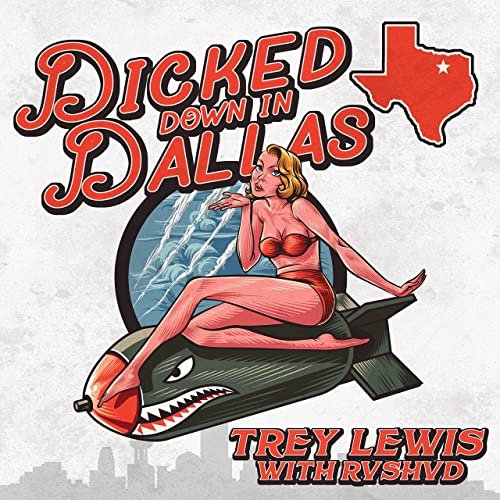
Then I spotted it. Sitting at the bottom of the search results was a tune by someone named Trey Lewis. A name and a song that I had never heard before. Familiar with Willie’s contribution and already tired of Jackson’s before the chorus even begun (Sorry, Alan, but it’s no “Chatahoochie,”) I clicked play on the new song.
Once the opening chords began, I fell in love. It’s a modern country classic. The strum of the guitar. The hit of the bass. The lyrics - pure poetry. Given the song’s liberal use of swears, I’ll issue a warning to you now - by proceeding further, you will see some naughty words. If you choose to listen along to the song while reading this - which I highly recommend - you’ll hear a lot more.
As I listened for the first time, I became outraged. It had nothing to do with the curse words. I sat there, hurt, wondering why no one in my life - not anyone who knows me personally nor anyone familiar with the podcast - ever bothered to send this song to me. After poking around on Google, I found that it went viral on TikTok in December 2020. That was a full year before I ever heard it. How dare you all let me down so hard?
Late to the party though I may be, I’m asking you to put aside any preconceived notions you may have based on the song’s title or the obscenity of the lyrics. Free your mind, open your heart, and join me on a journey into the majestic beauty of “Dicked Down in Dallas,” a song celebrating the beauty and independence of female sexuality.
“Dicked Down in Dallas” primarily catalogs the sexual exploits of a specific woman. Though the list of acts and geographic locations is long, at no point does the narrator ever slut shame her. He lists the various sex acts she engages in - including being “analed in Austin” and “buttf**ked in Boston” - but never assigns a moral value to her acts. He also doesn’t name her or directly identify her.
In the second verse, he veers into possible judgement, saying, “I wonder what her Daddy’d say,” speculating, “Maybe he’s the one to blame.” Given the narrator’s morally agnostic discussion of her actions throughout the rest of the song, I hesitate to jump to labeling this a judgment. Instead, I see this as a comment on the patriarchy’s harmful oppression that the woman (the “dickee” in this song) and every other female-identifying person has to suffer. If she wants to get “tore up in Tyler” and be free to “drop[] it like a tailgate,” she should be able to do so, without her actual “Daddy” or the proverbial “Daddy” of society judging her. And if either her father or society as a whole were so inclined to judge, their harmfully antiquated views of female sexuality make them “the one[s] to blame.”
In addition to the original song, there is a remix featuring singer Rvshvd (pronounced “Rashad”) that includes a bridge not in the initial version. The bridge offers the greatest simile in the history of music, as sung by Rvshvd himself. He observes the female protagonist to be “Poppin’ that cooter like a cap gun.” Who, except a poetic genius, would ever think to compare the enthusiastic way a female uses her sex organs with the white hot fire of a non-lethal fire arm?
The remix offers up a few additional lyrics that, upon first blush, appear to toe the line between acceptance and judgment. Rvshvd comments, “I’m a little concerned,” regarding the woman’s many exploits. However, his concern should not be read as judgment. Any of us, with the knowledge that a friend was getting “nasty in Nashville” to the point that “everyone knows her name” would express our concern as to whether she was getting nasty in the safest way possible (e.g., with the proper prophylactic measures in place).
It is also relevant to note that this song was released at the height of the COVID-19 pandemic. Rvshvd’s expression of concern was therefore more likely regarding her adherence to proper CDC guidelines and social distancing measures than any concern about her chastity or reputation.
The COVID concern is even more likely given his description of her generous lovemaking style as being “like a little league team, everybody gets a turn.” With that many participants engaging in the process, guidelines must be observed for everyone’s safety. Hopefully with everyone tested, masked, and vaxxed, she can run through that train with nary a sniffle.
The most beautiful part of “Dicked Down in Dallas” is the narrator expressing his ongoing interest in the female protagonist’s return, all the while acknowledging her otherwise full dance card. This is expressed perfectly when he sings, “Now I’m the one on my knees/Praying she’ll come back/Give me that sweet ass” despite his already knowing well that “she is getting dicked down in Dallas.” Fully aware of her myriad exploits, the narrator still wants her. This flies in the face of misogynistic expressions (both in real life and online) that classify a woman with a robust sex life as being impure or sexually undesirable.
The narrator here is not disgusted by her past (or present, for that matter). Rather, he reaffirms over and over his ongoing romantic interest in the ingenue, though she is “putting [him] through hell/f**king someone else.” If he were making a judgmental statement and planned to reject her for her sexually robust behavior, he would no longer express an interest to have her back. He could save the strain on his knees and quit praying for the return of her sweet ass.
The catalog of her various acts is not paired with any moral judgment. The only behavior for which he expresses a disdain does not involve her sexuality at all. Instead, it is her thoughtlessness as she took off “like a bat out of hell” headed out to begin (or continue) her sexual walkabout. The only thing he complains about is her series of abrupt departures without offering sufficient goodbyes.
His silence as to the moral value of her sexual escapades is proper given the pair’s ambiguous relationship status. Though the narrator is disappointed that she “left [him] all alone in Montgomery tonight,” nothing in the song points to the couple having an exclusive monogamous relationship. On the contrary, he laments that she “didn’t think twice about Amarillo” and that “Denver all but once crossed her mind.” If the narrator was the one left alone in Montgomery, but not the one left in Denver or Amarillo, then he has knowledge of other sexual partners in those towns who had suffered the same fate as he.
Yes, she may have made it with him in Montgomery, but he has no ownership over either the dickee or her body. Absent an agreement between the parties, he has no grounds to object to her behavior. Given the ambiguity of their relationship, that only affirms the beauty of “Dicked Down in Dallas.” He is in emotional turmoil at the natural end of their non-monogamous tryst, yet he never passes a negative judgement on her behavior.
He is able to express his feelings, voice his disappointment, and lament the ache of her absence but has progressed beyond the misogynistic need to lash out at the woman who has caused his heartache. The easiest path would be to sling mud, call names, and label her an unchaste woman. Yet, instead, he presents the reality as it is and expresses his feelings on the situation without assigning a moral value to her behavior.
The exaltation of the female protagonist is well deserved. There has not been a harder working character in a song since Dolly Parton’s “9 to 5.” She is traveling the country, which is a hassle in and of itself. Not only that, she is also getting tore up left, right, and center all along the way. This includes “suckin’ off ol’ what’s his name” in the Lone Star State as you are trying so hard to well as being both analed in Austin and buttf**ked in Boston. The singer's choice to name two seemingly similar acts in two different ways may be in an effort to delineate between two different acts, or merely a device to achieve poetic alliteration. In either case, it only further proves her endurance and ability to withstand great physical challenges.
Not only is she busy fogging up windows of all kinds (“Chevy’s, ‘Yotas, and Fords”), she is driving cross country in order to do so. Driving is exhausting. Driving AFTER you’ve been dicked down? That’s a super-heroic feat. Not to mention the price of gasoline and the general wear and tear on her car. And her ass.
At first blush, it would be easy to label this song vulgar and a transparent attempt to slut-shame a man’s ex. However, when the lyrics are examined, we see it is a highly evolved work of poetry, celebrating the female body’s capacity for hard work and difficult feats. It also gave us the phrase “poppin’ that cooter like a cap gun,” and for that I will always be grateful.
***
This piece first appeared in Sunday Morning Hot Tea. Subscribe so you don’t miss another piece.
Damn You, Billy Joel
Before the pandemic, I didn’t give a fuck about Billy Joel. I mean, I knew who he was. He’s the piano man. He plays at the bar, and they put bread in his jar. He is also the guy who really wants us to know that he did NOT commit arson. Like to a suspicious degree.
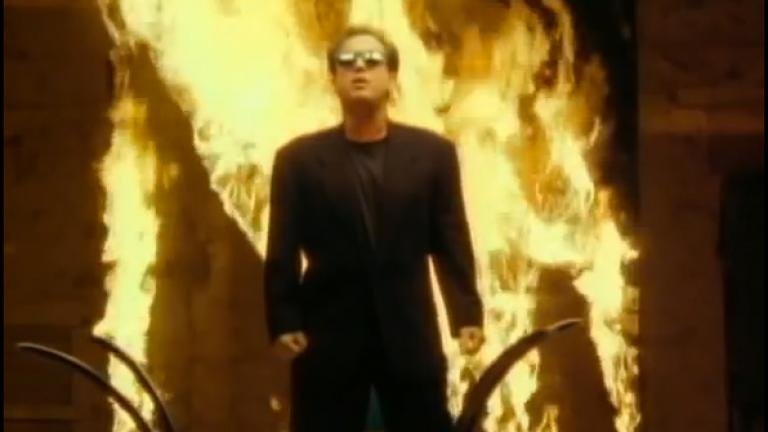
If you subtract the rocking melody and iconic music video and focus solely on the lyrics, “We Didn’t Start the Fire” is a word-salad cry for help. Any competent law enforcement official would hear that and immediately arrest him.
FBI AGENT
Mr. Joel, we understand there’s been an incident.
BILLY JOEL
Rosenbergs, H-bomb, Sugar Ray, Panmunjom
Brando, “The King and I” and “The Catcher in the Rye”
Eisenhower, Vaccine, England’s got a new queen
Marciano, Liberace, Santayana, goodbye
FBI AGENT
[troubled silence]
BILLY JOEL
ELVIS PRESLEY!
DISNEY LAND!
FBI AGENT
Get him out of here.
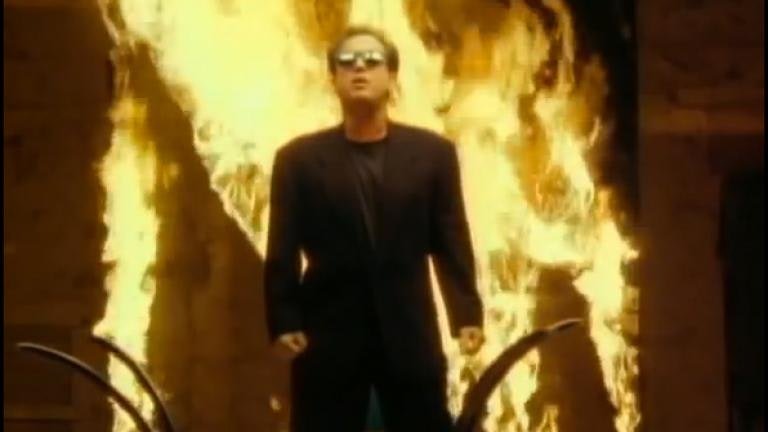
He 1000% started that fire.
So aside from knowing he definitely didn’t start any fires, I didn’t know much else about him. Frankly, I thought he was a bit overrated. That’s because I was a complete idiot.
I should clarify, I’m not a complete idiot. I’ve heard “Piano Man,” and yeah, it’s one of the most efficiently written musical short stories ever.
But still, I didn’t fully appreciate what he had cooking. Even more, I didn’t know he would begin sending me messages from the past in the form of his songs. Ok that sounds dramatic, but that’s only because it is.
This weird fixation began as a fluke around July 2020. We’d been locked up for about four months by then. I was working from home in my job as a private equity associate at a law firm and feeling very lucky to have a job that not only existed but also didn’t require me to leave the house.
The only problem? Pandemics are bad for the market. Bad markets are bad for private equity deals. We had little to no deal work.
Instead, I spent my days working on pro bono assignments, plugging in my headphones and powering through research projects.
I was on a 1970s playlist because in my soul I’m 63 years old. Up pops a song I’d never heard before. A sincere opening piano solo. A voice.
“They say that these are not the best of times, but they’re the only times I’ve ever known.”
Ooooof.
I stopped what I was doing to look up the song. It was “Summer, Highland Falls.”
“For we are always what our situations hand us. It’s either sadness or euphoria.”
The song absolutely wrecked me. I played it again. And then again. And again and again.
The lyrics rang out like an indictment.
“And as we stand upon the ledges of our lives with our respective similarities, it's either sadness or euphoria.”
I was privileged to sit, safe, at home researching legal responses to COVID-19 in vulnerable communities. Safe inside listening to the musical stylings of one of the greatest songwriters of all times. But something in that song ate at me, like I should be doing something else, something more.
Damn you, Billy Joel.
A few weeks later, I saw a job listing on LinkedIn for an “Elder Justice Fellowship.” It involved helping older adults who had been abused or financially exploited. So, like, not at all what I was currently doing.
I texted Meagan, my unofficial life coach and former “work wife” who herself had left the firm the previous October.
“Go for it,” she said.
“It’s a huge pay cut,” I said.
“You’ll figure it out.” She sounded sure. She always does.
I consulted a few other friends and family members. Then Billy chimed in, this time via another tune on the same album called “I’ve Loved These Days.”
“We dress our days
In silken robes
The money comes
The money goes
We know it's all a passing phase.”
He got me again. Damn you, Billy Joel.
I put in an application. I interviewed once, then again, then got an offer. It was time to leave the high paying, white shoe firm. It was all just a passing phase.
On my last day “at” the firm, I returned my laptop, said my goodbyes over Zoom, then called Paris to join me on the couch.
“Will you listen to this song with me?” I asked. He said of course he would. I played “I’ve Loved These Days.” Billy summed it up while I sat beside Paris and cried.
“So before we end
And then begin
We'll drink a toast to how it's been
A few more hours to be complete
A few more nights on satin sheets
A few more times that I can say
I've loved these days.”
The end of an era. Marked by a song that was written well over 40 years prior.
A few weeks later, my comedy home, Dallas Comedy House, closed. For good. Kaput. Gone. Forever. The night of the initial announcement, I sat up in bed, well past when Paris had drifted off and scrolled through picture after picture, saving them in a special album I could revisit whenever I wanted.
I shoved down how much it hurt by busying myself with the new job. I let up on the Billy Joel music, too. I cycled through a country phase.
But the other night I turned on Spotify while I was cooking dinner. There was Billy Joel again. Spotify said they thought I might like his songs. OH REALLY? YOU THINK??
After that, I put Turnstiles back in my rotation. Released in 1976, the record only runs 36 minutes, but it packs a lot of feelings in those moments. I decided I had to have that record, the physical record.
I looked through my collection, a combination of records from my parents and stuff I’ve grabbed from thrift stores or bookstores over the years. Inside, I found I already had two Billy Joel records – The Stranger and 52nd Street. Both great albums, but they’re not Turnstiles.
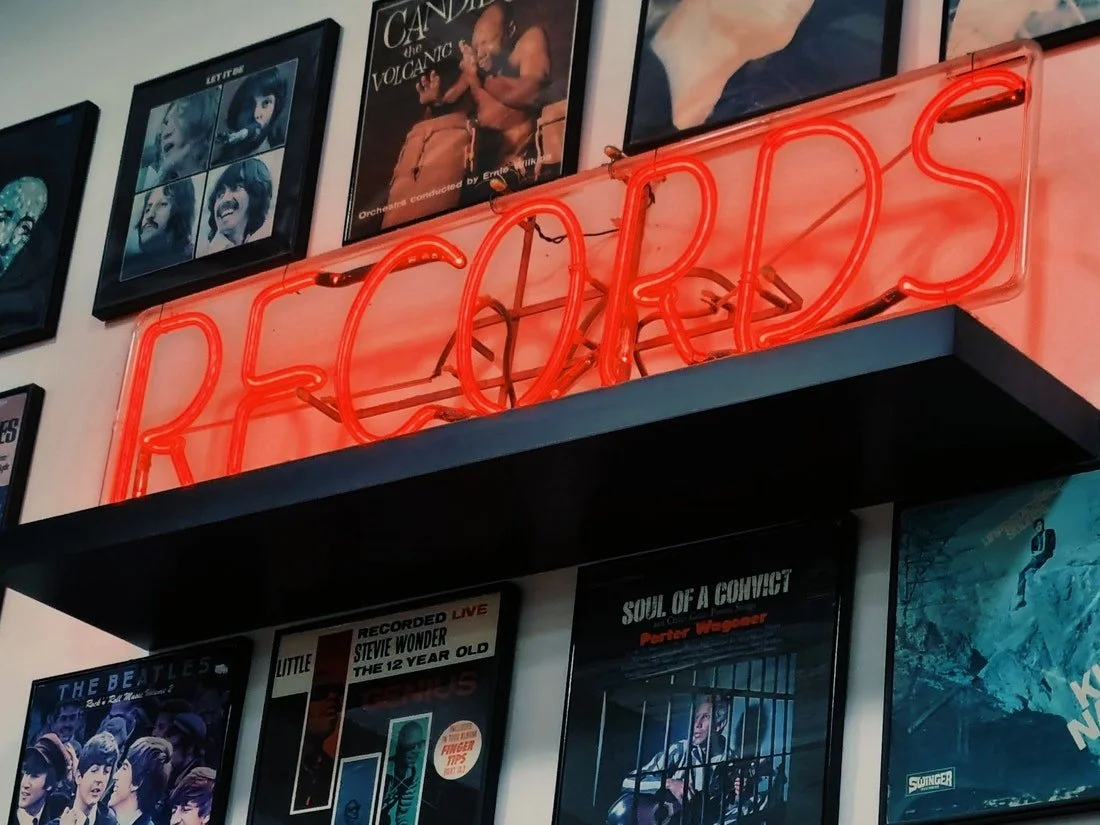
Photo by Paris Brown of our record store adventure
We ventured out on a Saturday to try and find this record. I stood before the J section at Good Records then again at 14 Records next door. No Turnstiles. At Half Priced Books, a helpful associate approached me as I thumbed past the Jacksons and Johns.
“I’ve got these,” he said, a stack of Elton John records in his arms. “Not sure what you’re looking for.”
“I’m trying to find Turnstiles by Billy Joel.”
“Ah, I haven’t seen that one in a while. Good record, though,” he said.
I left, disappointed, still on my search for a physical manifestation of a group of sounds that I could access any time I wanted with just the press of a button.
There’s something about having a physical album. It’s the same reason why I cling to my copies of Sgt. Pepper’s Lonely Hearts Club Band or Abbey Road. Why I hold Rumours so close to me. They’re tokens of my beloveds.
My mom won that Sgt. Pepper record from Dallas radio DJ Ron Chapman way back when the DJs gave records away on radio stations. He asked listeners to write in a list of all the famous faces that appear on the record’s cover. Little did he know, Seventeen magazine had recently published the list, so my astute future mom scribbled down the list and won the contest.
My dad walked into a record store and picked up my copy of Abbey Road. He took it home, and slipped the circle out of the cover. He sat it on the turntable and placed the needle just so until the unmistakable drum beat of that first song begins. When I pull the record from the sleeve and do the same, I’m transported, not just by the music but by the physical act.
I couldn’t find Turnstiles in person, so I settled for buying a used copy online. While I waited for delivery, I turned to the Spotify version during a run this week.
During the final few meters of my run, “Miami 2017” began. If you haven’t heard the tune, it is sung from the perspective of a man in the far-off future of 2017 telling his grandkid how New York was destroyed in the apocalypse. Fun stuff!
The song began just as I ran past the home of some comedy pals (Hi Kyle & Maggie!) I thought of them and comedy and our community as the song played. My mind shot to Deep Ellum, the Dallas neighborhood where the comedy house stood.
“I’ve seen the lights go out on Broadway.”
A frog climbed in my throat.
He went on:
“They turned our power down
And drove us underground
But we went right on with the show.”
I picked up my pace. By the time the song’s narrator ends up in Florida, I was full on sob-running. That’s where you’re running as hard as you can and audibly crying so loud that an older woman in a red SUV stops when backing out of her driveway to ask if you’re ok and then you point to your headphones and say, “Billy Joel,” and then she says, “Yes of course.”
All the photos I had sorted through back in August were on loop in my head. The stage. The lights. The songs. Sitting on a couch backstage, knowing that when the door popped open, no matter who it was, it would be great.
Then I thought of the lights out. Doors locked. The empty building. I sob-ran through the feelings – devastated, guilty, angry, powerless. It wasn’t all about DCH either. It was life, the way things were. Buildings, institutions, businesses, how it used to be – gone.
Every generation goes through change, through loss. But this one hits different. There is such a clear demarcation between then and now. Between before and after. Between March 2020 and March 2021.
So yeah, I want a physical record. I’ll keep it with all my others. I’ll give them to my kids someday. Let them set the vinyls on a turntable and feel how a song can dig its way into your brain but also kick you right in the heart. How music that’s powerful enough can help you quit one thing and start another. How it can bring healing and comfort and closure. And also how it can make you look like a bit of a wacko in public.
Damn you, Billy Joel.
***
This piece first appeared in Sunday Morning Hot Tea. Subscribe so you don’t miss another piece.
Legal Question: The Case of Snoop and the Stolen Gin & Juice
This question comes from Aaron:
“In the song Gin and Juice, Snoop Dogg claims that ‘I got me some Seagram's Gin, everybody got their cups but they ain’t chipped in.’ What steps would he have to take and what would be his burden of proof in order to recoup his money from them in court?”
Excellent question, Aaron. I think this one is particularly relevant given that we are close to New Year’s Eve, a time for partying and revelry. It’s also a time for fools to roll through parties with empty cups and no funds to chip in.
Your question is really two-fold, so we’ll address each part in turn. First, let’s talk steps Snoop has to take to recoup his money.
When you sue someone, you have to choose the proper venue. We discussed this a little bit in regards to The Santa Clause. Let’s assume that everyone involved in this incident is located in the LBC, or Long Beach, California, where Snoop would likely be hosting the party. Long Beach is located in Los Angeles County, California, so that county is where he would sue.
Next, he has to decide which court is proper. Though Snoop probably throws major blowouts, I'm going to assume that the amount of Seagram’s at issue is worth less than $10,000. California has two venues for individuals to resolve small disputes of less than $10,000: Small Claims Court and Limited Civil Courts. For several reasons, including fewer rules, no lawyers, and all partygoers being located in California, Snoop may want to sue them in Small Claims to make things easier. However, under California law, he would not be able to do that.
Snoop is asking a judge to determine the rights and obligations of the parties - Snoop’s right to recoup money and the gin-drinkers’ obligations to pay for the gin - meaning he would be required to file in Limited Civil Court. Because the Limited Civil Court requires the parties to follow procedural rules and rules of evidence, I would advise Snoop to hire a lawyer to help navigate the system.
Before filing the suit, Snoop should make a written demand the money from those who took the gin then document his demands. This is usually done through letters, sent certified mail, return receipt requested, to prove that the letters were delivered to the intended recipients.
For efficiency’s sake, Snoop would not want to sue each cup-holder individually. He would have his lawyer pursue one lawsuit and join together several defendants. This is permissible under California law since the suit is “arising out of the same transaction, occurrence, or series of transactions or occurrences” and because “question[s] of law or fact common to all these persons will arise in the action.”
He would also be unsure until all the facts were proven at trial as to who drank what and how much. In that case, the California Code of Civil Procedure would also permit him to join defendants together since Snoop “is in doubt as to the person from whom he is entitled to redress.” Since he is unsure, Snoop “may join two or more defendants, with the intent that the question as to which, if any, of the defendants is liable, and to what extent, may be determined between the parties.” This is something he would have to ask the court’s permission to do.
When filing the suit, Snoop’s lawyer could sue on several counts:
(1) breach of an oral contract - he was to provide gin, and they were to provide cash in exchange;
(2) “unjust enrichment” which requires him to prove (a) defendant’s receipt of a benefit, i.e., gin, and (b) unjust retention of the benefit at the expense of another, i.e., they never paid Snoop; and
(3) conversion - the civil action for theft. For conversion, Snoop would need to prove that (1) he owned the gin; (2) the drinkers interfered with his ownership by knowingly or intentionally taking it/destroying it (by drinking it); (3) that Snoop did not consent to their drinking it; (4) that Snoop was harmed by the taking of his gin; and (5) that the drinkers’ conduct was a substantial factor in causing Snoop’s harm.
Before the trial, Snoop and the defendants would then exchange information and answer questions posed by each side in a process called “discovery.” The court will also make them attend a mandatory pre-trial settlement conference, in order to see whether they could work out their problems before trial.
After the pretrial steps, if Snoop and his lawyer still want to sue these avaricious gin guzzlers, he has the burden of proving the elements of the above claims and all the related facts, including who drank what and how much. This brings us to the second part of Aaron's question - Snoop’s burden of proof.
California Civil Jury Instruction Number 200 is particularly helpful for this question. In plain terms, Snoop would have to prove to the jury that the facts of his case are “more likely true than not true.”
This standard of “more likely true than not true” is known as the “preponderance of the evidence.” This is a much lower standard than in criminal cases where the standard is “beyond a reasonable doubt.”
Some lawyers explain “preponderance of the evidence” as having to prove something was 51% probable, as in, if it is 51% more likely that something happened based on the evidence presented at trial, Snoop should win. That's a pretty low standard. Snoop would likely be able to prove his case with plenty of evidence given that, according to the song, “This type of shit happens all the time.”
And if he wins, he can ask the judge to make the other side pay his court costs and attorneys’ fees, making those some pretty costly cups of gin and juice.
I hope that answers the question. Thanks, Aaron!
Got a question? Submit it here. They can be legal what-if questions like the one above, or questions about the legality of actions in TV shows or movies you’ve seen. I never ever want to answer your personal legal questions, so don't send those. Love you, but I don’t do that.
Got a question? Submit it here. They can be legal what-if questions like the one above, or questions about the legality of actions in TV shows or movies you’ve seen. I never ever want to answer your personal legal questions, so don't send those. Love you, but I don’t do that.
***
This piece first appeared in Sunday Morning Hot Tea. Subscribe so you don’t miss another piece.