

Oh Baby
One summer morning, my mom rounded the corner of our hallway and found me, her youngest child, just ten-years-old on the toilet, in turn guzzling soda and grunting.
"What are we doing now?" she asked, looking from the two-liter bottle of Sprite on the counter to my legs dangling from the toilet.
"I thought if you ate or drank while on the toilet, it would immediately come out," I said, pants gathered around my ankles. I had taken several gulps from the bottle beside me, and no matter how I bore down, nothing came out but a few trickles.
She had found me in similar scenarios before. One time, when she found me sitting at our coffee table, covering my face in watercolor paints while wearing a floor-length vintage lace nightie with a Marvin the Martian T-shirt over it, she said nothing. Any time she walked into my room, she was likely to find me sitting on the end of my blue velour inflatable sofa having a full-on conversation with the air.
To clarify, I wasn't talking to myself. I was giving an interview to David Letterman and his studio audience.
Given my track record, there was nothing surprising about my Sprite/toilet experiment.
"That's not how that works, ding dong," she said walking away. She added over her shoulder, "Don't waste all the Sprite."
I was offended at her flippant dismissal. How dare she challenge my scientific inquiry? I didn't have a lot to go on. I went to public school in the conservative state of Texas, so anything below the waist was explained “because God.” And my parents weren't much help. They relied on the schools for the explanations. Meanwhile, I ended up with a series of electronic children over the course of my youth, none of whom possessed or explained realistic human bodily functions.
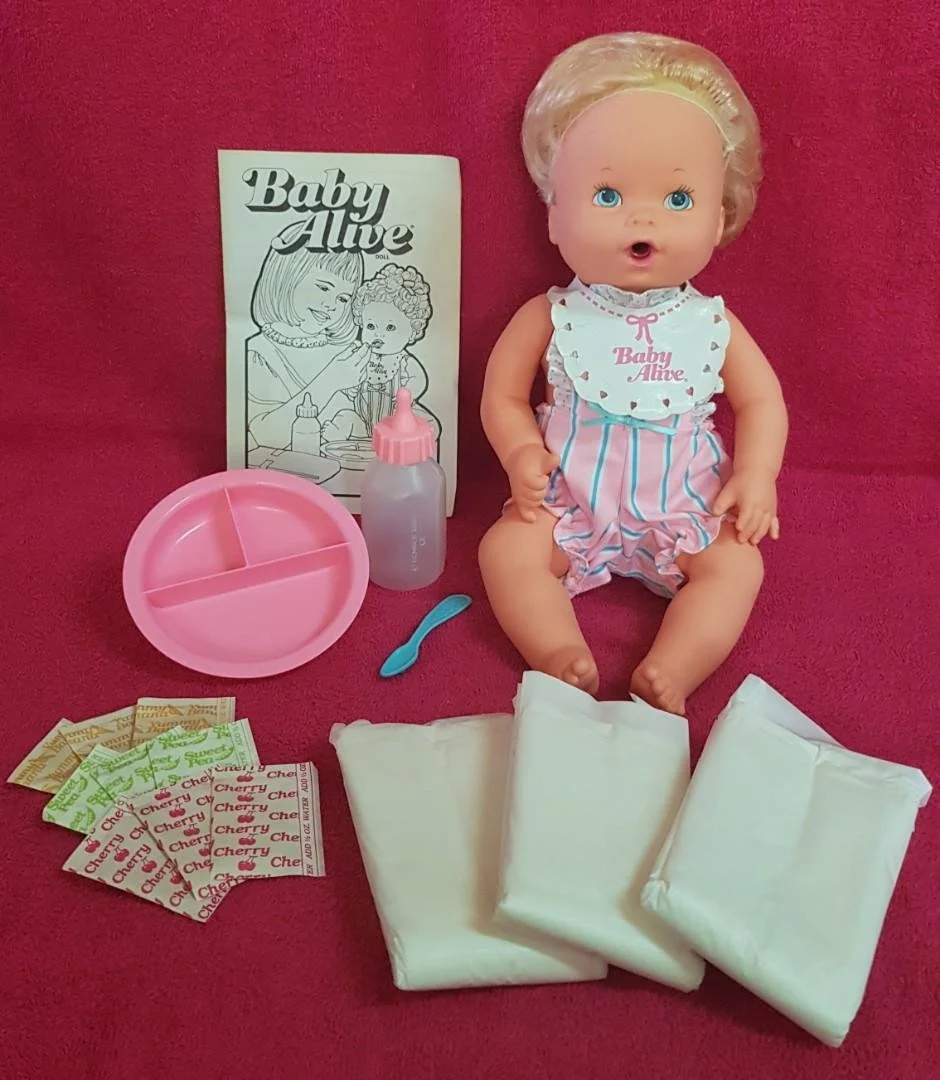
The first of these was a doll called "Baby Alive" I received a few years before the toilet test. Rather than a lifeless, plush Cabbage Patch doll, Baby Alive did just what real kids do – eat, drink, and soil themselves. The only thing this doll didn't do was grow up to resent me.
She came with a mechanical mouth, and a little bowl and spoon from which you fed it "food." The food was small packets of powder that, when mixed with water, formed pastes in such appetizing colors as beet red, grass green, and a putrid yellow that you would then force feed into the doll's gaping maw.
Baby Alive did not have a sophisticated digestive tract. I had to change the doll's wet diaper immediately after eating because Baby Alive, much like me in my 30s, almost instantaneously evacuated her bowels and bladder after every meal. The substance shot out of the quarter-sized hole in her bottom the same color as it had gone in. So after a delicious meal of red paste, Baby Alive produced a veritable crime scene in her pants.
When I ran out of food packets, mom informed me that we would no longer replenish the food supply. Doll food rations were expensive. The box warned against feeding the baby anything but the pre-approved packets, which was a pretty good racket for Hasbro.
From that day forward, my Baby Alive subsisted on water only, which made being a parent seem pretty cheap and easy. The commercial's catchy jingle had promised an experience "so real." However, reality would have necessarily involved government intervention when I fed my child only water, then eventually nothing. I ended up leaving her nude and abandoned in a plastic crib, exposed to the elements, batteries corroding, forgotten for years in a space beneath the treehouse in my parents' backyard.
Later, I would get a Nano Baby. This was an egg-sized electronic "game." It had a gray square screen on which a cartoon baby would appear, asking to be played with, fed, or changed. I should mention there was no off-switch, and without proper attention, Nano Baby would simply die. As it was only a toy, you could reanimate your dead Nano Baby by jamming a paperclip into its reset port in the back.
One trick to avoiding the death/regeneration cycle of my Nano Baby was to leave it in my mom's care. That meant that even when my sister and I were at school, she had not even one moment of peace, forced to feed, play with, and change a digital dependent during what was her only time alone during the day.
I received my third robot child for one week during my sophomore year of high school. Prior students in health classes at our school took home flour sacks covered in nylon pantyhose. Not my class. We got a fresh crop of Ready-or-Not Tots, infant size robots that used computer chips to track how we treated them. We had to soothe it when it cried, feed it, change it, and wake up with it during the night.
The Ready-or-Not Tot sat mostly upright, with a forlorn look on its face, arms outstretched. Its rubber expression said, "Love me or you'll get a C." The mold that the manufactures had used for the face made it appear as if, at some point, this creature was sentient but had now realized its horrible fate. Doomed to be stuffed into lockers, forgotten in backpacks, left crying in the trunk of a car — forever ignored by teenagers while they made out in dark parking lots.
A week after adopting our plastic children, we were to return them to Mrs. Gragg, the kind, soft-spoken child development teacher. She would then plug the child into its base, and the baby would give us a grade.
I received my Ready-or-Not Tot the same week I was taking driver's ed. While my mom sat for Ready-or-Not Tot, I attended class in a strip mall storefront, wedged between a Blockbuster Video store and a Cici's Pizza Buffet. Our teacher, who I'll call Pam, was a round woman with unnaturally bleached hair who barked at us like a drill sergeant. I'm not sure if it was the room or her or the Blockbuster next door, but the classroom always smelled like freshly popped popcorn.
Night after night, Pam began class by following the state sanctioned video-then-workbook format. Then, without fail, whenever we got to the discussion portion, she would veer off course.
Now, looking back as an adult, I understand Pam a little more. Allowing 15-year-olds on the road is, for the most part, a terrible idea. I've also come to understand that once you have experienced the wrenching grip of tragedy, it is hard to function without that tragedy then coloring everything else you do.
But we all have to soldier on and not let that tragedy pour out of us at every occasion. If we don't, we become that one person at the party, you know the one, who has to be handled with kid gloves lest we give them the opportunity to let the story slip out.
Pam was that person.
And her trigger for telling that story was driving.
Also cars.
Rules of the road.
The road itself.
Yellow lines.
Curbs.
Basically everything we covered in the class set her off.
If they gave awards for enduring human tragedy, Pam would win by a mile. Not only did she seem to suffer from some popcorn-related odor issue, she had lost nearly everyone close to her to one common foe: decapitation.
Her teaching method relied heavily on personal anecdotes. Every cautionary tale she shared with the class of apprehensive soon-to-be drivers ended in decapitation. I tried researching the statistical likelihood of being decapitated but could not find any reliable statistics. If we are going by Pam's numbers, the chances are about one in five.
Each lesson was introduced by a happy but stern woman on a tube TV that Pam wheeled in from the back room. After the video, we were given worksheets with blanks that corresponded to the video.
The proper following distance is ______ feet behind the car in front of you.
Pam would rush through the workbook answers, then launch into an anecdote about a family member, friend, or friend of her son. Each of lives had been cut short by that vicious and all too common beast: decapitation. The cause of death in each case was decapitation, and the cause of each instance of decapitation was a lack of attention to the Texas Department of Public Safety's guidelines.
"My son knew a boy whose name was Kevin," she began one day when the subject was tailgating. "He drove a beautiful black Camaro. He followed a semi-truck too closely, much closer than the 150 feet suggested by the Texas DPS. When the semi stopped, Kevin's car went right underneath. Kevin was decapitated," she said.
The class stared at her. No one spoke.
"So," she concluded. "Don't follow too close."
In reality, a far more likely result of following too close is a rear end collision. Everybody's heads remain attached to their respective bodies and, at most, you will probably be sued by the other driver. It may require everyone to go to court, testify, and be forced to take a day off work. Your insurance premiums will probably go up. A real pain in the ass, and I suppose, only slightly less painful than decapitation.
During the chapter about stopping to render aid, Pam shared another story.
"My husband and I were driving home when we saw an SUV on the side of the road in a ditch. As we approached, we noticed it was the McNally's car. They were a family from our church. As I opened the door to look inside, I found the whole family. Everyone in the backseat had been decapitated."
Everyone? I thought. In the backseat?
I had so many questions but said nothing. It wasn't my place to question her. I couldn't even drive a car, not legally at least. And she had sat front row to the worst driving had to offer. Maybe she really did see decapitated bodies in the back of that SUV. Maybe she stumbled upon some crime scene, the work of some lucky serial killer who had found himself the perfect hiding place: right in Pam's sight where it could be brushed off as, not a crime, but the result of yet another case of reckless disregard for the rules of the road.
After five solid evenings spent in that strip mall store front, the classroom portion was over. Another student and I were then scheduled to spend a few hours with Popcorn Pam behind the wheel getting on-the-road experience.
When we arrived at the school that Saturday, we were surprised to find that Pam was absent. Trevor, a 20-something substitute instructor was there instead. He took us cruising around our hometown in the driving school's tan Saturn sedan. We went through the motions, making the requisite turns and doing our assigned parking jobs. The other student was behind the wheel when Trevor asked our opinion of the classroom portion.
"That lady, Pam, is a nut," I said.
There was a long pause.
“Oh really?” Trevor asked.
“Yeah, she always smells like popcorn and every story ends in decapitation,” I said.
"Well she's my mom, so..." Trevor said, trailing off. The student driving sucked in air, and I slumped in the backseat, ashamed.
Aside from some awkwardly mumbled instructions, we were all silent for the remainder of the lesson. I felt so guilty for insulting his mom, but how was I supposed to know he was her son? His head was still attached to his body.
I burned with shame. This woman had opened herself up, shared tragic stories with us, and my inclination was to mock her. I imagined someone mocking my mom and felt myself get angry. I looked at Trevor as he remained quiet. If someone were to come after my mother, I wouldn't be so passive.
Despite my blunder, Trevor gave me a passing grade on the driving portion. That, coupled with the five evenings of lectures on all the possible beheading scenarios that accompany driving, got me my license.
During this time, my mom cared dutifully for her plastic grandchild. At the end of the week, when Mrs. Gragg plugged Ready or Not Tot into its base, the report revealed my mom had done an A+ job. The machine indicated that the baby was never neglected or ignored. Mrs. Gragg announced that my baby had been cared for perfectly, proving that my mom was indeed ready and capable of raising a child.
None of my three pretend-children made me want kids. All three were unfeeling nuisances I saddled my mom to care for. Maybe that's the real lesson – not in my interaction with the fake babies, but in my mom's interaction with me.
The real test for when I'm ready to have kids will be when I'm ready to love a creature as she loves me: patient and kind, caring but realistic, ceaselessly supportive. Either that, or I should just hurry up and have one now while she's still around to lend a hand and help keep me from needing to press the reset button.
***
This piece also appeared in Sunday Morning Hot Tea. Subscribe so you don’t miss another piece.
9/11/2002
It was the fall semester of my sophomore year in high school. 2002. A weird time for anybody - being a sophomore in high school and all. But also a weird time for being an American - being post-9/11 and all.
My school was especially hard to navigate as far as cliques was concerned. I was in theater, so I had my theater friends. And I was in gifted/talented English, so I had my GT nerd friends. The one clique I desperately yearned to be a part of was the most visible clique of all - the Christian kids.
As far as cliques go, the Christian kids weren’t terribly exclusive. The only requirements to join were (1) offering your eternal soul to Jesus, and (2) attending weekly meetings. But, like so many religions throughout the centuries, the Christian cliques in my school had separated into schisms.
In one corner, wearing orange T-shirts on worship-day Wednesday, was the crew from Mimosa Lane Baptist Church. And in the other corner, wearing royal blue T-shirts on worship-day Wednesday was the group from Sunnyvale Baptist Church. Warring gangs in a battle for teenage souls.
I wasn’t raised religious. I didn’t have a yearning for the Lord’s word. I just wanted one of those T-shirts. I wanted to be part of the sea of a thousand shirts, swimming with one school or the other. Didn’t matter which one. I wanted to belong.
My family went to church service about once a year (some years) at a small shack of a place behind the nearby elementary school. The preacher there was all fire and brimstone. He was a thousand-year-old man in an even older suit, yelling until he was red in the face about damnation. He punctuated each sweat-soaked sermons with an “Amen,” that was called back to him from the folks in the pews.
My mom’s best friend, Lillian, was the one who invited us to attend that church with her. Lillian was a foul-mouthed redhead about ten year’s my mom’s senior. She wore large, round glasses the diameter of a coffee mug and had a mouth permanently drawn up in a skeptical smirk. Her cheeks were sunken from years of wrapping her lips around cigarettes, and she was the first person I ever heard say the word “fuck” in real life.
“Sometimes the only thing that will help is a good use of the word ‘fuck,’” Lillian told me. Once, when she had dropped a 64 oz. can of Wolf Brand Chili on her toe, she told me the only thing that got her through the pain was a good “fuck.”
I took this lesson to heart. In middle school, when I slammed my finger in my locker door, the only thing I could do was grumble a good “fuck” to the shock of the kids in earshot.
Our middle school sat in the nexus of two neighborhoods - old Mesquite, where I lived, and the newly developed and more affluent Creek Crossing. When the new houses were built in Creek Crossing, the city had to build new schools to serve the influx of residents. First, they built grade schools, and a middle school soon followed. When they drew the lines determining who went where, my street and its solidly built but much older houses ended up drawn into the new middle school zone.
Some of the kids in Creek Crossing had not heard the word “fuck” on TV, forget about real life. Certainly never from another kid. I was willing to say it, though, along with any number of other curse words I had learned from my favorite show, South Park. This reputation made me the proud recipient of seven - yes, SEVEN - Bibles the first year of middle school. A few shy, religious kids, no doubt prompted by their well-meaning parents, scurried up to me at various points throughout the day before Christmas break. They thrust the Bibles toward me with a quiet, “Here you go. Merry Christmas.”
By high school, none of the many Bibles I had received had managed to cast the cursing demon out of me. It was no wonder then that I had not been invited to one of the two ultra-popular religious cliques. At first, I rebelled. I told myself I didn’t want to go to either of their nerd churches. They sounded boring. And dumb. But these were just lies I told myself to feel better. The truth was I yearned to be invited. I ached to wear one of those T-shirts on Wednesdays. I decided what I wanted most of all was to go to the orange church.
Yes, the orange church was where most of my friends attended. But I also made that church the focus of my desire by process of elimination. I didn’t want to go to the blue church because of some stories I had heard from its attendees. They had scared me straight into camp orange.
A blue-shirt-wearing classmate told me how she got fingered by her boyfriend in the church bathroom during Wednesday night services. Another attendee described trying anal sex for the first time in the cab of her boyfriend’s truck in the blue church parking lot after a different Wednesday night worship service. Both attendees felt comfortable performing these sex acts because, according to them, neither of those counted as “sex” in the Lord’s eye. It didn’t seem to factor into the equation that the acts were performed on church property.
Not wanting to be penetrated in any way, God-approved or not, I decided that the blue shirt church was not for me.
After waiting all of freshman year, finally, a few weeks into the fall semester of our sophomore year, it happened. An orange-shirted classmate invited me to Wednesday night worship service. I was in.
On Wednesday, September 11, 2002, I begged my mom and she agreed to drive me to the evening worship service at the orange shirt church.
Once inside, I felt still in a room swirling with laughing, shiny, blonde kids. I had walked in on a warmup game. Lesson number one: you’ve gotta warm up for worship! Groups of teens were challenged to throw plastic fish into assigned baskets. Unfamiliar with most Bible verses, I was left to assume that this game had something to do with scripture.
Listen, I said I RECEIVED Bibles as gifts. I never said that I had studied those Bibles. For all I knew, there was a passage saying, “And then the Lord sayeth onto the crowd, ‘Throw thine fish into thither basket, m’lords and ladies.’” That’s what the Bible sounds like, right? Like something from a Renaissance faire?
That was another reason I wanted to be recruited into the T-shirt gangs – the Bible references. I could have listed off the whole cast of The Dick Van Dyke Show. I could have given you the entire track listing of every Beatles album. If you needed someone to recite Monty Python and the Holy Grail, I was your girl. But when it came to understanding the reference of a cool kid’s “Abreadcrumb & Fish” Abercrombie & Fitch Christian parody shirt, I was outmatched.
High energy games like fish-in-a-basket were a great marketing ploy to get kids in the door. If you wanted to recruit the school’s best and brightest (who, in turn, would bring in the street rats like me), you had to throw some fun and games in there. I don’t blame them. Competition for souls was high. In our small town of Mesquite, there were easily 20+ churches all vying for attendees. If you could do like orange shirt church and recruit the coolest kids - your baseball stars and football stars and soccer stars - the rest would come.
Amidst the chaos, I saw a sandy haired guy in his early twenties take the stage. He put the mic to his mouth and asked if maybe we wouldn’t mind finishing up our games and could we please, um, possibly take our seats?
I had never even begun the game. Not understanding its purpose, I had lied to my team and said I had to go to the bathroom. Instead, I wandered from my assigned group of smiling Hollister models and crept to the back wall where I watched in silence as everyone else played.
Behind the leader who couldn’t lead, a group of kids I recognized as musicians from school took the stage and started grabbing instruments. The projector lit up. My classmates began to play, and the dough-faced leader took the microphone from the stand.
“Everybody, let’s take a seat,” he said. I complied, taking a seat about halfway up the room, dead center.
Of the fifty or more teens in the room, I was joined by only about five more. The rest were too wrapped up in the Holy Spirit of competition to obey the youth pastor’s commands.
He surveyed the room, pressed the mic closer to his lips, and motioned for the sound engineer at the back of the room to crank up the volume.
“LET. US. PRAY,” he shouted.
The room fell silent as if he had flipped a kill switch within everyone’s brains all at once. I looked over each of my shoulders in turn. Everyone – every single human person around me – had dropped their heads in a bow and now stood silent and still. Feeling like my head was very obviously the only un-whacked mole, I bowed down, too, and prepared for my moment with the Lord.
Face with the full attention of the crowd, the youth leader began his prayer.
“Lord, may we please ask for all these children - your children, Father God - to come to order and have a seat?”
I was no expert, but this seemed like a petty request to ask of the one Almighty God. I didn’t know Him that well, but I couldn’t imagine God was that much of a micromanager. But, like sheep in the proverbial flock, the other kids came over and filled in the pews around me.
“Thank you, Lord,” the youth leader said. I was impressed. God had moved these teenagers to sit down. Truly moved by the power of prayer. Praise the Lord. The youth leader began his sermon.
“The events of this day one year ago are, I’m sure, imprinted on all of your minds just like they are on mine. You remember where you were and who you were with when you watched the news of the attack.”
He was right. I remembered that day as clearly as I remember it all these years later. I was brushing my teeth and listening to the Kidd Kraddick in the Morning drive time radio show. My mom had turned on the local news. We listened to Kidd and watched the footage on ABC News. There it was - what would become an iconic image of the World Trade Center, billowing smoke, flaming across the bright blue New York sky.
“My God,” I said, toothbrush still in my mouth. “That pilot is such an idiot. The building is huge. How could anyone have run a plane into the side? Don’t they have computers on board or something?”
My mom shook her head and told me what we’d all soon learn was the truth: “That was no accident.”
At thirteen, I didn’t really grasp what a terrorist was. Before that day, terrorists were bad guys in movies – your Hans Grubers, British and sinister, wearing suits and doing heists. Now, terrorists were very real, right there on TV, the impact of their carnage evident in images that would be printed in history books.
In those initial moments, I couldn’t grasp all the lives that were lost that day. All the moms and dads and daughters and sons and friends and neighbors who wouldn’t come back home. Watching the smoke billowing back into the building, I never considered people who were suffocating, burning to death, trapped in those walls. Those realizations came with time. As it unfolded in real time, I still had the benefit of innocence.
Little black dots began streaming down the screen. Those were people. Jumping. I couldn’t fathom why they would jump. Just wait, I thought, naive and hopeful. Help is on the way.
The morning of 9/11, I stood watching Good Morning America, while listening to Kidd Kraddick try to carry on and offer some sense of hope. Then another plane entered the frame.
Watch out for that building, I thought. It was too late. Just like that - one minute you’re hurtling through the air in a pressurized cabin or sitting at your desk trading stocks or whatever and the next you’re engulfed in flames.
I don’t know if I screamed. I can’t remember if I cried. I know my mom, clinging to some sense of normalcy, drove me to school that day. I rode along, eager to board my school bus for a scheduled field trip that would never happen.
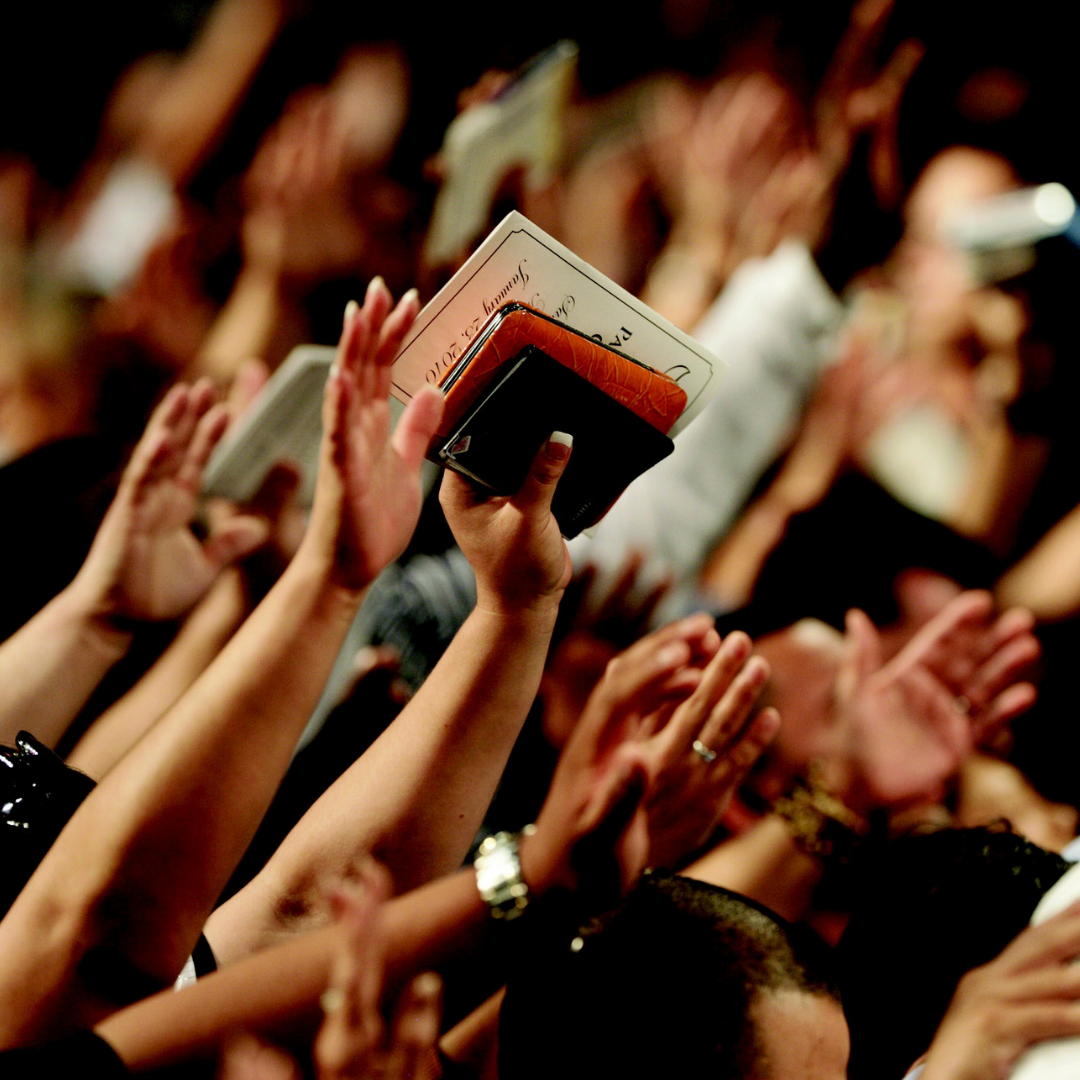
A year to that day, I then found myself in a church pew, surrounded by a venerable who’s-who of our school. I was following the crowd, sure. Thirsty for a t-shirt, admittedly. But I was also looking for answers. I was looking for God, the great and powerful deity, the Awesome One, subject of the music advertised on late night commercials.
I thought surely He dwelled within the walls of this, the trendiest church, where His most cherubic-faced followers gathered to raise their arms and praise Him. I was there to seek Him and expected that He would offer me an answer as to why something like 9/11 could have happened. These, the coolest of kids of our school, would help me receive his message.
Pastor Chet/Chad/Brad adjusted the microphone cord and continued his sermon. The assembled teenage band behind him strummed their instruments in a quiet soundtrack to his words.
“On a day like today, we want to be thankful. Thankful to be together. Thankful for the first responders – the heroes – who put their lives on the line that day, one year ago.”
The teens around me were not thankful. Or at least, if they were, they were too chatty to recognize it. I struggled to hear him over whispers and giggles. His eyes darted around, and he went back to his tried-and-true trick.
“Let us pray!” he commanded once again. The students responded. Again, their heads dropped in immediate silence.
“Lord, please give these students some patience. Father God, we ask you to give these students the self-control not to talk while I am talking,” he said.
My head popped up from its bow. I stared up at Chet/Chad/Brad. There he stood, nearly a teen himself, fresh out of whatever school qualifies you to be a youth pastor, asking God once again to use His almighty power to step in and do some crowd control.
Now standing in reverent silence, he finished it off with an “Amen!” With the full attention of the crowd, he got into the meat of his message.
“You all remember last year, when those terrorists got into the pilots’ cabins and crashed those planes. Before the terrorists got in there, those planes were headed to their destinations. And they would have made it if not for those terrorists.”
Yikes, I thought. Coming on a little strong with the terrorism reminders. Still, I was patient. It wasn’t easy to discuss this kind of thing. He continued.
“I want you to think about that. About those terrorists overwhelming the pilots. You are like those airplanes,” he said.
Oh no, I thought. Don’t do it. Don’t do it.
He did it.
“You are a plane scheduled to go to the ultimate destination,” he said, pausing for effect. After he looked across the crowd and found us sufficiently attentive, he whispered into the microphone: “Heaven.”
My eyebrows shot up. I checked the faces of the students around me, but no one else seemed to be reacting.
“Jesus died so all of you could go to your destination. He bought that plane ticket for you. But your destination is not guaranteed. Just like all those people on the planes on 9/11. The devil – he’s like those terrorists. He wants to derail you and keep you from your destination. The devil is banging on the door of the cockpit of your soul. You cannot let him in. Once he’s in your cockpit, he will crash your plane right into those flaming Twin Towers of sin.”
My eyes were wide, but I wasn’t staring at Pastor Chet/Chad/Brad. I was staring through him. I remembered watching the towers burn just a year before. I remembered watching the memorials and fundraisers on TV in the months since. Families torn apart. Widows and orphans heartbroken. I remembered hearing about the heroes – both the first responders at the crash sites and the passengers in the planes who fought like hell to keep the attackers at bay. My eyes adjusted, and I looked in front of me at this chucklehead, using their deaths as some weird lesson.
Aside from being distasteful and patently offensive, the metaphor also didn’t work from a rhetorical standpoint. The “Twin Towers of sin” is nonsense. No one in those people in towers deserved to be there when that happened. “Letting the terrorists in the cockpit” was an equally shitty selection of words, implying that if only those folks in the planes had fought harder, things would have been different. That they let the terrorists in.
I was mostly disgusted that I came for existential answers to big questions – Why are there terrorists? Why does God let bad things happen? How do we heal and move forward? And got this pile of shit instead. Rather than provide me any answers or even comfort, this peach-fuzzed bobblehead with a microphone turned a once-in-a-generation tragedy into a cautionary tale about bare-knuckle boxing the devil.
His speech was more patronizing than any plastic fish game and more disgusting than anything that happened in that other church’s parking lot.
I don’t remember what else he said that night. I do remember walking to my mom’s minivan in a line of headlights later that night. I slinked into the front seat.
“How was it?” she asked.
“It sucked,” I said.
“Oh really?”
“He told us not to let the devil break into the cockpits of our souls and crash our planes into the Twin Towers of sin,” I said.
She laughed.
“Well at least you tried,” she said. “Did you get a t-shirt?”
“I don’t give a fuck about a t-shirt,” I said.
***
This piece first appeared in Sunday Morning Hot Tea. Subscribe so you don’t miss another piece.
Don’t Look, Ethel!
Early one morning the week before Christmas I was scrolling through Twitter while drinking coffee. A woman tweeted that she tried showing a clip from the BBC game show Taskmaster to her family while visiting for the holidays. The tweeter's parents watched in silence through all the parts she thought would make them laugh. Her sister pity-scoffed then left the room.
I had never heard of this show, mostly because I only ever watch old sitcom reruns. I clicked play, and for a solid twelve minutes, I was both riveted and terribly amused at five grown adults struggling with a potato. I laughed so loud at several points that Paris could hear me clear on the other side of the house.
That night, I cued up the clip and showed him. Once he began to laugh, I could exhale. I trust Paris. I mean, I better. We’re getting married soon. But even with our deep level of intimacy, it was still scary to show him something that I thought was so funny for fear that he may not enjoy it.
Later that week during our family's Christmas Eve festivities, my cousin, Ami, was sharing a story about a patient of hers. She's a nurse in the post-surgical department at a local hospital. Her patient had been putting his clothes back on after a procedure when he shouted to his wife, "Don't look, Ethel!"
When the man said this, Ami laughed. She described how she and the patient shared a moment of recognition over this reference. When Ami repeated the phrase for us at Christmas, it elicited chuckles from my mom, aunts, and uncles. Ami noticed the confused look on my face.
"From the Ray Stevens song? You know Ray Stevens, don’t you?”
I knew of Ray Stevens. My former coworker had shown some of his music videos to me while we fettered away work time on YouTube. But I had no idea what song Ami was talking about.
“‘The Streak’?” Ami asked. “Mam-maw used to play that record all the time."
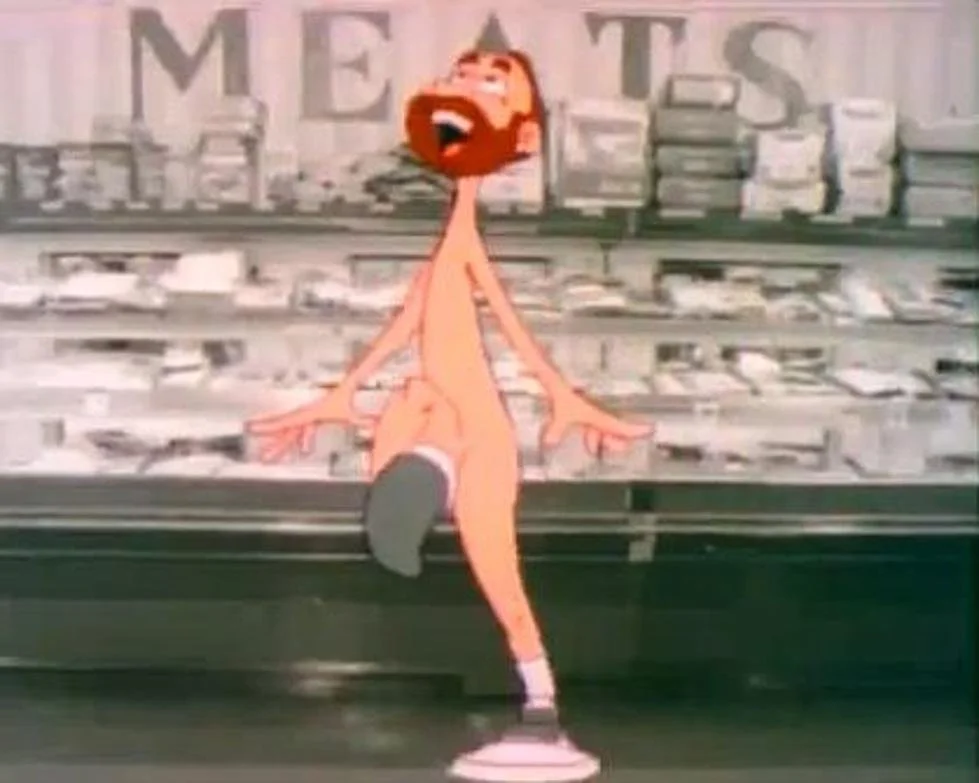
My coworker had wisely not shown me any videos about streaking on the company computer. I pulled out my phone and began to play "The Streak." It begins at a supermarket with Ray Stevens interviewing himself, playing the part of both an "action news reporter" and a witness to some streaking.
"Mam-maw knew every word to this song. All the spoken parts. Everything," Ami said over the music.
I have tons of memories of our grandmother. I was born in 1986, the year of her 70th birthday. We spent plenty of time together, with sleep overs and shopping trips and sitting beside one another at family holidays. Once I could drive, I would make random visits to her house up until she passed away in 2004.
For so many of those years we spent together, I was a kid. Although we shared a lot, you can only share so much with a kid. We watched TV together and laughed at Johnny Carson’s jokes, but “The Streak” must have fallen out of favor all those years after its release, so she never played it for me. Also it's a song about committing a crime, so probably not appropriate for a kid anyway.
Listening now, it's no surprise to me that she loved this song. Mam-maw was naturally funny. When she told a story, she held an audience. She would lower her voice at certain points in a story and relate an aside to you that made you feel like it was a story she was telling only to you. She’d get tickled at herself, too, and start laughing along with whoever was listening.
I remember asking her about what she was like when she was younger. She told me about a time when she and her friends were none too pleased with a fellow girl in their group. Mam-maw and her friends took turns pissing into a bowl full of punch that they then set out and let her drink from at a dance.
“Did she drink it?” I asked.
“Well, yes,” she said. Then she added, “But not much.”
I also got to live some funny Mam-maw stories as they were unfolding. Once I was tasked with escorting her from our car up to the event space at the top of the luxury Stoneleigh Hotel for a cousin’s wedding. I was around twelve at the time and was happy to walk with Mam-maw, her arm linked in mine. We stepped onto the elevator, and a couple of strangers joined us. At the time, I thought they were weird. As an adult, I now know they were drunk.
“Are you going to the reception, too?” she asked.
They shook their heads.
“You should join us. I'm sure it'll be fine. There’s a full bar. Unlimited wine," she said, giving the wedding crashers both motive and permission to do their crashing.
They looked at one another then to me. I had nothing.
“If anybody says anything, just tell them you’re with Mam-maw,” she said.
The strangers disembarked the elevator into the reception and made a beeline to the bar. A glass or two deep in wine, they were escorted out by hotel security.
In the days since Christmas, I have listened to "The Streak" no less than fifty times. It's grown on me more each time. If you're not familiar, the song follows a streaker running nude around a town. The same male witness is interviewed by the reporter during every verse. The witness is accompanied by a woman named Ethel, who the witness admonishes not to look at the streaker's exposed bits. These warnings don't work, and in the end, Ethel strips down and joins the fun.
Though it is categorized as a "country/novelty" song, it hit the Billboard Top 100 chart in 1974. It spent some time at number one and finished the year at number eight, just above "Bennie and the Jets" by Elton John, "Jungle Boogie" by Kool & the Gang, "Sunshine On My Shoulders" by John Denver, and "Hooked on a Feeling" by Blue Swede.
"You know he wrote that song in the 70s when everybody was streaking all the time," my mom told me.
When everybody was streaking all the time?
Turns out, the mid-1970s were prime streaking time across the U.S. and the globe. It was such a prevalent occurrence that Ray Stevens had to RUSH his song to air for fear that others may try to capitalize on the trend. They did. According to an interview with him in a book on Billboard hit songs, there ended up being THIRTY TO FORTY more songs about streaking.
None were as successful as his.
How could they have hoped to be as beloved as "The Streak"? It is a catchy tune with a quotable refrain - "Don't look, Ethel!" Its popularity, particularly in the 1970s, is not surprising. There was no accompanying music video at its initial release. Therefore, the audience was left only to imagine the “fastest thing on two feet” who was “wearin’ just his tennis shoes” in their minds’ eyes.
There’s power in the theater of the mind, and Ray Stevens nailed it. The song’s structure also follows what they teach you in comedy classes. It has three beats with a clear game set out in the first "scene." It heightens the game with every beat and “shows” the characters in different settings. We’re taught “if this, then what?” If someone is behaving this way in one setting, what are they like in another? And if this reality is true, then what even more extreme fact may be true in another setting?
In this song, Ethel is first incensed in the fruits and vegetables aisle at the grocery store, then “flashed in front of the shock absorbers” at the filling station. She finally gets a free shot of the streaker “dribblin’ right down the middle of the court” in the gym at the basketball playoff.
Not every Ray Stevens song is as classic as this one. Some have not aged well at all (and weren't funny when they came out, either). But I don’t find myself with a sudden affection for those songs -- or even Stevens himself -- like I do with “The Streak.” While I have so many memories of her, listening to the song and imagining my Mam-maw listening so often that she knew all the words makes me feel closer to her.
Sharing something that you thought was funny feels like a risky move. No matter if it's a video of people struggling with a potato or a song about jogging balls-out through a community. We fear judgment. The pity scoff. The other person leaving the room. The unanswered meme in the group chat.
Showing our soft little underbellies of what we find funny fosters intimacy in the most terrifying way. We are offering a glimpse into our inner selves to a person who we hope will know us better. Humor is born from surprise, and learning what tickles someone else can be just as funny as the thing that makes them laugh.
Though I felt close to her the whole time our lives lined up, hearing that she loved that comedy song about "running through the pole beans...nekkid as a jaybird" was like a warm hug from my Mam-maw. The comedy we enjoy when no one is around is a window into a very intimate part of ourselves. It helped fill in the blanks of the picture I have of her in my mind. It's a picture that remains necessarily incomplete since I only knew her in the context of kid and grandma.
The best thing I got for Christmas this year was the little movie in my mind of my Mam-maw in her housecoat, washing dishes or playing cards or making dinner with that record player going, singing along and hollering out, “Don’t look, Ethel!”
***
Here is the link to the Taskmaster bit that cracked me up. And here is the link to “The Streak” - the original version.
***
This piece first appeared in Sunday Morning Hot Tea. Subscribe so you don’t miss another piece.
Hook, Line, and Sucker
Bouncing balls. Jumping children. Painted faces. Squeals. Screams. Laughter.
Last weekend, Paris and I found ourselves the only childless couple at a four-year-old’s birthday party in a mini gymnasium. Kids flew around the foam-covered floors and walls, flipping and jumping, and sometimes landing upright.
One particularly runty kid, the younger sibling of a party attendee, flipped off the trampoline and onto the floor. Her mom was elsewhere, mingling with other grownups. Paris and I were the closest adults in range. She locked eyes with me and began to cry. We stood, staring back at her. It’s a particularly sticky situation being a random adult at a kid’s birthday party. On the one hand, you’re an extra chaperone. On the other, you shouldn’t go around snatching up kids that don’t belong to you.
The kid's mom’s MomRadar™ kicked in, and she ran over to scoop the girl off the ground in seconds flat. But still, in that moment when she looked at us, she believed that because we were taller, we had the answers. She believed we could help, that we must know how the world works.
Sorry, little kid. That just ain't true.
Being a kid involves a ton of inherent trust. It’s an innocent viewpoint, one that I held dear throughout my earliest years. That belief was completely shattered one summer day in 1992: the day I realized adults have no idea what they're doing, even if they tell you otherwise.
I am the youngest grandchild in my family by five years and five months. As such, my role has often been that of gullible guinea pig. Early on, my mom trained me to follow her without question by calling things “adventures” rather than “chores” or “errands.” She would ask if I “wanted to go on adventure.” These adventures could mean throwing phone books with her best friend, Lillian. It could mean going to a movie set with Lillian’s husband, Dan. Just as likely, it could mean going to the grocery store or taking cans to the recycling plant.
It could also mean going to the dentist and having five teeth removed.
This scam worked every time. A gambler by nature, I risked the dentist “adventures” and endured the grocery store “adventures” to get to the movie set adventures. If adventure was on the menu, I would always order it.
This fateful day in the late fall, my mom asked me if I’d like to go on an adventure to my Aunt Bari’s house. I said yes. I had hope. Bari’s house was where we spent all our Christmas Eves throughout the years. An adventure to her place was bound to involve a gift or at least some fun. I was wrong.
Honestly, I should have known. Just a few months before, I had heard my mom, my Aunt Bari, and her sister, my Aunt Vicki, all circled around my sister, Shannon, in our dining room. Shannon was crying. My mom was comforting her. Aunt Vicki, who we were told had “beautician training,” was applying some goop from a container to my weeping sister’s head as the three of them told her, “You must suffer to be beautiful.”
This oft-repeated phrase was how they got Shannon to endure hours with noxious perm chemicals singing her scalp, its fumes permeating the walls and upholstery. The result of her suffering was not beauty. Instead, Shannon ended up sporting a blond Jheri curl when the process was done. The combined result of their laughter, the reckless abandon, the results of their attempt started the erosion of my trust in adults.
Maybe, just maybe, I thought, they don’t really know what the hell they’re doing.
Still, it was my mom. They were my aunts. They were grown. They drove us around. They fed us. They gave us a place to live. They kept us safe from strangers. Being vested with that much responsibility, I relaxed back into the notion that they had to know what they were doing. They had to.
As I eyeballed the situation that day at Bari’s house, I was relieved that there were no chemicals around. They had stacked three phone books on a wooden dining chair and asked me to climb on up. Suspicious at the three of them together, especially after the number they had done on Shannon, I hesitated.
At the first sight of uncertainty, they started convincing me: “Come on,” they said. “It’ll be fun. It’s an adventure!”
I settled up onto the phone books and turned to face the fireplace. I noticed how the mantle looked emptier without the family’s Christmas stockings. Christmas would be here before we knew it. I started making a list in my head of all the things I would ask Santa to bring me that year.
I was wretched from my thoughts by Aunt Vicki pulling a comb through my hair, yanking my head back every few strokes.
It was shocking, but I was ready for this. It wasn’t long before that day when we had been visiting family in Tennessee. A strong-handed cousin had gone wild on my head with a fine-toothed comb. She had tried yanking my hair into a thick braid on our cross-country visit.
“One day, I’m gonna be a hairdresser,” she assured me, as if her future plans somehow qualified her to perform the current task. Like telling someone, “Lie back, I’m going to be a doctor some day,” as you make the first cut of the at-home tracheotomy.
My Tennessee cousin’s amateur cosmetology had prepared me for that day, I thought. It was a tough comb job, but I was tougher.
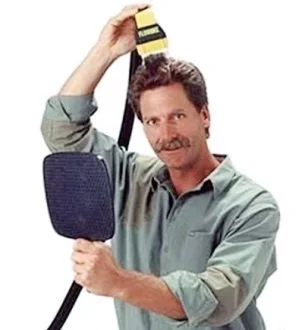
Then I saw Bari affixing an attachment to her vacuum cleaner. My mom held an instructional booklet in her hand, flipping through the pages and reading out loud.
“Affix the hose – yeah, yeah, yeah. Be sure to attach the safety – blah, blah, blah.”
She flipped the booklet shut and tossed it on the dining table without finishing. Bari snapped the attachment into place. The box on the ground read in large block letters - FLOWBEE.
I cannot fault Bari for purchasing this contraption. The advertisement featured, as most infomercials do, smiling people using the product. These actors made using the Flowbee look effortless, even fun.
In retrospect, the infomercial footage is iconic. A middle-aged man with feathered hair drags the machine over the crest of his skull, sucking chestnut hairs conveniently into the vacuum bag below. A small boy, even younger than I was, smiles as a disembodied hand runs the business end of the vacuum across his scalp with ease.
One guy who looks like an off-duty soccer coach stands cutting the hair of someone I have to assume is also on the coaching staff. In another scene, a man suctions the hair off a woman while a third guy watches. The woman on the receiving end of the hose monitors the Flowbee’s efficacy with a hand mirror, her eyes narrowed.
Hey, this footage tells the audience, Even extremely discerning women let their friends cut their hair with a vacuum cleaner hose.
A professional hand model in pleated slacks and a pastel button-down tucked neatly into his pants demonstrates all the parts, showing off how simple it all is to assemble, use, then disassemble.
The voiceover really sells it: “Tens of thousands of satisfied customers! Save time and money! Have fun!”
The Flowbee, like almost every other product ever marketed to the masses, promised to fulfill your dreams, solve your problems, and answer your prayers.
“Who has time to get a haircut?!” the announcer asks. “Don’t you hate spending time sweeping up all that hair?”
No one bothered to ask why you wouldn’t just use the vacuum to suck up the hair from the floor, rather than sucking hairs still attached to your head into a relentless machine.
Trusting the grownups around her, little Heather sat on the phone books, a vulnerable target for the waiting Flowbee. My mom had disregarded the instructions. Bari had eyeballed the assembly. Vicki had been eager to grip the hose. Though I started to question the whole idea, I had no chance of escape. We had driven all the way to Bari’s house, and it wasn’t even Christmas. No chance we were leaving without completing the adventure.
Though the written instructions had been tossed aside, the Flowbee came with an instructional video on VHS tape. We popped it in the VCR and watched it play. Two hosts came on screen. For some reason, they kept trying to sell the Flowbee rather than explain how to use it. My dudes, we already plunked down the money. Just give us the instructions. But, nope, Gary and his sidekick continued to extoll the Flowbee’s virtues.
“A lot of kids like trendier haircuts,” Gary’s partner said. “With kids these days, we are talking about any kind of haircut imaginable.”
Gary agreed, “That’s one of the great things about the Flowbee. You can create. You can experiment.”
Great, just what I wanted to be. An experiment.
Then, finally, instructions, though scant: “Bounce it up and down. Make sure you bounce it up and down.” Everyone in the instructional video gave the same imperative: Bounce. It. Up. And. Down.
The video rolled to a close. My mom and two aunts descended on me. Bari fired up the vacuum. Vicki grabbed the hose and held it over my head.
“Just start at the back,” my mom told her. Vicki pressed the Flowbee down toward my scalp. In direct disregard of Gary’s imperative, she did not bounce it up and down.
Neither the Flowbee nor I was prepared for what happened next.
As an adult, I have been told by haircare professionals that I have densely placed follicles. My hair is like a forest you cannot walk through without first thrashing a machete out in front of you. Using the Flowbee on my hair was like trying to drive a school bus through that dense forest. Everything gets ruined, and all you hear is the sound of children screaming.
The vacuum’s engine whirred on, but the Flowbee’s “state of the art” blades ground to a halt. The searing pain was worse than anything my inept cousin from Tennessee could have ever done. I'm not sure if it was the lack of bouncing up and down or my hair or a combination of the two, but there was no way I was walking out with any of the trendy haircuts Gary had mentioned.
My hair and the Flowbee were at an impasse. It wasn’t until Bari unplugged the vacuum that I could hear their laughter over my screams. They snipped my hair free and caught their breath. I was traumatized and sobbing, but they could not help themselves. The infomercial, the instructional booklet, the VHS tape, Gary – nothing prepared any of us for this.
When you start out as a kid, you think that grown ups have all the answers. They know what to do, know how stuff works, know how to run the show. The day comes for us all when we learn that is not true. Not at all. When you actually are a grown up, you realize you don’t know what to do. You can just do your best to appear authoritative. You master pretending to know all that stuff so the kids around you don’t freak out and you don't either.
Once you’ve pretended long enough, the grift has worked on you as well the kids around you. You become fully convinced of your authority. That’s when you pull out your credit card. That’s when you pay your four easy payments. That’s when you drive your youngest child to another town to be a test subject. That’s when you throw caution to the wind, fire up the vacuum, and let nature take its course.
***
This piece first appeared in Sunday Morning Hot Tea. Subscribe so you don’t miss another piece.
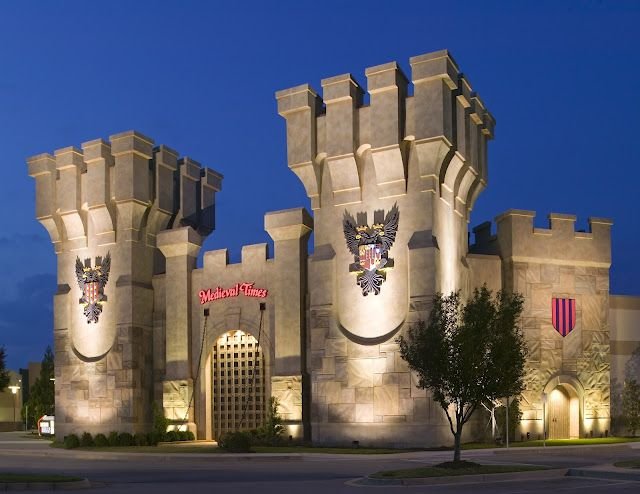
Journey Back to the Times
It was the first weekend in December 2021, and for the second time in a calendar year, Paris and I were walking through the parking lot of Medieval Times on our way to a matinee show.
“We were just here,” I said, but he reminded me it had been months earlier. But was “months earlier” in Medieval Times time actually that long ago?
“You think there are people who come here a lot?” I asked. “Like frequent flyers?”
“I’m sure,” he said. “The staff probably recognizes them.”
“I bet you can’t miss them,” I said. “You’d notice repeat offenders. This place is more of a once-a-year kind of deal.”
“Unless you’re us,” he said.
Medieval Times: Dinner and Tournament isn’t normally the type of place you’d go to more than once, at least not this close together. It’s a place for birthdays, field trips, company outings, and, yes, anniversaries.
We came in July for our friend’s 35th birthday. The vibe of our group that day fell somewhere between nostalgic and snarky. We came to enjoy the camp, though a bit ironically, and to revel in the nostalgia.
This second trip, my attitude had veered beyond nostalgia and fell directly into snarky disdain. I was not there to get into the show. I was there neither to hoot nor holler. Looking around that clear Sunday afternoon in December as we walked past the putrid green pond stocked full of listless orange fish, flanked on all sides by happy families snapping selfies with the castle, I realized we were in the minority. By a lot. They were all there to hoot, to holler, and to journey back to a simpler era where forks didn’t exist (except they did…)
My mom had requested the trip so she could share the experience with her only grandchild, my four-year-old niece, Sydney. Mom was firmly in the nostalgia camp, though in our family, it is impossible to experience anything without at least a pinch of snark involved.
Back in the mid-1990s when we first traveled to the castle on the interstate, our intentions were pure — much like the crowds we found ourselves surrounded by this day. Back then, we bought the schtick whole hog. We wore our crowns and scarfed our chicken by hand without comments, paying no mind to the others in the crowds around us.
Now, navigating a crowded lobby on a Sunday afternoon in our thirties, forties, and sixties, respectively, the people around us were almost all we noticed. Though there was a posted mask mandate, nobody around us wore masks.
“There’s nothing more on brand than spreading a plague,” I told Paris.
We waited for the show to begin beside an armory, a glass and wood countertop lined with red velvet where a wench was selling swords.
“Who buys a sword or full suit of armor?” my mom asked. “How do you get it home?”
“Did you see the guy in the Stetson with the crown on top of his cowboy hat?” my brother-in-law, Aaron, asked.
“Dedication,” I said.
“Shhhh,” Sydney said, commanding us to pay attention as the announcer took his spot on the balcony.
She was staring up at a man in black velvet robes accented with gold piping. He stood poised against the railing, ready to address the crowd below him. His red hair parted down the middle did little to hide the headset microphone through which he spoke. His British-ish accent boomed across the crowd and drew our attention.
“Lords and Ladies,” he began then asked if we were ready for the dinner AND tournament. The crowd gave a half-hearted “woo.” He doubled down.
“Are you ready?” he boomed, pausing for effect between each word. The crowd stood at attention and gave him a more satisfactory “woo.”
“Before we begin, I have a few announcements,” he said then began the near-impossible task of directing a crowd, in a British accent, while making sense, and also maintaining character.
The need for crowd control stemmed from our assigned seats. Customers are supposed to sit in sections separated by color. The announcer clarified that there was a red section, a yellow section, and a red AND yellow section, but that we shouldn’t confuse the three. Just like with the fork thing, I guess they only had five colors back then so they had to mix and match. We followed the arrows and signs around the arena to our place in the solid red section.
With the lights up, we could take stock of who else filled the seats that day. The Venn diagram of the type of folks that come to Medieval Times is a solid circle with those who slurp signature cocktails from the souvenir cups at a Margaritaville on vacation. Nearly every table I glanced at, it was easy to mentally replace whatever they were wearing with T-shirts that read HARD ROCK CAFE - BRANSON, MISSOURI.
Row after row was filled with rhinestone-encrusted jeans and leather cowboy boots. I even saw one man in a pair of dirty jean overalls who was a piece of straw in his mouth away from being a living cartoon character.
Don’t these people have horses at home? I thought.
Soon, fog filled the arena and our red-headed announcer was back. He galloped to the center of the sandy floor on his horse and explained that we would see a tournament the purpose of which was to find a champion to become protector of the realm. The queen emerged and addressed the crowd, flanked on one side by a “councilor” called Cedric, who we joked was a total simp for her.
One by one, the knights rode out on their mighty steeds. And one by one my family had comments to make. The black and white knight was deemed to look “Beetlejuice as hell.” The yellow knight looked like a soccer dad. The blue knight, with his slick ponytail, had clearly been born for this. Our red knight, my brother-in-law noticed, looked like the gigolo from the film Deuce Bigalow.
With the announcement of each knight, the audience members waved their souvenir flags and screamed for their guy. What happened down in that sand pit really seemed to matter to these people. The ponytailed stranger on a horse was not just a person but became their person, just by virtue of the color of his cloaks.
The queen, Doña Maria Isabella, was an elegant woman in her early thirties, with long, dark curls. She addressed the crowd using an English accent that sounded like it made a pit stop in Prohibition New York on its way to the castle that day. I looked at the signs above each section. The names were all of areas in Spain, not England (or the five boroughs either). None of it added up.
I snarked on the actors’ accents to Paris and commented on their stiff-sounding script and corny jokes, which hadn’t changed since July. I got pretty good at doing an impression of the queen. Soon, our serf came to bring us ye olde Pepsi and piña coladas.
“The classic drink of the era,” I said, lifting the souvenir plastic cup to my lips.
I couldn’t help but roll my eyes at the pageantry and drama that began the show. Early on, during some of the horse dancing, I got up to use the restroom. When I got back in the arena and began heading down toward my seat, I heard a warning from the announcer, “Do not distract her and please stay in your seats.”
I looked down toward the sand pit and saw a woman with a falcon on her arm. She swung a treat up in the air, and the bird took flight.
“I repeat - remain seated for your own safety,” the announcer said. “This is a bird of prey.”
I had to decide whether I wanted to run down toward my seat and risk a falcon to the head, or stand where I was and risk a falcon to the head.
I hurried down the stairs, at once afraid of the bird and also aware of my movement in opposition to the clear instruction we’d all just been given. I caught eyes with Cedric the queen’s simp. I saw through his accent and corny jokes and felt the pity of a man who dresses in velvet robes for a living.
The hell are you doing? his eyes seemed to say.
I gave a small shrug and ducked down as I made it back to my seat in time for the bird to return to its trainer’s arm.
I leaned forward to look past my sister and fixed my eyes on my niece. She was sitting on the edge of her seat, her chin propped on the table, eyes glued to the bird.
Once the tournament began, she was even more entranced. The spotlights turned down low, the strobe lights in full force, she shoved rotisserie chicken into her mouth and barely blinked as the men jousted, tussled, and jumped from their galloping horses. With each event, I watched her cheer and gasp and laugh.
Watching her watch the show, I got wrapped up in it, too. I cheered and booed and waved my flag. With each passing event, it became very important to me that the red knight win.
Come on, Gigolo, I thought to myself as he sped head long into another knight. Win it for us.
Safe in the dark of the arena, I knew no one could see me cheering. No one could judge. In that moment, the arena thick with artificial fog and scored by a booming soundtrack, we were all united in a singular purpose. It was printed right there on the paper napkins: dinner AND tournament.
After the jousting, the knights engaged in hand-to-hand combat. At one point, the action stopped, and the announcer asked the crowd whether the knights should fight to the death. The crowd roared, but the queen stopped us. She spoke of honor, of valor, of bravery. She told us only she could determine whether knights could fight to the death. And then she told them to go for it. We all screamed.
Our own red knight faced off against Beetlejuice - the black and white knight. As they exchanged blows, I called out.
“Go for the throat!”
“Don’t say that,” Sydney told me, worried for both men’s safety.
Nonetheless, our knight heeded my advice. He went for the throat and emerged victorious. Our section went wild.
After the show, I waited in a mile-long line for the ladies room. A woman behind me couldn’t stop talking about the show. She was in her mid-sixties. Her voice was husky, and her thick accent placed her home somewhere far outside the city limits.
“Don’t matter who the winner was,” she said. “There wasn’t nobody better than the green knight. I bet he’ll be walking on air for days.” She was speaking to her mother, an even more shrunken woman in her eighties.
“What a job,” the mother said.
“Going to work for an ego boost,” the husky voiced woman said with a laugh. “Can you imagine?” Then she said it again, “Yep, don’t matter who they said won. The green knight - he was the best.”
She was wrong though. It did matter who they said won. That’s the point of a tournament. There was someone better than the green knight. It was the red knight. Our knight. The one who won.
I secured my red paper crown on my head and patted the red flag sticking out of my purse. I navigated past her on the way to the sink.
“Excuse me,” I said. Then finished the sentence silently, Winner coming through.
***
This piece first appeared in Sunday Morning Hot Tea. Subscribe so you don’t miss another piece.

The Night I Met Santa
When we were little, my sister, Shannon, told me that she knew Santa was real. She had seen Rudolph in real life, so it stood to reason that if Rudolph was real then Santa was, too. I believed her, of course. I was only about five, which would make her about ten. That meant she was the authority on everything in life. Our parents could tell us one thing, but if Shannon contradicted it, I went with her version, no question.
She hadn’t seen Rudolph at our house. The chance encounter occurred at our Aunt Bari and Uncle John’s house, the relatives who hosted our extended family’s annual Christmas Eve celebration. She swore one year she saw the glowing red light of Rudolph’s nose down the hall. There was no way it was an electronic device or the reflection of Christmas lights in a mirror or anything. It was Rudolph, plain and simple. And if Rudolph was there, you know Santa was somewhere nearby.
Since it was Christmas Eve, it was believable that Santa would have made an appearance, though I never questioned why he showed up mid-celebration when everyone was awake and the chips and dip hadn’t yet been depleted.
Or maybe that’s exactly why he showed up. If you’re used to creeping in late at night after everyone is asleep and only ever getting dessert, maybe once in a while you’d like to join the festivities and show up in time for appetizers.
Based on this secondhand experience, I was sure Santa was real. That belief persisted up until I was around ten or eleven when I was forced to confront the logistics of traveling around the world and making all those stops all in one night and at so many houses, especially ones like ours that didn't even have a chimney. Still, our mom warned us if we didn’t believe in Santa, he would stop coming. This was a fun way to bribe us into keeping up the Christmas spirit, and I loved it.
Now, grown and nearing the years where I’ll play Santa to kids of my own some day, I have been forced to accept that Santa isn’t real. Or at least, I use to accept that. Then I met him. In real life. The real Santa. This week. At a mall.
It shouldn’t surprise you to learn I met Santa at a mall. That is where he is most often spotted, probably even more often than on rooftops. It happened at an outdoor mall in Garland, Texas called Firewheel. I had plans to meet my sister for dinner at 6:30, but I arrived fifteen minutes early, like I do for most every event in my life.
I browsed a jewelry store before spotting a sparsely decorated storefront with its doors open across the way. A sign sat on the sidewalk out front, beckoning me: COME MEET SANTA.
Inside, there were two sets of stanchions, one for the incoming line leading you to meet Santa and the other meant to herd you back toward the register and out the door. On this Wednesday evening in early December, there was no need for line management or crowd control. There were no lines. There was no crowd.
Behind the counter at the front was a man in his late thirties. He had a close cropped red beard and wore a fitted Titleist baseball cap, topping off his sporty polo shirt. He looked like he would rather be playing a round or two of golf instead of guarding the King of Elves, but here he was.
“Can I meet Santa?” I asked. I skipped asking whether Santa was busy because I could see he was not. I maybe should have asked if he was conscious as he was slumped over on his jolly throne, not quite comatose, about fifteen feet behind the counter.
Santa’s Gatekeeper was on the defensive.
“We don’t do singles or cell phones,” he said. “Packages only.”
I had no idea the world of mall Santas was chock full of such jargon. Based on the various sizes of sample photos printed and mounted beside the register, I took this to mean I was about to be on the hook for some serious cash.
“That’s fine,” I said. “I’m happy to pay. I just want to meet Santa.”
The gatekeeper seemed irritated.
“It’s FORTY dollars,” he said then paused, waiting for me to slink away.
I was more resolute than before. It offended me that he thought a mere price gouge would keep me out.
“That’s fine.” I said. He turned on his heel and began walking toward Santa. I took my cue and followed him. Santa seemed to power on at the sight of us.
I received neither a HO HO HO nor a MERRY CHRISTMAS. Instead, I was greeted only with questions.
“Just you?” Santa asked. “No kids?”
In this moment, I had an opportunity. I could lie and tell Santa I did have kids. That I was taking this photo for them. That I had to leave them at home for some heart wrenching reason. Then Santa would be at ease thinking I had a rational reason for being there.
But then I looked at him, and I knew he would know if I lied. Plus, there was something delicious about freaking out Santa and his golf buddy.
“Nope. Just me,” I said, advancing on him.
Santa began shifting to one side of his green velvet throne.
“Beside me or on the knee?” he asked. I couldn’t help but think if I were a kid he may have kept up the pretenses a little more.
“I would say knee, but I don’t want to be any trouble.”
“No trouble at all,” Santa said as he repositioned himself back in the center of the seat and patted his knee.
The interaction had taken on a bizarre tone. To be fair, it started with a bizarre tone but here we were. Grown woman in jeans and business-casual top, wearing nice leather shoes, a deranged smile on her face. A grown man in a velvet suit that had been worn more than a few years in a row, sitting on a throne, surrounded by tinsel and candy canes, maintaining character.
What were we doing?
I sat on his knee and planted my feet, one on each side of his leg.
“No, no,” said Santa. “Swing them over. Put both legs on one side.”
I tried complying with his commands, but the position caused me to lose balance. No matter. Santa, unfazed, wrapped his white gloves around my waist.
I turned toward the camera and smiled. Santa’s helper snapped the photo.
“How does it look?” I asked.
The helper hesitated.
“You can come over here and look for yourself,” he said. I hopped off Santa’s knee.
“Looks awesome. I can’t wait to show my fiancé,” I said, still looking at the screen.
“Oh,” Santa said. “Am I supposed to be making your fiancé jealous?”
“No, I think he’ll laugh,” I said. Santa’s face fell.
The gatekeeper and I walked back over to the register, leaving Santa to slump back over in his chair. I heard the whir of the printer as it shot out my photos. The gatekeeper and I stood in silence.
Santa got up and started toward us. He had forgotten to ask whether I had been good or bad and what I wanted this year. Surely he was headed back to right this wrong.
Wrong.
Santa made a beeline, not toward me, but to an enormous styrofoam cup from Sonic, America’s Drive-In. He reached out his gloved hand and drew the straw up to his mouth.
I knew if I didn’t ask, I would regret it forever.
“Hey, Santa - what is your go-to Sonic drink?”
The jolly old elf didn’t hesitate. “Diet cherry limeade.”
“Me, too,” I said.
“Got hooked on these about fifteen years ago,” he continued as he walked past the counter toward the front door. “I don’t get them so much anymore.”
“Did you get tired of them?” I asked.
“No, there’s just no Sonic near my house.”
“I guess Sonic needs to add a North Pole location,” I said with a grin.
Santa grunted and walked out the open door.
The printer finally stopped. It had spit out the four photos I had committed purchasing to as part of my $40 package. But there was also a fifth photo. A much larger one. An 8x10.
“This is part of the upgrade package,” Santa’s helper said.
I knew this grift. We did it when I worked at the tourist boat company and when I worked at the theme restaurant. Printing the photos costs pennies, and if it’s already there, people are more likely to buy it. Maybe this worked on sucker parents and their snot-nosed kids, but not me. Throw my photo in the trash. I don’t care, I thought.
“I’m good,” I said. Rather than the trash, I noticed he slipped the photo under the countertop, down where the paperwork was stacked up.
Hey, that's not the trash.
I paid for my photos and headed out the door where Santa stood motionless, staring into the night sky.
“Bye, Santa,” I said. “Thank you.”
Santa broke his gaze, coming back to the present.
“Yes, yes. Merry Christmas,” he said.
Walking toward the restaurant, I caught up with my sister who was heading over from her car.
“Guess who I just met,” I said.
“Who?” she asked, looking at the envelope in my hand. I told her I had just met Santa.
“Was it the good Santa?” she asked. Having never met any other Santas up there, I had no frame of reference. Still, I knew the answer.
“No.”
I pulled out the photo.
“Oh,” she said, recognizing the face. “That’s the one we call Sloppy Santa.”
“The word ‘bedraggled’ came to mind, but ‘sloppy’ has more of a pop to it.”
Once we were both so sure she had seen the real thing. Now we were faced with the reality that there are many Santas, and they come in varying qualities.
We walked in the restaurant and enjoyed dinner, but the whole night, there was one thought I couldn’t shake.
What if - and stick with me on this - but what if this so-called Sloppy Santa was actually the real deal?
You have to admit the clues all add up.
EXHIBIT A: Wouldn’t the real Santa be sick of North Pole jokes (no matter how clever they were)?
EXHIBIT B: Far away from Mrs. Claus left back at home, wouldn’t the real Santa be thrilled at the opportunity to make a fiancé jealous?
EXHIBIT C: After centuries on the job, working 24 hours a day during his busiest season, wouldn’t he look a little “sloppy” especially if he was just sitting around in a mall in Garland, Texas?
When I got home from dinner that night, I showed Paris the photos. He was not at all jealous and did indeed laugh.
“I think it was the real Santa,” I told him.
“I’m sure it was, babe,” he said.
That’s all it takes. Just a little bit of faith.
***
This piece first appeared in Sunday Morning Hot Tea. Subscribe so you don’t miss another piece.

Fire Sale on a Life Well Lived
One of the best parts about working for myself is doing things at off-hours. Going to the grocery store, for instance, is much less stressful during the day when you’re only there with stay-at-home parents, retired folks, and Instacart shoppers. In that relaxed state, not having to rush around the after-fivers in their rolled-up button-downs and pinching heels, I can shop thoughtfully. On my last trip, I bought hopeful things like spinach and fresh raspberries and gluten free organic granola. Choices that said to the world, “I care about what goes into my body.”
I loaded the groceries into my car and headed home. About five minutes before getting to my house, I saw a bright yellow sign with the black outline of a cartoon finger pointing down a street well out of my way. It read “ESTATE SALE – THIS WAY,” as if it were offering me directions I didn’t know I had been waiting for. I wanted to turn toward the sign, but I had a momentary flood of doubt, the stuff that keeps me from acting on my every whim and impulse. A lesson learned over time.
“Silly child, you don’t need anything from an estate sale,” I thought to myself and kept driving.
“The fuck I don’t,” I thought, as I whipped a U-turn in a nearby circle drive to turn back toward the sign.
I followed the cartoon finger down a long stretch of street into a neighborhood I never knew existed. I’d passed the turn to enter this subdivision a thousand times before, but I had never made the turn to head inside. I drove so long that I started to lose hope, thinking I’d missed the sign directing me where to turn next. Then I saw another yellow sign, and yet another, beckoning me to hang a left, then a right.
When I was a kid, my mom and her best friend, Lillian, would sometimes take me to estate sales. Garage sales were always a childhood staple – we both hosted them and stopped at them, browsing yards full of random this-and-thats. But a garage sale feels different than an estate sale. The host of a garage sale has the autonomy to say, “I do not want this anymore.” Whereas an estate sale is made up of stuff someone wanted and would have liked to keep had they not, you know, died.
This estate sale was at a brick ranch house set off from the street by a curved walkway. At least a dozen cars were parked on either side of the street in both directions. Two other cars pulled in at the same time as me. I was nearly side-swiped by one of them, an older model Honda Civic which, judging by the car’s speed and proximity to my side mirror, was operated by Vin Diesel. The other was a larger black sedan that double-parked and engaged its hazard lights.
The Honda’s door opened, and a thick-necked man with thick dark hair stepped out, adjusting his t-shirt as he raced me to the door. An older gentleman stepped out of the black sedan carrying a large brown shopping bag with a receipt stapled to the exterior. The three of us were met at the home’s front door by a young woman with a mess of sandy curls wearing a t-shirt printed with the logo of the estate liquidation company.
“Uber?” she said to the three of us, and the older man obliged by holding the bag forward.
“I think you’re waiting for me,” he said. I got a whiff of the bag – fried chicken and fresh bread and hot wing sauce.
Honda Vin Diesel and I followed the woman inside the home, crossing the elevated threshold marked with yellow caution tape. I turned left into the dining room, carpeted with thick pink tread, and began to root through some stranger’s life.
A low-hanging chandelier in the center of the dining room was draped with more caution tape. The dining table had been shoved flush against one wall, serving as a makeshift display. every inch of the six-person table was covered with this impressive set of dishes – over a hundred pieces, easily – all matching and painted with a dusty pink and green floral pattern.
In the center, someone had propped up a faded booklet that featured photos of the dish set. A sort of dish manual, I suppose, though I am not sure what could necessitate over two dozen pages on dish use and maintenance. My instructions for dishes consist of: “Put food on dish, eat food off dish, clean dish, repeat.” Sometimes I even skip a step or two. The previous owner clearly followed the manual because, though the dishes were old, they were in great shape. I could tell they were her good dishes, the kind that you only break out for important company.
I moved past a pile of warped plastic tubs labeled VINTAGE TUPPERWARE - $3 and into the kitchen which looked frozen in time. The double oven was copper colored with a manual dial, labeled in a font that belonged in the Nixon administration. The Vent-a-Hood was also copper, with a scalloped edge that would have fit seamlessly in an old issue of Better Homes and Gardens Magazine.
The estate liquidation company had posted helpful signs around, listing the prices for various items: dishes - $2 each, cups - $3. I noted the handwritten $5 price tag on a special microwave bundt pan, accompanied by its manual in mint condition that read – “Optimized for the Microwave Chef.” I felt very seen. I am not much of a chef in the conventional sense. Aside from the occasional bag of burnt popcorn – which I agree with you, should be punishable by a day in the stocks – I can make just about anything in the microwave. Now that I know “Microwave Chef” is an available title, I know what to call myself.
I passed a set of commemorative glasses from the 1962 Seattle World’s Fair, then stopped to read a wooden plaque hanging from a cabinet knob. It read, “Being a mother is the most important job, but being a grandmother is the most fun.” Someone had tagged it with a small white sticker marked $3.
I made my way into the living room which was carpeted in the same thick pink polyester as the dining area. The fireplace hearth was blocked by a card table. On its left side, the liquidation company had set out black velvet boxes to display this grandmother’s jewelry. A glass cabinet behind the boxes held, I guessed, more valuable items like newer model cameras. On the right side of the table was a full-size professional cash register manned by a dark haired woman in her late twenties, wearing the same t-shirt as the woman who had answered the door.
I passed to the other side of the living room and browsed a wall-length built-in bookshelf. It was half-full of recipe books – both professionally published and typed at home on a typewriter – and half-full of medical books. Gray’s Anatomy. A medical encyclopedia. I flipped through some pages and saw the previous owners’ names – I’ll call him Bob and her Betty – stamped inside each inside volume.
I wondered if Bob had been a doctor or, like me, just curious about diseases. I found an orange tome as thick as a phone book titled, Basic Human Physiology: Normal Function and Mechanisms of Disease. Bob had highlighted, annotated, and circled multiple sections of the chapter on “Body Fluids and the Kidney.” The notes made me think he really understood what he was studying. When I flipped to the page titled, “Radiation Hazards in Space,” I slipped the book under my arm and continued browsing.
When I turned around, I noticed for the first time the taxidermy fish mounted on the living room wall. It was shiny and had its head turned, facing me, and keeping watch over a rifle sitting on the coffee table. A framed painting of birds in the forest hung on the wall perpendicular to the fish, above the head of the woman from the entryway who had taken delivery of the hot wings. Her takeout container was lying open just inches from the rifle, while she sat leaned back, licking sauce from her fingers on Bob and Betty’s sofa.
It occurred to me that, wherever she was, Betty probably did not allow eating in the living room. Based on the pristine condition of nearly everything in the kitchen, dining room, and living room, I imagined she would have especially not allowed eating hot wings on her sofa. But, then again, Betty wasn’t there.
I headed out toward the garage, stopping for a moment in the laundry room. Above the washer and dryer on some shelves, I saw an empty glass Dr Pepper bottle printed with an image of 1970s Dallas Cowboys legend, Roger Staubach. A collectors’ item in Bob’s eyes, surely, now labeled with a handwritten white sticker - $5.
Down the stairs and out the garage door, I was met with long tables that covered the entirety of the garage. The liquidators lined each table with box after box of screws, nails, hinges, and general garage items. I passed those to head toward the driveway, my eyes firmly affixed to a giant black leather trunk with a gold buckle. It was enormous, and my first instinct was to buy it right away. Then I tried imagining any possible spot for it in my house.
Finding none, I left the trunk behind and moved past four wooden schoolhouse chairs toward a stack of boxes, nearly as tall as me. Their initial function, based on the letters printed on the side, was to ship school yearbooks. Someone had written on the sides in black Sharpie, “PICKLE JARS,” which made sense in context with the nearby open box of various empty glass jars, ready to be filled with jams, jellies, and preserves.
There was a man behind the stack of pickle jar boxes. He lifted the trucker hat off his head and ran a hand over his sweaty head. He was older than me, maybe in his late 50s, with a thick gray beard.
“Can I help you?” he asked.
It wasn’t said in the chipper tone of an eager salesman. He wasn’t dressed like the liquidation company employees, either. He wore a black t-shirt stretched over his belly with red print reading “Stranger Things” from the Netflix show. It also looked to me like he was surveying the people themselves, rather than the objects. I wondered if he knew Betty and Bob, or at least, used to know them.
“I’m just wandering,” I said. I clutched my book to my chest, feeling suddenly guilty, like a vulture pilfering what was left of this man’s childhood home.
“We don’t sell needs here, you know,” he said, walking closer. “We sell wants.”
“That’s good,” I said. “Since I really want this book.” I held the book out, showing him the title.
“Mechanisms of Disease,” he read from the cover. “Humanity is a disease.”
“I hear you, brother,” I said, putting on a thicker than usually Texan twang. What I said was technically true, anyway. I had heard him.
I walked away from him, toward the shelves labeled CHEMICALS (VARIOUS) - $3. On my way back inside, I saw a rack of Bob’s hunting jackets – thick canvas pieces, printed with camouflage. Under the rack, someone had dumped all his bright orange knit caps, the kind hunters wear to avoid shooting each other, into a cardboard box. I wondered for a moment if Bob had been killed in a hunting accident, but figured, based on the state of the world we are in, probably not. Based on the sheer age of the items, it didn’t seem like he had been an active hunter, anyway, but was, instead, someone who had hunted – past tense.
I had a similar thought when I entered a nook, only slightly larger than a closet, adjacent to the living room. I found his photography equipment, laid out on the desktop beneath a mounted bookshelf. It was filled, rows and rows, with travel books. The pages lush with landscapes – Hawaii, Greece, Indonesia. Had he gone to these places? Taken his own photos there? Or just dreamed about it?
Some of the cameras had been used, their shutter buttons worn. Others stayed in dusty boxes, their technology long since obsolete. The optimism of a new purchase unfulfilled. What photos he must of imagined taking on those new cameras. What must have stopped him.
Rounding a corner to enter a spare bedroom, I was met with former president John F. Kennedy’s enormous face, framed in gold, propped up against a wall beside some empty suitcases, winter coats, and a brand new “Wedding Photos” album, still in its shrink wrap.
I moved on to the next door way. Pink tile clung to the walls in the guest bathroom, where rows and rows of old toiletries – like make-up and cologne – covered the countertop.
Who buys used cologne? I thought as a pair of women entered and began reading labels and sniffing a bottle marked Racquet Club for Men.
In the next spare bedroom, I found a porcelain jewelry box painted with the word “Grandmother” above a mushy messaged you would find inside any drug store greeting card. Beside the box, there was an open leather suitcase had a handle worn down to the tan underneath. It was propped open, with a folded Army uniform inside.
The rest of the room had all the makings of a spare bedroom/junk room. Unused printable labels still in their package. An old brown Swingline stapler. A pair of silver flashlights. An ancient clipboard. As I walked out, I passed a little boy’s baseball uniform with the word “Eagles” hand-stitched across the front.
When I reached the main bedroom, I saw that the woman of the house had quite a shoe collection. In addition to the 15 pairs hanging behind the closet door, there was another half-dozen pairs in plastic containers sitting on the top shelf. I could tell from the clothes on the hangers and the size of the shoes that she had been itty bitty, a waif of a thing, whose gloves could have been mistaken for those of a child.
In the otherwise middle-class elegant bedroom, with wood furniture and sensible drapes, I struggled to make sense of the lamp.
It stood nearly a foot tall on top of the dresser beside the mirror. It had a tan metal base and an opaque glass shade printed with the bisected head of an elephant. In yellow letters, it said “ZOO FREAK” with “KZEW 98 FM” printed smaller in black font along the bottom. The print above “ZOO FREAK” touted that this lamp was a “Collector’s Edition.” This led me to wonder: (a) what collector? and (b) were their other editions of this lamp?
How did Bob and Betty end up with this lamp? Did he insist on its place in the bedroom, the start of an argument that would linger as a lifelong ace up her sleeve she could use any time the subject of taste came up?
“Oh really, Bob? You think that would look good, like the zoo lamp?”
“I’ve told you, that lamp is a collector’s edition!”
Or did Betty so love her husband – radio station lamp and all – that she kept the lamp there long after he was gone?
So often things that drive us crazy when a person is around come to be some of the very things we miss the most about them. I wasn’t fully certain about all of their quirks, but I started to miss them.
When I wandered into their den and found a pile of board games, I missed them even more. A game of Clue, marked © 1956, caught my eye. I opened the box and found the pad of Detective’s Notes, scribbled with page after page of pencil marks, chronicling all the games they had played over the years. I closed up the box and put it back in its place, on top of Parcheesi and Battleship, and headed back into the living room to check out.
As I approached, the woman behind the register was absolutely destroying a piece of Texas toast. I took my time browsing Betty’s jewelry to let the woman finish her bite. Then I began looking in the small glass cabinet. I spotted a tiny gun inside the case, formerly a toy, I thought, but by then was missing so many parts it could only serve as a paper weight. I hated to bother the woman, but I wanted that gun. She handed it to me and I turned over my cash before leaving with my wants.
I looked around one last time at the things left behind. Stuff that would be discounted deeper and deeper each day as the weekend ticked by. The things over the years that they had bought and used and packed away, now on their way to future lives in new homes.
For a quick second, I felt bad for Betty and Bob, their lives on sale like this. But then I thought better of it. They didn’t sell needs there after all. They sold wants. At various times in their lives, all of this was exactly what they wanted – the Racquet Club cologne, the microwave bundt pan, the KZEW lamp. They wanted those things at one point or another, and for so many years, they got exactly that.
***
This piece first appeared in Sunday Morning Hot Tea. Subscribe so you don’t miss another piece.

Home Remedy
There was a period in my early thirties that I had a lump behind my right ear. Maybe it was there for a year, maybe 5 years. But right at the base of my ear where my lobe dangles near my neck, there once lived a small lump. It was nothing to worry about at first - no bigger than a pimple, but over the years it grew larger until one Sunday, I reached back absentmindedly and felt it as I was having lunch with my friend, LeeAnn. She and I have been friends since middle school, and she has seen my emotions run the gamut from slight upset to full on hypochondria-induced terror.
Maybe I was more likely to consider my lump that day because of how I had been spending my time. In the weeks proceeding that Sunday lunch, I had been absolutely addicted to the TLC reality show Dr. Pimple Popper. It is an hour-long television show that features three to five cases of folks at their wits end, suffering under the weight of unsightly growths with nowhere to turn. Except with this show, they do have somewhere to turn – dermatologist Dr. Sandra Lee, also known as Dr. Pimple Popper.
One middle aged flight attendant with a thick New York accent declared that no doctor he had seen in twelve years was able to cure him of the unsightly purple grapefruit that had taken residence above his right knee. It wobbled when he walked and banged the armrests of seats as he strolled the aisle during beverage service. The B-roll footage showed him shimmying into jeans, wincing as the softball on his leg pressed tight against the fabric, not unlike the way I cram myself into my skin-tight Spanx jeans (Yes, Spanx makes jeans, and they're FABULOUS!)
Another patient, a handsome, blue-eyed personal trainer with a rock-solid body, felt self-conscious and was even dumped by a prior girlfriend due to the grape-size red protrusion growing just at the top of his nose. It had finally begun to jut into his eye socket, and I imagine made left turns tricky.
In both cases, Dr. Lee greeted the men like she does all her patients, chipper and warmhearted, with a dazzling smile and a friendly pat on the shoulder. “I think we can take care of this,” she tells seemingly everybody, putting to ease these lump-covered dejected souls who had so far encountered nothing but rejection. This beautiful doctor would make them beautiful, too. And the results speak for themselves. Dr. Lee suits up, grabs her trusty Sharpie, and gets to marking guides for herself where she'll eventually insert her scalpel.
“We’ve got to make sure to get the whole thing,” she tells each of them. Cysts, internal sacs full of discarded skin cells, grow and stretch the skin, creating these lumps. If you leave the sac behind, it can re-fill. With both the personal trainer and the flight attendant, she sliced ever so carefully on her pre-drawn Sharpie line, squishing and poking and draining until the lumpy beige liquid dribbled into a waiting bed pan.
“Looks like oatmeal,” she told the flight attendant, who then declared he probably wouldn’t be eating any more oatmeal any time soon.
The hottie with the grape smashing into his eye was a slightly tougher case. The grape was located in what Dr. Lee called “the triangle of death,” an area on the face home to several blood vessels, serving as direct routes to the brain. An infection in this area can lead to paralysis or even death. Luckily, Dr. Lee mashed on the little red lump long enough to get all the chunks out, using tweezers to pull the sac alongside it, and sewed him back up with no signs of issues.
“We don't want our friend coming back,” she said, dangling the empty translucent sac from the end of her tweezers.
I had my lump for so long I actually started to forget that it was there. Sometimes when I would put in an earring, I would graze it. It never hurt but had grown bigger and bigger without my noticing. A season deep into Dr. Pimple Popper, I began to worry.
Sitting with LeeAnn, our empty plates of chicken shwarma before us, our conversation lulled from upcoming travel plans, so I took my chance and came out with it. “I've got a lump,” I told her. I hadn't told anyone yet, having succumbed to the irrational theory of if-I-don’t-acknowledge-it-then-it-is-not-there.
“What kind of lump?” she asked.
“I don't know. Probably cancer,” I said. She scrunched up her face and shook her head. I relented, “Or a cyst. Or lipoma.”
“Let me look at it,” she said. I leaned forward and folded my ear down, pulling back my hair so she could see. I imagined it was a round little pink thing, like a baby’s finger pressing through from the other side of my skin.
“It's black,” she said. Then she stifled a laugh, and I saw her eyes move as she looked over my shoulder. We were sitting in a new Mediterranean restaurant near my house with clean lines and white tables. At the table behind us, two women were holding hands, their heads down and eyes closed, mumbling prayers. LeeAnn got tickled. “They're praying and I’m over here checking out your lump.”
I wasn’t sure what they were praying about, but it should have been me.
“What does it look like?” I asked.
“It’s black,” she repeated. “I mean the tip is black.”
My stomach turned — black on the top. A sure sign of a tumor, definitely a malignant one, and so near the base of my skull and my brain. All the good things I had planned for the next few months - trips, concerts, seeing my nieces grow up, watching another live action remake of a Disney cartoon - all disappeared in a blink. I frowned.
“You should try to pop it yourself,” she said. I thought for a minute about asking her to do it, testing the bounds and limits of our friendship. Do you love me enough to press on my skin until goo oozes out?
“Maybe I'll just go to a doctor,” I said, so flippantly it sounded even more pretentious than I actually am. Sure, I'll just cruise right into a doctor’s office! It’s easy! I’ll go right after my champagne bath!
For me, it would have been easy, at least back then. Not the champagne bath but going to the doctor. I was lucky then that my job had good health benefits and paid me a livable wage to afford them, a rare privilege among my friends.
Whimsically deciding to go to the doctor was actually a new deal for me. I grew up with no health insurance. My dad was an independent contractor for the Dallas Morning News, delivering newspapers from their production plant around Garland, a crumbling suburb north east of Dallas.
When we got sick as kids, we were told to “suck it up” or “get over it.” Not so much in an effort to make us tough - if that were the goal, then my parents failed miserably. I yelp and wail at the slightest bit of pain, and if I am ever lucky enough to get sick, I drag it out for days or weeks, milking every sympathetic hug, back rub, or ice cream pint I can for as long as possible.
The “suck it up” family motto was borne of necessity and a lack of health insurance. It worked fine, too, at least for bumps and scrapes. We guzzled Triaminic, ace-bandaged and gauze-wrapped our way back to health dozens of times. But when something more serious happened, that’s when it was time to hit the ER.
One of these “more serious” incidents happened on a summer day when I was nine. My dad worked nights, so he stayed home with my older sister, Shannon, and me while my mom visited her mother, our Mam-Maw, in the hospital with a broken neck.
It sounds worse when you say it like that, but Mam-maw had osteoporosis, which meant any small bump or fall could break a bone. This time she cracked a few upper vertebrae which the doctors corrected by drilling four industrial screws into my grandmother's skull. These screws held in place a metal halo, which then attached to her shoulders via a plastic vest resembling medieval chest armor. It was, in medical terms, a whole ordeal. My grandmother took it like a champ and even let us decorate her new metal exoskeleton with glittery butterfly stickers.
While mom was away, Shannon, Dad and I spent the day like any normal summer day. That morning, unsupervised, I watched the movie musical Grease for the twenty-third day in a row. I'm not sure if I was just feeling extra helpful or if it was the way John Travolta and Jeff Conaway shined their “pussy wagon” Greased Lightning, but I decided to wash my dad’s car.
At that time, my parents had two cars — one was a white 1992 Dodge Caravan. We used this for road trips, general getting around, and in the mornings, when my mom would rush me off to school still in my pajamas, I used it as a dressing room.
My dad drove the other, a 1986 Jeep Cherokee, which, at ten years old, still maintained its shine. It was a gorgeous cherry red with a sleek looking chrome bumper and matching hub caps. I knew it was chrome because Daddy told me. And not just me, he told anyone who would ask, and lot of people who didn't ask. He probably also mumbled it in his sleep.
Snore
Exhale
It's all chroooomeeee.
My dad was not a prideful man with the exception of three areas - his children, his car, and his beard. Of these, he was unabashedly proud, boastful almost. Growing up in Detroit in the early 1950s and 60s, his father worked at the Ford plant before the family moved to East Tennessee in 1967. The family never had much money. My grandfather spilt his paycheck between supporting his five children and his tab at the local bar.
Grandpa would drink most of his paycheck away and come home in the dark, looking for a fight. Finding my granny and the kids asleep, he would bang around, hollering. If my dad heard the bedroom door beside his opening, where his four little sisters slept inside, he would get up, head to the hallway and knock something over. This would set Grandpa off but also redirect his rage away from the sleeping girls to my father. And when Grandpa slipped out and abandoned the family before my dad's sophomore year of high school, leaving my grandmother alone with a teenage son and four little girls to feed, my dad headed to Texas to work with his uncle and send money back home to Knoxville.
So it's no wonder that, when he had the opportunity to raise kids of his own, my dad spoiled us. Whenever I was struck with a cold as a child and needed to take cough medicine, my mother would try to come at me with a big silver tablespoon of sour liquid once or twice. When I refused, she'd shrug and tell me, “Well I guess your throat doesn't hurt that bad.”
My dad would then sit me up on the counter and ask me to take the medicine. When I refused, he would first beg, then bargain.
“If I juggle these oranges for 30 seconds, will you take your medicine?” he would ask.
“Yes,” I would lie. After the one-man stage show, I would get a look on my face. A protruding lip, welled up eyes, and he couldn't bring himself to force me to take the medicine. He would put his hands on his hips, standing exasperated on the yellow linoleum and regroup like a jester standing before a petty toddler queen.
Eventually, I would take the medicine, but mostly after being promised a treat as a reward, usually cookie or, my favorite, a Mrs. Baird’s fried pie.
In addition to being proud of us kids, he also loved his beard. When we were grown ups, he would look on the beard with reverence in photos, even years after he'd shaved it off: “Look at it. Full coverage. No patches. That deep chestnut color. Gorgeous.”
“Dad, we're in those photos, too,” we would remind him.
“Yes, yes,” he would say. “That was a great trip.” But the line of his eyes was trained on his beard.
And, finally, he was proud of his cars. The one line he drew in his spoiling of us kids was drawn at the cars. We were never ever allowed to touch the cars. Ever. Initially, I took to this rule with jealousy and a little annoyance. Did he love the cars more than me? Of course not; I know that now. But at the time, I felt a little hurt.
I later learned a family down the street had two of their children hospitalized after a parked car accident. The kids, who weren't much older than me, had climbed into the family’s station wagon, parked on their steep driveway. Somehow in their roughhousing, the kids kicked the car into neutral and rolled backward into our busy street. An oncoming car t-boned them.
When I heard that, I knew my dad’s strict car rules were born, not out of some preference he had of the cars over us, but out of abject terror that something bad may happen to us. It's what really drives all parental decisions, which, as an unmarried, childless woman in my thirties, I am obviously fully qualified to comment on.
So that summer day when I was 10, considering this rule, I decided not to tell him that I would be washing his car. I found myself excited at the prospect of a pleased father, that chrome bumper he so fawned over, shiny enough for him to look into and admire his own beard.
The first major obstacle was the Jeep’s location – it was parked inside our garage, a solid 50 feet from the nearest water spout. I could have tried to use the kitchen sink, but there were two problems with that plan: first, it would have drawn too much attention to me, and even worse, I would have committed another cardinal McKinney Family Sin: “Do not leave the door open in the summer: we are not trying to air condition the whole neighborhood.”
Instead, I rifled around beneath the kitchen sink where Mom kept her cleaning supplies and took out a bottle full of store-brand blue window cleaner. I snuck the paper towels off the mounted rack beside the stove and headed outside. To wash a whole Jeep. Using off-brand Windex and paper towels.
I got to work. I started with the bumper, the most precious part, spraying the chrome, careful to avoid the front-mounted license plate. It jutted out, ugly and out of place, its sharp edges, rounded off but not covered by any sort of plastic bumper.
Next I washed the grill, pleased how easily the crusted bugs went limp under the onslaught of the window spray and crumpled into the paper towel. After the headlights were nice and shiny, I moved on to the hood.
That was a more of a challenge, considering my height at age 10. I wasn't the small fry in class, but also not quite tall enough to reach to the upper edge of the Jeep’s hood. I sprayed a nice coat on the bottom half of the hood that I could reach. Then in an effort to reach the top half and adjacent windshield, I put my little bare foot, blackened by garage floor, onto the glinting chrome bumper.
I made it. Balanced on my knees on the hood, I began spraying the windshield. But each time I reached forward to wipe, I would find my hand just far enough away to reach the glass. I tried to shimmy but still, by the time I had sprayed and tried again to wipe the glass, I found myself slipping down, down until I found myself sprawled on the concrete floor with a grunt.
I looked down to grab my spray bottle and saw it lying on its side just beyond the small but growing pool of blood.
That's when I looked down at my right leg. Just south of my kneecap, on the outside of my leg, there was an open wound. Inside I saw a substance that resembled pimento cheese, although slightly less orange. There was also something red oozing out. But the catch was, nothing really hurt. I just couldn't figure out what I was seeing. I screamed, “DADDY!”
And I kept screaming it, over and over, a helpless little siren in a heap on the hot garage floor.
He cracked the garage door from inside the house, ever cognizant of the self-imposed A/C rule and asked what was wrong. When he got a glimpse of his pathetic youngest child lying, leg outstretched and bloody, surrounded by a mountain of paper towels, he threw open the door without hesitation.
“What happened?” he asked. A quick look around told the story. A child. A damp car. A license plate, jutting out and dripping with blood.
The shock had worn off of me, and by this time, I was weeping. The bleeding had picked up even with both of us pressing on my skin. The wound still sat open like a pair of hands cupping red water under a faucet. He began hollering for my sister.
She emerged from the door, at first flippant, which then turned horrified at the crime scene she saw in front of the Jeep.
“Get a cup towel!” Daddy commanded. Shannon came back with a ragged terry cloth hand towel, yanked from the handle on the front of our old yellow stove. He wrapped up my leg and applied pressure while Shannon called 911.
“My...uh... my sister is bleeding and my dad, he...uh... he's trying to....” she tried describing the scene to the 911 operator. The real story, “My sister fell off of a slippery Jeep that she herself had covered in a thin layer of Windex only moments before” sounded too stupid. Shannon stuck to the facts - Kid bleeding. Dad trying to stop bleeding. Send ambulance.
In quick succession, an ambulance of EMTs came and, after wrapping my leg in gauze, left almost immediately. Later, I would hear my parents discuss the decision for Daddy to drive me to the hospital in the very Jeep that had caused my injuries, my blood still drying on the front bumper.
“An ambulance ride would have cost THREE HUNDRED DOLLARS,” they would say, claiming later that it would have cost “FIVE HUNDRED DOLLARS” then a thousand, then a kidney.
We sat in the waiting room while my mom drove from one hospital to another. She sped from downtown Dallas and met us in the dark and crowded hospital lobby, just past the library in downtown Mesquite, Texas. The Mesquite Hospital has by now changed hands several times, being bought and sold, improved and run down. But when I was there, it looked like the hospital out of a horror movie. A bloodied teen could run up, yelling, “He's chasing us, he's chasing us!” and the uninterested woman behind the front desk, trifold paper hat on her head, squeaking shoes beneath her feet, would say, “Take a number, kid.”
That is how I came to sit with my gaping leg wound dripping redness onto the gauze, for twelve hours before a doctor would finally see me.
When they took me back to a large open room, I was told to lie down on a gurney, separated from other moaning wretches by only the thin curtains that hung from shower hooks from the stained tile ceiling. I looked first for Hawkeye then Radar, feeling certain I had been transported to the military hospital from all those episodes of M*A*S*H I had watched with Mam-Maw.
“We've gotta numb it,” the doctor announced to no one in particular. My mother stood vigilant at the foot of the bed, wringing her hands and watching for any sign of error from the doctor. Meanwhile, Daddy walked to the head of the bed and put his face close to mine.
“Ok sweetie,” he started, searching my crying face with his piercing blue eyes. “They're going to poke you and it may hurt for a minute, but only for a minute,” he lied.
I nodded and felt better, at least for having him there. The doctor then began to work. It started with what felt like dragging the sharp end of a needle up and down my leg bone and ended an eternity later, with the doctor making a knot, finishing off a row of about 15 stitches.
“Come back in a month or two, and we'll take them out,” he said. We later learned from my cousin, a pediatric nurse, that the stitches should have come out much sooner. She actually slid them out of me herself a few weeks later, leaving just one behind that had grown into my skin.
I believe if it had been possible, my parents would not have taken me to the hospital that day. An ER visit couldn't have been cheap, and although we weren't living off scraps, money was tight back then. But they did what they had to, insurance or not.
Faced with my lump, I was grown. I didn’t have Daddy around to juggle oranges for me or bribe me with fruit pies to take my medicine. I was 33, living alone. It was up to me to handle things like a lump.
When I got home from lunch with LeeAnn that day, I decided to take a look for myself. I stood in my floor length bathroom mirror and folded my ear down, turning my head and straining my neck so I could see it. LeeAnn was right. It was a round, white bump, slightly larger than a pea, with a big black dot in the center.
I could hear LeeAnn: Just pop it. Part of me was afraid, scared that it wouldn't pop, that it was in fact a tumor. The other part was hopeful that, much like those poor bastards on Dr. Pimple Popper, I would feel the satisfaction and relief of draining thick white goo out of myself.
I shut my eyes, took a deep breath, and pressed down on it. Jackpot. An off-white custard oozed out and I pressed and pressed until nothing was left. No lump remained. Just the smooth surface of the back of my ear.
It sounds irrational, but now that it’s gone, I sort of miss my bump. I put my finger back where it once was and feel nothing but flesh. I had gotten used to it, reaching back when I was nervous or feeling it absentmindedly when working on a project. Now it’s just plain, smooth skin
As I stood in the mirror that day, pinching the bit of goo between my fingers, I felt proud. There I was, standing in my own house, having lanced my own lump (yes, I continue to refer to it as “lump” because substituting the world “pimple” in a sentence like, “I really miss my pimple,” doesn’t net a person many friends). But I had handled it myself, no one there to force or cajole me. No need for the promise of a fried pie.
I was a little sad, too, much in the way I was sad when I first began living on my own. I would jolt awake from a nightmare at night with no adult to come in and check on me. I put myself back to sleep, having learned to take care of myself. But ever missing those days when, having fallen in a heap on the garage floor, someone would come running when I call.
***
This piece first appeared in Sunday Morning Hot Tea. Subscribe so you don’t miss another piece.

Vocal Coach
I promise this newsletter is not all about people who die. However, this week is going to be about another person who has died. We lost my high school speech teacher, Coach Copeland, this week. He was a mainstay in my hometown. A beloved football coach. A family man. And a damn fine comedian.
I only had him for one semester. I don’t even know if he would have recognized me if we would have seen each other again. Doesn’t matter to me if he would have remembered me or not. I remembered him.
He started every class with this poem that he recited from memory. If I’m not mistaken, I believe he even had the saying stitched onto a throw pillow which he kept in his classroom. It went:
“This is the beginning of a new day.
God has given me this day to use as I will.
I can waste it or use it for good.
What I do today is very important because I am exchanging a day of my life for it.
When tomorrow comes, this day will be gone forever, leaving something in its place I have traded for it.
I want it to be a gain, not a loss.
Good not evil.
Success, not failure, in order that I shall not regret the price I paid for it.”
It was cheesy at the time, but it really stuck with me. I mean really stuck. Every single one of those words live in my brain to this day. I cannot remember where I put my keys or what I had for dinner. I constantly forget to reply to texts. I will forget people’s birthdays and my own age. But somehow, I can remember every word to this poem from my tenth-grade speech class from 2003. When I heard Coach died this week, I wanted to know more about the source of this mantra, this prayer, that began each of our classes.
Growing up in the conservative Christian town of Mesquite, Texas, I assumed this refrain was from the Bible. If not, I figured it was at least Bible-adjacent. Turns out that assumption was incorrect. It is the words to a poem formerly called, “A Salesman’s Prayer” – later renamed “A New Day” by a Texan accountant/car salesman named Heartsill Wilson. Because of course it was.
Even if the words weren’t from the Bible, I have absorbed them like gospel. I think about them when I’ve lied lazily on the sofa for a full day, or when I’ve spent eight hours helping clients. I’ve traded a day of my life for this day – was it worth it? In both cases, yes. I think sofa-lying time is just as important as productivity time. Self-care, baby!
Coach Copeland was also the first person to share with me this Teddy Roosevelt quote:
“It is not the critic who counts; not the man who points out how the strong man stumbles, or where the doer of deeds could have done them better. The credit belongs to the man who is actually in the arena, whose face is marred by dust and sweat and blood; who strives valiantly; who errs, who comes short again and again, because there is no effort without error and shortcoming; but who does actually strive to do the deeds; who knows great enthusiasms, the great devotions; who spends himself in a worthy cause; who at the best knows in the end the triumph of high achievement, and who at the worst, if he fails, at least fails while daring greatly, so that his place shall never be with those cold and timid souls who neither know victory nor defeat.”
Again, I remember most of this quote verbatim, yet I couldn’t remember the route I took on my walk earlier today. It meant that much to me. Whenever I am faced with criticism, which as the podcast grows, is becoming more frequent, I plan to turn back to this quote. Not just the words, but the person who taught it to me.
Coach Copeland was, to put it plainly, a real hoot. He had a leather face with deep crevices cut into it from decades squinting his striking blue eyes toward a football field. He had a laugh that sounded wicked but pure. When something got him tickled, his cheeks and eyebrows would draw up, and he would wheeze from deep in his belly.
My career is lawyering, but my passion is storytelling – on the show, in writing, with friends and family. I love a funny story well told. The semester I spent in Coach Copeland’s class was less a speech class and more a masterclass in storytelling.
In addition to his inspirational quotes, he captivated us with his Vaudeville-style pun stories. He once told what I have learned is called “the longest joke in the world.” It involves a talking snake and a lever that could bring about the end of the world. He told the whole, long-ass thing and held everyone’s attention to the very end. He got a laugh, too. Not an easy feat with a crowd full of high schoolers.
These long stories would’ve been completely obnoxious except for that infectious laugh that got even a room full of teenagers on his side. Side note: I don’t know how teachers do it. Kids and teenagers are scary to me. But Coach Copeland came in with cool confidence. A man like that, with his polo shirt and a face open and kind but weathered, you just knew. He had seen some shit. He wasn’t afraid of our dumbasses. He commanded respect, and he commanded the room. He also seemed to get a real kick out of us, too.
Aside from those two quotes and a few of the pun stories, I don’t remember a single thing I learned in that class, not from the books anyway. Everything Coach Copeland taught us was by virtue of his presence. I learned to be a great speaker because I got to hear him speak. His comedic timing, delivery, and unshakable commitment to the bit all stuck with me.
I’m sure we also had to do speeches in there. That was the name of the class after all. I just can’t remember any of them. What we learned the most was from just listening, which is a lesson in itself.
Miss you, Coach.
***
This piece first appeared in Sunday Morning Hot Tea. Subscribe so you don’t miss another piece.
Just Desserts
This past week on the Sinisterhood Patreon, we released a new “Am I the Asshole” episode. There is a website on which users ask whether their behavior in interpersonal relationships is or is not acceptable. The other users judge their behavior by voting one of three ways: YTA – you’re the asshole; NTA – not the asshole; or ESH – everybody sucks here. Christie and I read the questions aloud on air then debate whether someone’s behavior rises to the level of assholery. It’s a ton of fun.
The first story we covered this week was about a man who recycles milk. It’s horrific. I don’t want to repeat it here.
But the second story we covered was regarding a woman’s “special ice cream nights.” I don’t want to give too much away, but it involved celebrating the untimely demise of this woman’s high school bullies with pints of delicious ice cream. She roped her husband into celebrating without telling him, and his reaction was the issue of the asshole question. I won’t get into all that here, but something about this story has been bothering me. Namely the fact that…
I am guilty of the wife’s behavior.
Now let’s get this straight. I am not having ice cream to celebrate anyone’s death. Ice cream is sacred and should be reserved for real celebrations like birthdays, high holy days, Tuesdays, Wednesdays. Fuck it, eat ice cream whenever you want.
Still, I have to admit I celebrate tiny victories in the form of the misfortunes of those who have wronged me. I am big enough to admit how small I am.
Of course, major mishaps like deaths and family losses are off the table. But something small –like a bad haircut, an ugly spouse, or the karmic subversion of a braggart’s exaggerated life plans – that is more delicious to me than any ice cream.
I’m not proud of this. Yet, it is true.
While I acknowledge that it is healthier to wish good fortune on everyone, it sure isn’t easy. Unless perhaps you are a saint. But I am not a saint; I am a human. A petty, petty human.
With the understanding that it is not productive behavior, I try not to seek out this information. In the same way I never drive myself to a buffet, I don’t purposefully head to those recesses of the internet. But also if I’m at a wedding and the dinner is being served buffet-style, well, hey, when in Rome, right? So if I’m scrolling and happen to see, oh I don’t know, a particularly mean bully’s new husband posting asinine vaccine hoax videos, well, that’s just the universe smiling down upon me. Right? Right?
On the flip side, there are probably people watching me in the same way, celebrating when things don’t go my way. If so, that’s fair. Plus, I’ll never know, so go ahead, crack open a pint for yourself when I fail.
I get where the ice cream lady is coming from though. Like her, I also missed days of school because of bullying. The things said to me scarred me to the point that a word or a song will still pierce my gut like an arrow. I want to write about what happened in depth some day when I am ready.
It is hard to write about because some of it is still so real to me, even 20 years later. I can feel the sheets of notebook paper between my fingers. See the insults about me penciled in with bubble letters. I can hear the snickers behind my back while a song is played loud enough for me to hear. The song they used to torment me? Ironically, “Un-Pretty” by TLC.
“That song is about you,” one of them said through laughs. Granted, yes, “un” means the opposite of something, but talk about a lesson in missing the point entirely. Imagine being so stupid that you attempt to wield a body positivity empowerment anthem as an instrument of insult. Stupid or not, it worked. I turned that song on recently to remember the words. Even to this day, when the acoustic guitar chords started, my cheeks burned with shame. My stomach seized. The weight of those days came roaring back.
Then I looked across the living room and saw my boyfriend, Paris, bopping his head to the song. Tears welled up in my eyes, and I smiled. To him, it was just another pop song. I let the song play through. I let the blood throbbing in my cheeks subside. You have no power here, I thought and closed the tab.
These are all deep-seated problems that probably require me to get even more therapy than I have already had. That I can admit. But in the meantime, I gotta say, the schadenfreude is a pretty good band-aid. Having a really amazing partner, helps, too.
I want to tell you I’ll do better, that I’ll stop scratching that itch that only comes from “winning” a decades-old invisible rivalry, but I love you too much to lie to you. I ain’t changing shit.
***
This piece first appeared in Sunday Morning Hot Tea. Subscribe so you don’t miss another piece.
Mall Madness
(When I was a kid, maybe nine years old, I remember sitting at home with my mom on a Saturday night, waiting to drive back up to our local mall and pick up my sister, Shannon, at closing time. She was around 15 then, outfitted with a pager my mom bought for her at that very mall. It was a simple model. You would call a number, then the pager would beep, notifying her of what number to call back. The pager was enclosed in an opaque, dark purple case and affixed to the belt loop of her Levi’s with a gold chain.
My mom and I had dropped Shannon and her friend, Laura, off at the Foley’s a few hours before. Foley’s, the now defunct department store chain, was my family’s standard mall meeting point. If we got dropped off, it was at the Foley’s. If we were to be picked up? Foley’s. Lost in the mall and couldn’t find each other? Meet at the Foley’s, specifically on the sofas right by the glass doors. This wasn’t due to any brand loyalty on our part. In fact, mama always said Foley’s was “too rich for our blood.” It was sheer convenience. Foley’s was situated on the back side of Town East Mall, meaning you could avoid the highway access road to get there.
That fateful night, we returned to Foley’s to pick up Shannon and Laura only to find them in hysterics. Some boys Laura tried picking up had stolen Shannon’s pager. They hadn’t stolen it from Shannon’s body, however. She had let Laura wear it, I suppose so that Laura could look cool in that certain way that only a pager can accomplish. But Laura’s canoodling proved dangerous and the pager was snatched away, never to be recovered. It turned out that the gold chain was no match for the clutches of a determined teenage boy.
Town East Mall was the center point of our suburban town back then. Erected in 1971, the mall was anchored by four stores. Sanger-Harris, later turned Foley’s, is currently a Macy’s. Years’ worth of my back-to-school clothes were purchased at another of the anchor stores, JC Penney.
Extremely fancy clothes like prom dresses and bridesmaids’ dresses were procured from down the way at the more upscale Dillard’s (formerly Tiche-Gottinger then Joske’s). Sears has stood stalwart since the beginning, but like hundreds of other locations across the country, it is set to close up shop in April 2021.
The thing about growing up a suburban kid is the mall becomes your be-all, end-all. It is a place that contains not just stores, but the hope and belief that something lies inside that is just what you need. That something waiting for you has the possibility to change your life. What is that thing? Doesn’t matter. That’s the mall’s magic. The perfect thing could be in there. You just have to go in and find out.
Just thinking of the baby-bottle-lighthouse affixed on our hometown shopping center’s roof jostles loose an avalanche of formative memories for me.
I feel like that descriptor requires photographic evidence for you non-Mesquitians.
That looks like a straight up baby bottle, right?
My family got our first cell phone from a Cingular kiosk right outside the Foley’s. I believe having said that sentence, I now qualify for the senior breakfast special at Denny’s. I used to walk the aisles of KB Toys, craving a new board game or action figure or Barbie doll. I filled cellophane bags full of treats at The Sweet Factory. I got the clothes for my first ever grown-up job from the women’s section at JC Penney. I had some arguably too glamorous Glamour Shots taken for a friend’s birthday party outside the Sears.
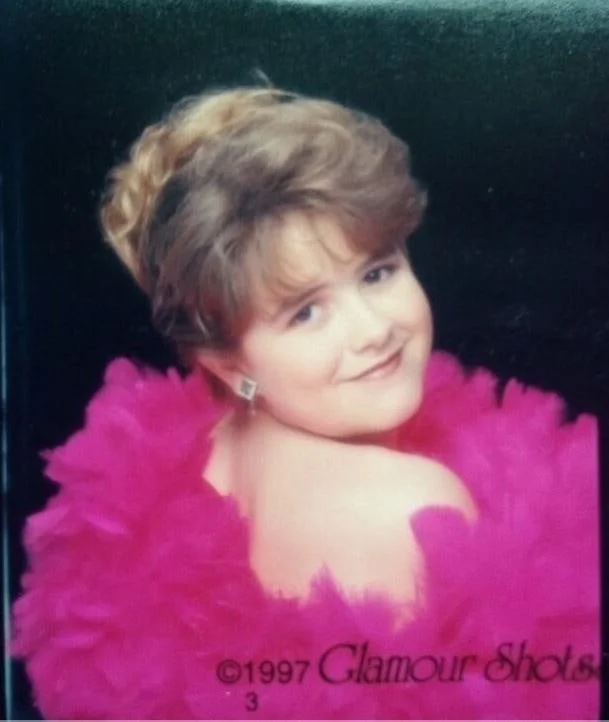
This photo alone was the cause of Glamour Shots’ shuttering its doors.
Sure, my mall nostalgia may be turned up to 11 with the isolation from COVID, but I also think I’m not off the mark. Online shopping is great, don’t get me wrong. I love being able to Google something as specific as “Zack Morris divinity candle” and within days, have that same item arrive at my house. But the intrinsic value of a mall is that I shouldn’t have to Google that in the first place. I should be able to walk into a Spencer’s Gifts, and it should be there, waiting for me, beckoning me to buy it.
On the flip side, I will concede that malls are also breeding grounds for filthy teenagers making out, smoking cigarettes, doing petty crime. But that’s what gives us* the grit to become responsible adults.
* It feels disingenuous not to correct your thinking that I’ve done any of those things. To be clear: I have never made out, smoked a cigarette, or done a petty crime at a mall. This is not because I am better than anyone. It’s just that I currently am and always have been a big ol’ chicken shit scared of getting busted. But think of all the rebellious things I could have done! The mall gave me that chance. It was I who squandered it.
The original creator of malls, store designer and architect Victor David Gruen, saw the mall’s potential as a fully operational center point for the rising suburban communities. More than just stores, Gruen’s invention was to be the “third place” for many suburbanites. If home was first and work was second, then the mall could be that third place where families spent time away from the house, but not in the city.
Across many towns, that third place is now dead.
An entire genre of YouTubers has emerged around “dead malls.” A sub-genre of urban exploration, “dead mall” vloggers show the decrepit remains of long-abandoned malls, often interspersed with archival footage showing the malls in all their former glory.
This devolution was seemingly inevitable. What Gruen initially intended as an indoor oasis became overrun by commerce. Where his first mall in Edina, Minnesota included a bird sanctuary and a green space, later malls that sprung up in its wake included, rather than birds, Sbarro’s, Auntie Anne’s, and Cinnabon.
The Slamdance film Jasper Mall covers a year in the life of the titular shopping center in Jasper, Alabama. The town is home to just over 14,000 residents, many of whom use the mall as a sort of community center.
Seniors show up right as the doors are unlocked, walking shoes laced up, ready to make their loops. A foursome of septuagenarians gathers around a food court table, not to enjoy a quick bite, but to play dominoes and socialize for hours. In the introductory moments of the movie, the security guard/mall manager/jack of all trades, Mike, mentions that he lets the city’s homeless population in during cold winter months to protect them from the elements.
Malls have been on a steady decline over the past few years, a trend that has been exacerbated by COVID. But much like Gruen’s initial vision, malls across the country have begun trending back toward their community-centered roots. The emptied-out anchor space in Jasper that sat idle since 2017 is now home to a worship center, kid’s play place, and private school. One mall in Gwinnett, Georgia has utilized empty retail space to conduct mass COVID vaccinations, and it’s not the only one. Where once you tried on the latest pair of Reebok’s or sniffed CK-One from rectangular sample cards, soon you will be able receive your COVID vaccine.
The over-saturation of malls that began in the late 1970s and eventually tapered off in the late 1990s may have been the mall’s downfall. In Dallas, for instance, Valley View Mall’s traffic was significantly diminished when the Galleria was built less than a mile away. Updated and sleek, the Galleria sucked major brands away from Valley View, leaving the older mall to suck in its final dying gasps these past few years. Corridor by corridor have found themselves on the business end of a bulldozer.
Maybe I’ve just been cooped up for too long. Maybe I’m drunk on nostalgia and fuzzy feelings. But I fear that the loss of malls means the death of a major American institution that has powered suburban commerce for the past seven decades. Plus, where else am I supposed to get my Dippin’ Dots?
From the looks of things, the mall of my youth isn’t a total loss cause. In the past few years, Town East has received interest from some big retailers, with Dick’s Sporting Goods moving in as another anchor in 2018. Even with that, the old gray mall just ain’t what she used to be. She isn’t ghastly or gutted enough to find herself on a “dead mall” video, but neither is she beautiful or bountiful enough to be featured on a shopping vlogger’s channel. But still she stands, right where I remember her, doors open, ready for our return.
***
This piece first appeared in Sunday Morning Hot Tea. Subscribe so you don’t miss another piece.
Blame It All On My Roots
“You know they say you can’t be just a little bit pregnant?” I said out loud to 85 of my coworkers during a presentation. “Well, you can be just a little bit incapacitated. It’s not an on-and-off switch.”
I was co-presenting a legal education seminar on how to spot red flags of elder abuse. I hadn’t planned on using such a colorful analogy to discuss capacity. It just popped out.
Aside from capacity issues, another challenge is getting people to open up about being victimized. In order to get someone to share their pain with me, I have to establish a rapport, I explained to the audience.
“I like to turn on my Mesquite charm. It helps them let their guard down,” I joked, bringing out a more-Texan-than-usual accent. This tactic works, too. A casual, “So tell me what’s been going on,” in my native cadence works better than a sterile, “Please explain the extent of your abuse.”
As a kid, I never would have imagined my drawl would be an asset I could use to help clients. Starting in my early teens, I tried to escape my accent. I hated that I didn’t sound like the girls on TV - your Kelly Kapowskis, who cheered in a non-regional dialect, and your Clarissas, who explained it all with no hint of southern tone. I was able to shake the speech impediment of my early years which rendered my Rs and Ls to Ws. Meaning that my dad’s impressive Christmas light display went from “un-bee-weeve-able” to just “unbelievable.”
I may have kicked the impediment but not the accent. Little country-talking Heather was who I was. My family spent many Wednesday nights at a local restaurant called Trail Dust to enjoy the all-you-can-eat steak night. Trail Dust was a wild west themed steakhouse in my hometown, adjacent to the Mesquite Championship Rodeo. That sentence is chock full of Texanness, and for that, you are welcome.
A massive, two-story building, Trail Dust served customers on long lines of tables covered in red and white checkered plastic tablecloths. If you came in wearing a tie, they’d snip it off and staple it to the wall alongside your business card. The restaurant’s second story boasted the facades of an old west town, complete with a jail, bank, and hotel.
But how, you may ask, would you get from the second floor back down to the first? Via stairs or an elevator, like a mere mortal? No, by way of the 30-foot-long metal slide. A skin-tearing behemoth that terminated on a slick wooden dance floor, the two-story slide launched you right into a row of tables seated with customers.
Music blared over the speakers - Reba, Garth, Willie, both Brooks and Dunn. They had it all. After 7PM, a band would take the stage, playing music made for boot-scooting. My family wouldn’t usually stay long past when the band started playing. Dinner time for my family was meant for talking - no distractions, no TV, certainly no cell phones because we weren’t time travelers, and no country music bands.
We would pay our check and head toward the door, greeted by a looped track of Roy Rogers and Dale Evans singing “Happy Trails.” My mom would always stop and listen, at least for a full chorus.
Anytime I try to tell myself I’m “not very country,” I think of even one aspect of going to Trail Dust and remember I am country as HELL. The sizzle of a hot steak. Steam rising off the family-style bowl of beans. Tipping up that Heinz bottle to cover my garlic bread with ketchup.
What? I was 10 years old.
Back then, we kept the family radios tuned to the country stations. I knew all the words to “Heads Carolina, Tails California.” I wanted to find a love like Tim and Faith. I found myself in complete awe of Garth and his hat and his spiffy, tailored cowboy shirts. Garth’s songs have everything you would want in a hit tune. Cursed ghosts who wander in eternal agony. Murder. Accidental deaths borne from the hubris of man. More murder. Double fisting frozen bevs on the beach. Banging cougars on a farm (the ladies, not the animals). Even more murder.
Good lord, Garth. Are you ok, bud?
I watched music videos on CMT and sang along with KSCS. Then, without warning, it all became unbelievably dorky. I can’t pinpoint the exact moment, but I think the shift hit somewhere around middle school. One day it’s Dixie Chicks lyrics, the next day it’s Eminem. The itch inside me that only a steel guitar could scratch went unsatiated. For years.
The tides of coolness had shifted, so I played pretend. I chose to deny myself the auditory miniseries that is a Garth Brooks record because some string bean in basketball shorts who couldn’t even grow pubic hair somehow made me feel ashamed.
When I very first moved to Chicago, I often found myself masking my love for all things country and trying desperately to hide my accent. Anybody who has heard me talk at any point from 1990 until now probably finds the idea of me being able to conceal my accent hilarious. But still, I tried.
Why do we suppress those parts of ourselves that make us who we are? For fear of being truly seen? We can try cowering in the safety of homogeneity as much as we want, but sooner or later, the dam will break. All those things we try and hide will spill out, burning to be seen.
I eventually came to embrace my Texanness once the parts that couldn’t be hidden slipped out. One particularly rainy day on Navy Pier had rivers of water rushing down the stairs beneath the Ferris wheel and toward our small office.
That day, I had the pleasure of teaching my midwestern coworkers the concept of a “turd floater.”
turd float·er | tərd ˈflōdər | noun
When it rains so much that the septic tanks overflow and the turds float away
Classy.
As I’ve grown, I have sloughed off the need to feel “cool.” This is partially due to what I like to believe is maturity, and partially because all the cool youngsters aren’t on Facebook anymore. With that concern for fitting in now disregarded, I am now free to return to what makes me feel good.
I can relish the pure joy of a man in a Stetson admonishing me not to rock the jukebox. Another with a glorious mullet reminding me of the simple pleasures of rice cookin’ in the microwave. I can break free on an open road, my feet hitting the pavement in time, while a butter smooth voice croons to me about showing up in boots and ruining a black tie affair.
My pace quickens. Breathless, I sing along. After all, I can’t help myself. It’s just who I am.
***
This piece first appeared in Sunday Morning Hot Tea. Subscribe so you don’t miss another piece.